
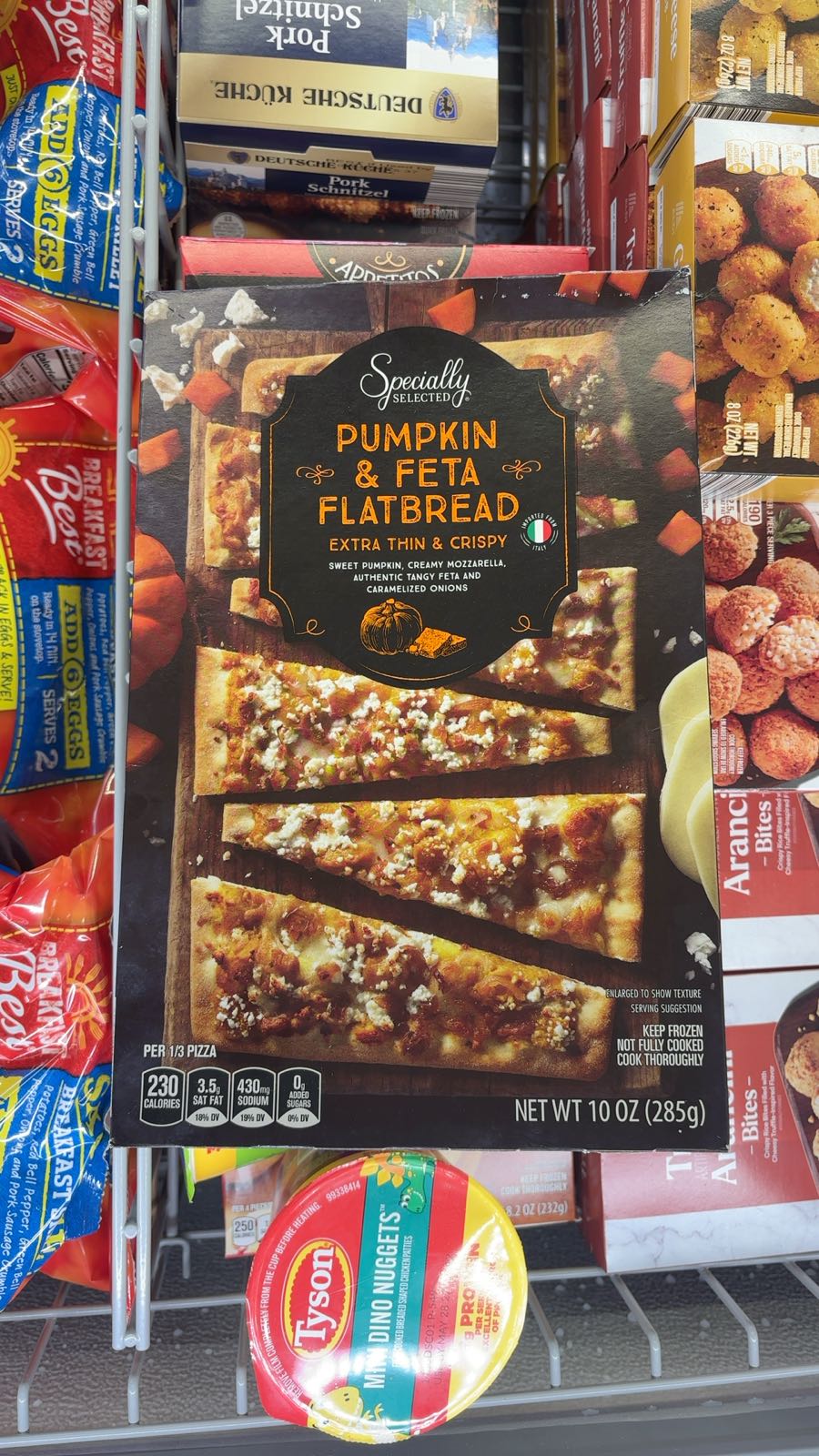


At a glance
Summary
The Pumpkin & Feta Flatbread contains some beneficial ingredients like concentrated pumpkin puree and part-skim mozzarella cheese, which provide vitamins and protein. However, the presence of sunflower oil, a seed oil high in omega-6 fatty acids, and cane sugar, a refined sweetener, detracts from its healthiness. The product is processed, which limits its score potential, and the inclusion of these less desirable ingredients further impacts its rating.
Key ingredients 8
Concentrated pumpkin pureeGood
Pumpkin puree is rich in vitamins and minerals, particularly vitamin A and potassium. It is a natural ingredient that adds flavor and moisture to baked goods. The concentration process enhances its nutrient density.
Benefits
Rich in vitamin A, which supports vision and immune function, and provides dietary fiber.
Part-skim mozzarella cheeseGood
Part-skim mozzarella cheese is a source of protein and calcium, essential for bone health. It is lower in fat compared to whole milk cheese, making it a healthier option. The cheese is minimally processed, retaining its nutritional benefits.
Risks
Contains lactose, which may cause digestive issues for those with lactose intolerance.
Benefits
Provides protein and calcium, supporting muscle and bone health.
Feta cheeseNeutral
Feta cheese is a tangy cheese made from sheep's milk, offering a distinct flavor. It is a source of calcium and protein but can be high in sodium. The cheese is traditionally made, preserving its authentic taste.
Risks
High sodium content may contribute to increased blood pressure if consumed in excess.
Benefits
Provides calcium and protein, supporting bone health and muscle function.
Caramelized onionsNeutral
Caramelized onions add a sweet and savory flavor to dishes, enhancing taste profiles. The caramelization process involves cooking onions slowly to develop their natural sugars. While flavorful, they do not offer significant nutritional benefits.
Benefits
Enhances flavor and aroma in culinary applications.
Citric acidNeutral
Citric acid is a natural preservative and acidity regulator commonly used in food products. It is generally recognized as safe and helps maintain flavor and freshness. It is naturally found in citrus fruits and is used in small quantities.
Benefits
Helps preserve food and maintain flavor stability.
Wheat flourBad
Refined grain flour stripped of bran and germ.
Risks
Refined wheat flour can contribute to blood sugar spikes and may lack essential nutrients found in whole grains.
Benefits
Provides structure and texture to baked goods, making it a versatile ingredient in cooking.
Cane sugarBad
Cane sugar is a refined sweetener that can contribute to increased calorie intake and blood sugar levels. Excessive consumption is linked to various health issues, including obesity and diabetes. It is often used to enhance sweetness in processed foods.
Risks
High intake can lead to obesity, diabetes, and other metabolic disorders.
Benefits
Provides quick energy but lacks essential nutrients.
Sunflower oilVery Bad
Sunflower oil is a seed oil high in omega-6 fatty acids, which can promote inflammation when consumed in excess. It is often extracted using high heat and chemicals, which may degrade its nutritional quality. Alternatives like olive oil offer healthier fat profiles.
Risks
High omega-6 content may promote inflammation and imbalance omega-3 to omega-6 ratios.
Processing
Processed Foods
Get the full breakdown in the Scout appTake Scout shopping
Scan any product to see lab results, healthy alternatives, and your personalized analysis.
Download on theApp Store GET IT ONGoogle Play