
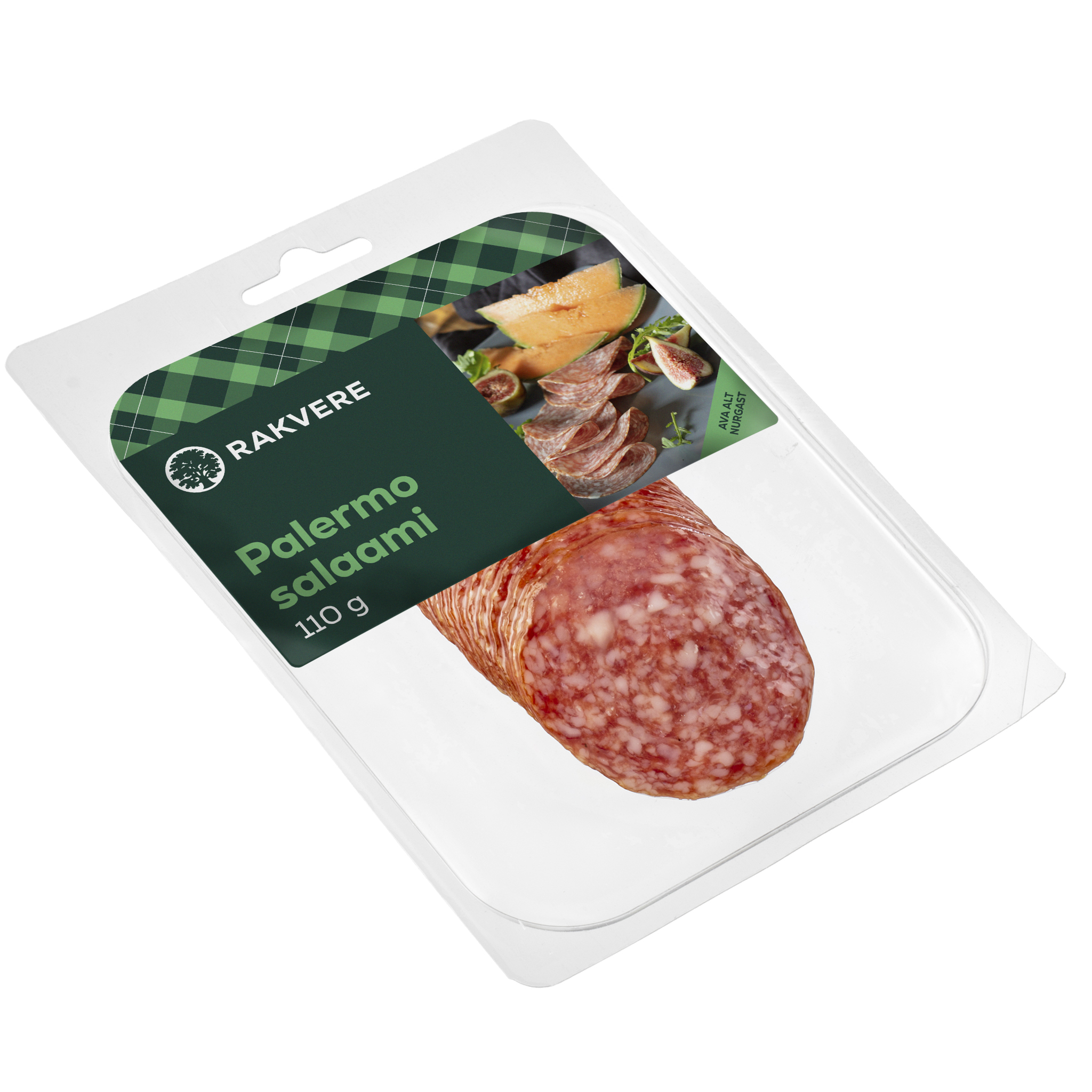
Palermo Salaami
Summary
Palermo Salaami is a processed food with a relatively clean ingredient list, primarily consisting of pork and spices. However, the presence of unspecified flavoring raises concerns about potential artificial additives, which can impact health negatively. The product's high salt content and processing level further limit its health score.
At a glance
Key ingredients 8
PorkNeutral
Pork is a primary source of protein and essential nutrients. It is a common ingredient in processed meats like salami. The quality of pork can vary based on the animal's diet and living conditions.
Risks
Processed pork products can be high in sodium and saturated fats, which may increase the risk of cardiovascular diseases if consumed in excess.
Benefits
Pork provides a good source of protein and essential vitamins and minerals such as B vitamins and zinc.
Pork fatNeutral
Pork fat contributes to the flavor and texture of salami. It is a source of saturated fats, which are necessary in moderation for various bodily functions. The health impact depends on the balance of fats in the overall diet.
Risks
High intake of saturated fats can contribute to increased cholesterol levels and heart disease risk.
Benefits
Provides energy and aids in the absorption of fat-soluble vitamins.
SaltNeutral
Salt is used as a preservative and flavor enhancer in salami. It is essential for maintaining fluid balance and nerve function. However, excessive consumption can lead to health issues.
Risks
High sodium intake is associated with increased blood pressure and risk of cardiovascular diseases.
Benefits
Essential for electrolyte balance and proper muscle function.
SpicesNeutral
Spices add flavor and may have antioxidant properties. The specific health benefits depend on the types of spices used. They are generally considered beneficial in small amounts.
Benefits
May provide antioxidants and enhance the flavor profile of the product.
FlavouringBad
Flavouring can include a variety of natural or artificial substances to enhance taste. The lack of specificity raises concerns about potential artificial additives. Artificial flavorings can sometimes cause allergic reactions or sensitivities.
Risks
Potential for allergic reactions or sensitivities, especially if artificial flavorings are used.
Spice extractsNeutral
Spice extracts are concentrated forms of spices used for flavoring. They retain the essential oils and active compounds of the spices. The health impact is generally positive, similar to whole spices.
Benefits
May provide concentrated flavors and potential antioxidant benefits.
DextroseNeutral
Dextrose is a simple sugar used as a sweetener and preservative. It is quickly absorbed by the body, providing a rapid source of energy. However, excessive consumption of simple sugars can lead to health issues.
Risks
Excessive intake of simple sugars can contribute to obesity, insulin resistance, and dental cavities.
Benefits
Provides a quick source of energy.
Antioxidants: E301Neutral
E301, also known as sodium ascorbate, is used as an antioxidant to preserve color and flavor. It is a form of vitamin C, which is essential for immune function and skin health. In processed foods, it helps prevent oxidation.
Benefits
Acts as an antioxidant and can contribute to vitamin C intake.
Processing
Processed Foods
Get the full breakdown in the Scout app
Scan any product to see lab results, healthy alternatives, and your personalized analysis.
Download on theApp Store