
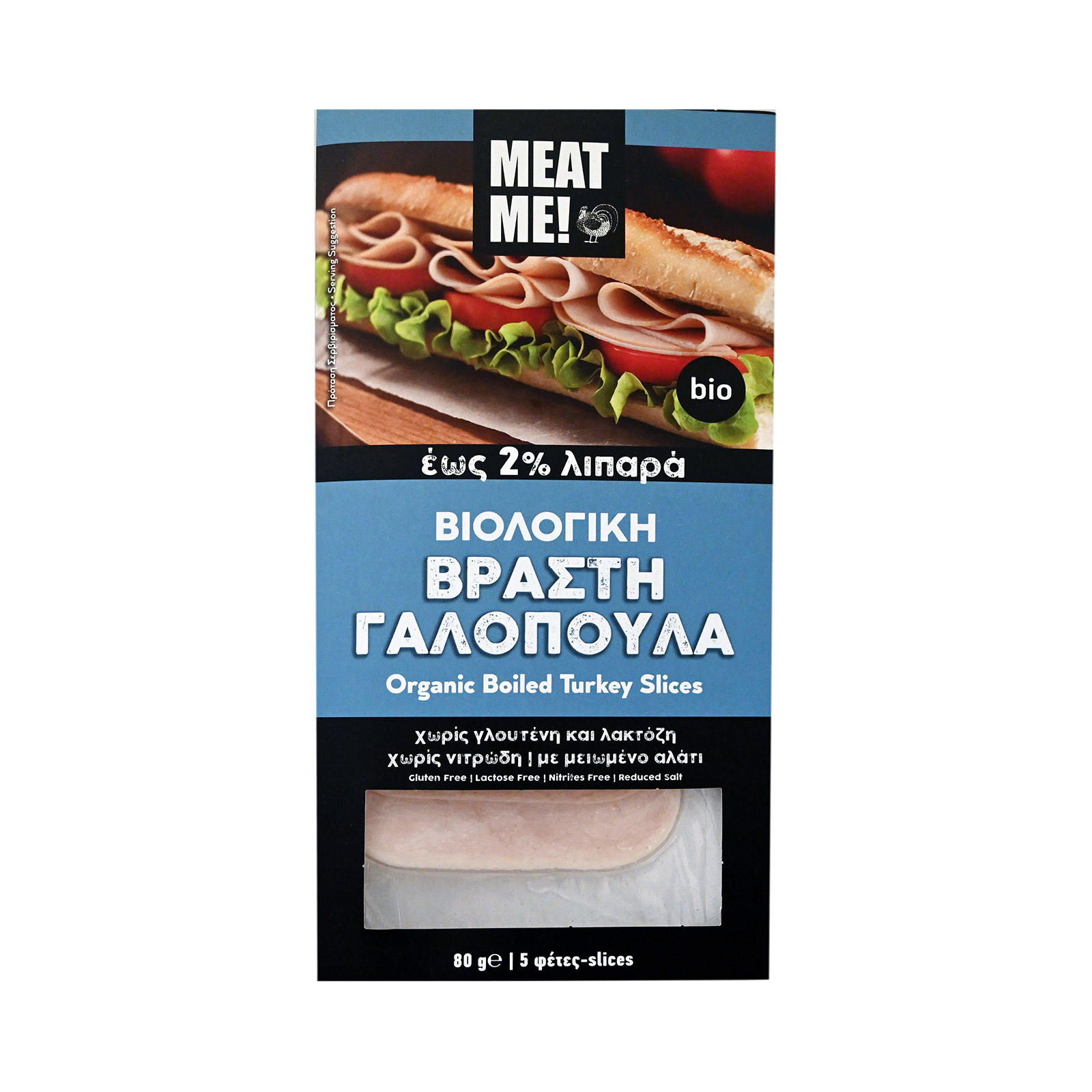


At a glance
Summary
This product contains turkey fillet, which is a high-quality source of lean protein, but it is processed with additives such as dextrose and stabilizers. The presence of dextrose, a refined sugar, and other additives contributes to its processed nature, impacting its healthiness. While the turkey fillet itself is beneficial, the overall processing level and inclusion of additives limit its score.
Key ingredients 8
Turkey filletGood
Turkey fillet is a high-quality source of lean protein, essential for muscle maintenance and repair. It is minimally processed and provides important nutrients like B vitamins and selenium. Compared to processed meats, it offers a cleaner nutritional profile.
Benefits
Rich in lean protein and essential nutrients, supporting muscle health and overall nutrition.
WaterNeutral
Water is used as a solvent and to maintain moisture in the product. It is a neutral ingredient with no direct nutritional impact. Its presence helps in processing and texture maintenance.
See more about Water →Potato starchNeutral
Potato starch is used as a thickening agent and stabilizer in processed foods. It is a refined carbohydrate with minimal nutritional value. It helps improve texture and consistency in the product.
Risks
Excessive consumption of refined carbohydrates may contribute to blood sugar spikes.
Benefits
Provides texture and stability to the product without significant nutritional benefits.
SaltNeutral
Salt is used for flavor enhancement and preservation. It is a common culinary ingredient with no additional nutritional benefits. Excessive intake can lead to health issues like hypertension.
Risks
High sodium intake can increase the risk of hypertension and cardiovascular diseases.
Benefits
Enhances flavor and acts as a preservative in food products.
Citric sodiumNeutral
Citric sodium is used as a stabilizer and acidity regulator in food products. It helps maintain product stability and shelf life. It is generally recognized as safe in moderate amounts.
Benefits
Helps maintain product stability and shelf life without significant nutritional benefits.
Sodium ascorbateNeutral
Sodium ascorbate is an antioxidant used to preserve color and freshness in processed foods. It is a form of vitamin C, but its use in small amounts in processed foods does not significantly contribute to vitamin C intake. It helps prevent oxidation and spoilage.
Benefits
Acts as an antioxidant to preserve freshness and color in food products.
Spice mixNeutral
Spice mix is used to enhance flavor and aroma in food products. The specific composition can vary, but it generally includes natural spices. It adds sensory appeal without significant nutritional impact.
Benefits
Enhances flavor and aroma, contributing to the sensory appeal of the product.
DextroseBad
Dextrose is a simple sugar used as a sweetener and preservative. It can contribute to increased blood sugar levels and is considered a refined carbohydrate. Its use in processed foods is often linked to negative health impacts when consumed in excess.
Risks
May contribute to blood sugar spikes and increased risk of metabolic disorders when consumed in excess.
Benefits
Provides sweetness and acts as a preservative, but offers no significant nutritional benefits.
Processing
Processed Foods
Get the full breakdown in the Scout appTake Scout shopping
Scan any product to see lab results, healthy alternatives, and your personalized analysis.
Download on theApp Store GET IT ONGoogle Play