
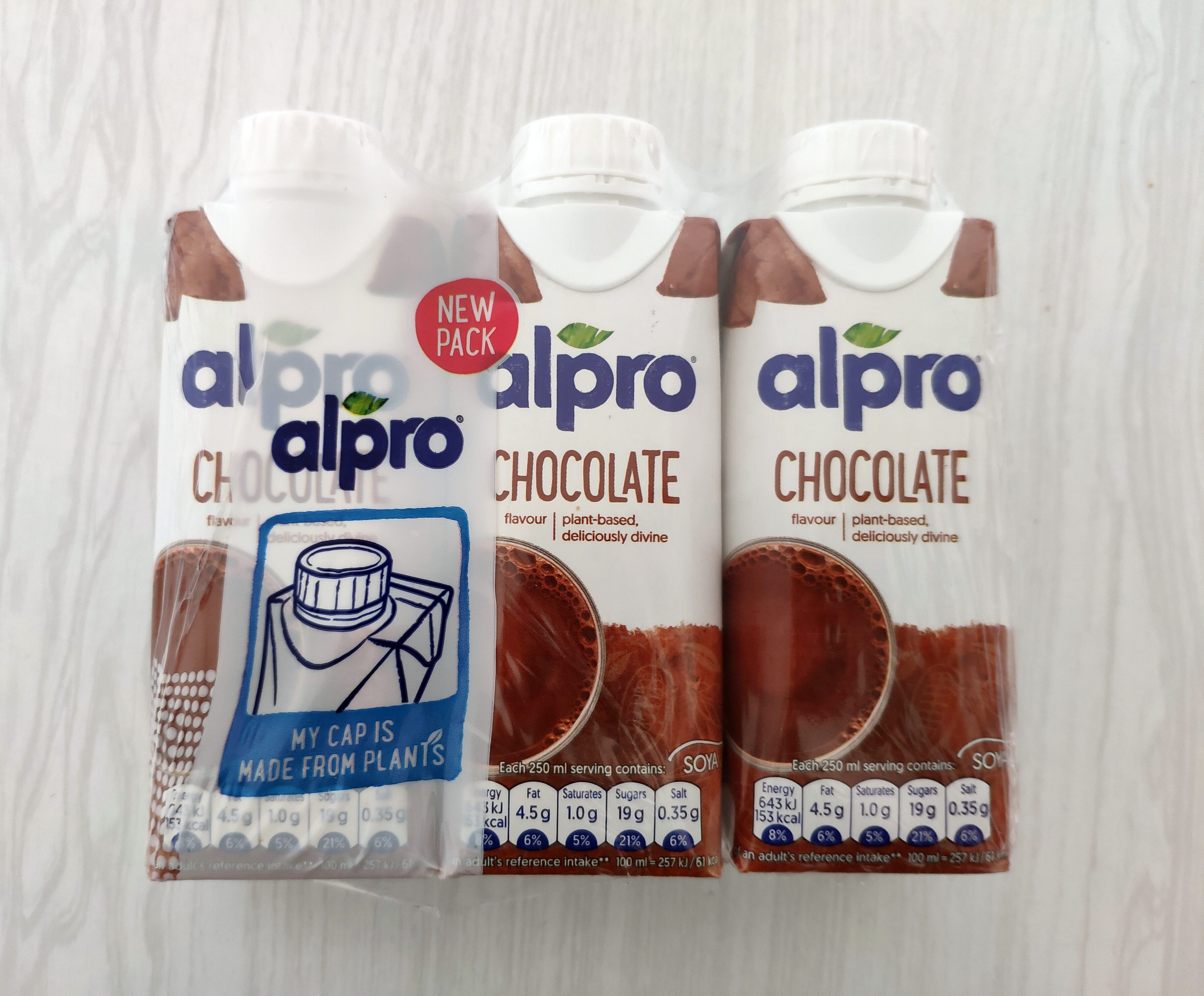


Alpro Sojadrink, Schokoladen-Geschmack 3x250ml
Analysis updated August 2026 · How Scout scores
At a glance
Summary
This product is ultra-processed, which limits its potential health score. It contains refined sugar, which contributes to empty calories and potential metabolic issues, and carrageenan, a controversial additive linked to digestive concerns. Despite these drawbacks, it includes beneficial ingredients like hulled soya beans and fat-reduced cocoa, which provide plant-based protein and antioxidants.
Key ingredients 13
Hulled Soya BeansGood
Hulled soya beans are a good source of plant-based protein and essential amino acids. They contain isoflavones, which may have health benefits such as reducing cholesterol levels. The hulling process removes the outer shell, making them easier to digest.
Risks
May cause allergic reactions in individuals sensitive to soy.
Benefits
Rich in protein and isoflavones, which may support heart health and provide antioxidant benefits.
Fat-Reduced CocoaGood
Fat-reduced cocoa provides flavor and some antioxidants while being lower in fat. It retains beneficial compounds like flavonoids, which may support cardiovascular health. The reduction in fat content makes it a lighter option for chocolate flavoring.
Risks
May contain trace amounts of caffeine and theobromine, which can affect sensitive individuals.
Benefits
Contains flavonoids that may have antioxidant and heart health benefits.
Sea SaltGood
Sea salt is a natural source of sodium and trace minerals. It is less processed than table salt and retains beneficial minerals. It enhances flavor and provides essential electrolytes.
Risks
Excessive consumption may contribute to high blood pressure.
Benefits
Provides essential minerals and enhances flavor in foods.
Vitamins (B2, D2)Good
Vitamins B2 and D2 are added to fortify the product, supporting metabolic and bone health. Vitamin B2 aids in energy production, while D2 supports calcium absorption. Fortification helps meet daily nutritional requirements.
Benefits
Supports energy metabolism and bone health through essential vitamin fortification.
WaterNeutral
Water is a neutral ingredient used as a base in many beverages. It provides hydration but no additional nutritional benefits. It is essential for dissolving other ingredients and creating the desired consistency.
See more about Water →Calcium CarbonateNeutral
Calcium carbonate is used as a calcium supplement to fortify foods. It helps in maintaining bone health and preventing deficiencies. It is a common additive in plant-based milks to mimic the calcium content of dairy.
Risks
Excessive intake may lead to hypercalcemia or kidney stones.
Benefits
Provides a source of calcium, essential for bone health and metabolic functions.
Guar GumNeutral
Guar gum is a natural thickening agent derived from guar beans. It is used to improve texture and stability in food products. It is generally considered safe and has minimal impact on health.
Risks
Excessive consumption may cause digestive issues such as bloating or gas.
Benefits
May aid in digestion by acting as a soluble fiber.
Xanthan GumNeutral
Xanthan gum is a polysaccharide used as a thickener and stabilizer in foods. It is produced through fermentation and is widely used in gluten-free products. It is generally recognized as safe with minimal health impact.
Risks
High doses may cause digestive discomfort in some individuals.
Benefits
Helps improve texture and consistency in food products.
Potassium PhosphatesNeutral
Potassium phosphates are used as acidity regulators and stabilizers in food products. They help maintain pH balance and improve shelf life. They are generally considered safe in moderate amounts.
Risks
Excessive intake may affect kidney function or electrolyte balance.
Benefits
Helps maintain pH balance and stability in food products.
Natural FlavouringNeutral
Natural flavouring is derived from natural sources to enhance taste. It is generally considered safer than artificial flavouring. However, the lack of specificity can be a concern for those with allergies.
Risks
Potential for allergic reactions if sensitive to specific natural sources.
Benefits
Enhances flavor without synthetic additives.
SugarBad
Refined sugar is a source of empty calories and can contribute to weight gain and metabolic issues. It is highly processed and lacks nutritional value. Excessive consumption is linked to increased risk of chronic diseases.
Risks
High intake may lead to obesity, diabetes, and dental cavities.
CarrageenanBad
Carrageenan is a thickener and stabilizer derived from seaweed, often used in processed foods. It has been linked to digestive issues and inflammation in some studies. Its use is controversial due to potential gastrointestinal effects.
Risks
May cause digestive discomfort and inflammation in sensitive individuals.
FlavouringBad
Flavouring is a broad term that can include artificial or natural additives to enhance taste. The lack of specificity raises concerns about the quality and source of these additives. It may include synthetic compounds with potential health risks.
Risks
Potential for allergic reactions or sensitivities to unspecified compounds.
Processing
Ultra-Processed Foods
Get the full breakdown in the Scout appTake Scout shopping
Scan any product to see lab results, healthy alternatives, and your personalized analysis.
Download on theApp Store GET IT ONGoogle PlayAmazon pricing & content
Amazon price as of . Product prices and availability are accurate as of the date/time indicated and are subject to change. Any price and availability information displayed on Amazon.com at the time of purchase will apply to the purchase of this product.
CERTAIN CONTENT THAT APPEARS ON THIS SITE COMES FROM AMAZON. THIS CONTENT IS PROVIDED “AS IS” AND IS SUBJECT TO CHANGE OR REMOVAL AT ANY TIME.