
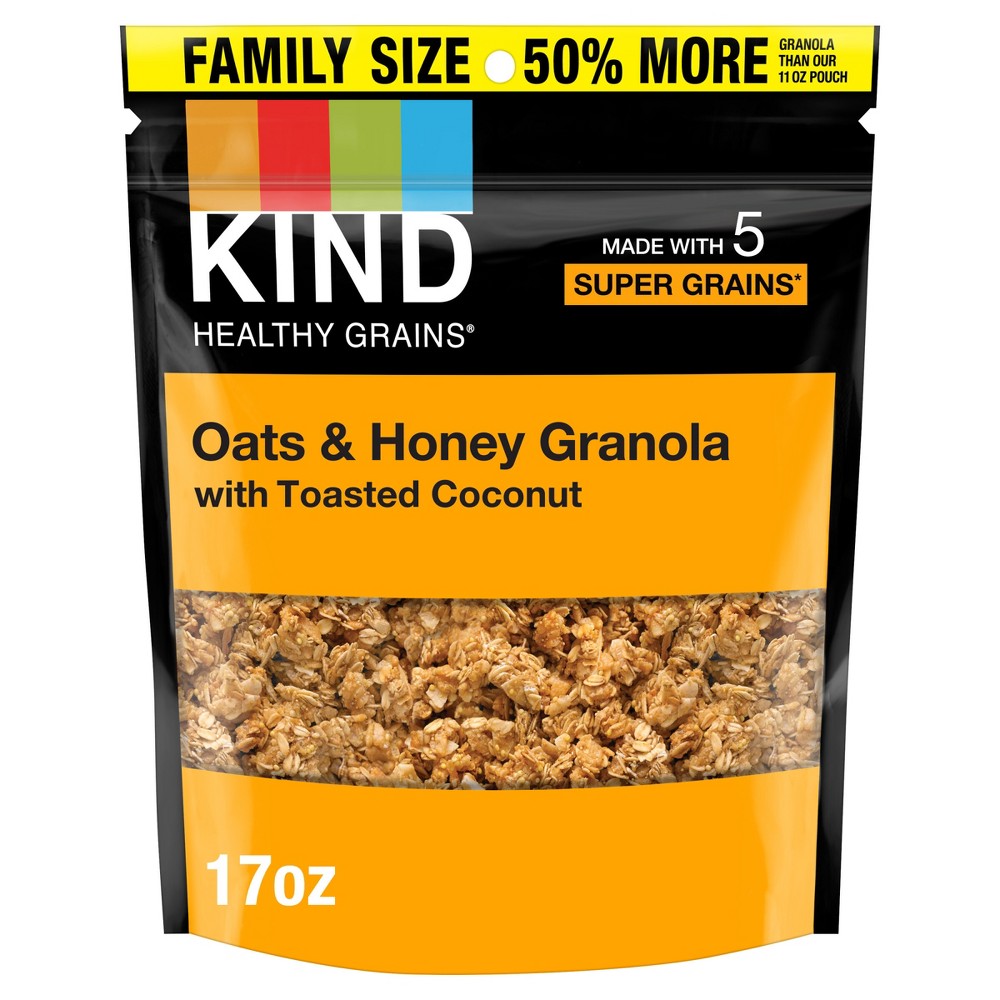


KIND Granola
Summary
This granola contains a mix of beneficial whole grains like oats, millet, and buckwheat, which contribute to its nutritional value. However, the presence of refined cane sugar and highly processed canola oil detracts from its healthiness. The product is moderately processed, which limits its potential score despite the inclusion of several nutrient-rich ingredients.
At a glance
Key ingredients 17
OatsVery Good
Oats are a whole grain rich in fiber and essential nutrients. They are minimally processed and provide a good source of beta-glucans, which can help lower cholesterol levels. Oats are also versatile and can be used in various recipes, enhancing their nutritional profile.
Benefits
Rich in dietary fiber, which supports digestive health and may help lower cholesterol levels.
Tapioca syrupNeutral
Tapioca syrup is a natural sweetener derived from cassava root. It is less processed than high fructose corn syrup but still contributes to sugar intake. It provides a mild sweetness without significant nutritional benefits.
Risks
Excessive consumption may contribute to increased sugar intake and related health issues.
Benefits
Provides a natural alternative to more processed sweeteners, with a mild flavor.
Brown riceGood
Brown rice is a whole grain that retains its bran and germ, providing more fiber and nutrients than white rice. It is minimally processed and a good source of complex carbohydrates. Brown rice supports sustained energy release and is a staple in many healthy diets.
Benefits
Rich in fiber and essential nutrients, supporting digestive health and providing sustained energy.
Cane sugarBad
Cane sugar is a refined sweetener that contributes to increased calorie intake without providing essential nutrients. It is highly processed and can lead to health issues like obesity and diabetes when consumed in excess. While it adds sweetness, it offers no significant nutritional benefits.
Risks
High consumption can lead to obesity, diabetes, and other metabolic disorders.
HoneyGood
Honey is a natural sweetener with antioxidant properties and trace nutrients. It is less processed than refined sugars and can provide a source of quick energy. Honey also has antimicrobial properties and can soothe sore throats.
Risks
Excessive consumption can contribute to high sugar intake and related health issues.
Benefits
Contains antioxidants and trace nutrients, offering a natural alternative to refined sugars.
CoconutGood
Coconut is a source of healthy fats, particularly medium-chain triglycerides (MCTs), which can support energy metabolism. It is minimally processed and provides a unique flavor and texture to foods. Coconut also contains fiber and essential minerals like manganese.
Benefits
Rich in healthy fats and fiber, supporting energy metabolism and digestive health.
MilletGood
Millet is a gluten-free whole grain that is rich in fiber and essential nutrients. It is minimally processed and provides a good source of magnesium and phosphorus. Millet supports heart health and can be a versatile addition to various dishes.
Benefits
Provides essential nutrients and fiber, supporting heart health and digestion.
Oat flourGood
Oat flour is made from ground oats, retaining the nutritional benefits of whole oats. It is minimally processed and provides a good source of fiber and protein. Oat flour can enhance the nutritional profile of baked goods and other recipes.
Benefits
Rich in fiber and protein, supporting digestive health and providing sustained energy.
Canola oilVery Bad
Canola oil is a highly processed seed oil with a high omega-6 fatty acid content. It is often extracted using chemical solvents and high heat, which can degrade its nutritional quality. The high omega-6 content may promote inflammation when consumed in excess.
Risks
High omega-6 content may promote inflammation and related health issues when consumed in excess.
BuckwheatGood
Buckwheat is a gluten-free pseudocereal rich in fiber, protein, and essential nutrients. It is minimally processed and provides a good source of antioxidants and magnesium. Buckwheat supports heart health and can be a versatile addition to various dishes.
Benefits
Rich in fiber and antioxidants, supporting heart health and providing essential nutrients.
AmaranthGood
Amaranth is a gluten-free pseudocereal that is rich in protein, fiber, and essential nutrients. It is minimally processed and provides a good source of lysine, an essential amino acid. Amaranth supports muscle health and can be a versatile addition to various dishes.
Benefits
Provides essential amino acids and nutrients, supporting muscle health and digestion.
Sesame seedsGood
Sesame seeds are a rich source of healthy fats, protein, and essential minerals like calcium and magnesium. They are minimally processed and provide antioxidants that support heart health. Sesame seeds can enhance the flavor and nutritional profile of various dishes.
Benefits
Rich in healthy fats and minerals, supporting heart health and providing essential nutrients.
MolassesNeutral
Molasses is a byproduct of sugar refining that retains some vitamins and minerals. It is less processed than refined sugar but still contributes to sugar intake. Molasses provides a distinct flavor and can be used as a natural sweetener in moderation.
Risks
Excessive consumption may contribute to increased sugar intake and related health issues.
Benefits
Contains trace minerals and provides a natural alternative to more processed sweeteners.
QuinoaGood
Quinoa is a gluten-free pseudocereal that is rich in protein, fiber, and essential nutrients. It is minimally processed and provides a complete amino acid profile, making it a valuable protein source for vegetarians and vegans. Quinoa supports muscle health and can be a versatile addition to various dishes.
Benefits
Provides a complete amino acid profile and essential nutrients, supporting muscle health and digestion.
Brown rice syrupNeutral
Brown rice syrup is a natural sweetener derived from brown rice. It is less processed than high fructose corn syrup but still contributes to sugar intake. Brown rice syrup provides a mild sweetness without significant nutritional benefits.
Risks
Excessive consumption may contribute to increased sugar intake and related health issues.
Benefits
Provides a natural alternative to more processed sweeteners, with a mild flavor.
Sea saltGood
Unrefined sea salt — a minimally processed, natural source of sodium and essential trace minerals, and a legitimate whole-food seasoning. Treated as a positive ingredient.
Risks
Excessive consumption can contribute to high sodium intake and related health issues.
Benefits
Contains trace minerals and enhances flavor in foods.
Vitamin E (tocopherols)Good
Vitamin E is an antioxidant that helps protect cells from oxidative damage. It is added to maintain freshness and extend the shelf life of products. Vitamin E supports immune function and skin health.
Benefits
Acts as an antioxidant, supporting immune function and protecting cells from oxidative damage.
Processing
Processed Foods
Get the full breakdown in the Scout app
Scan any product to see lab results, healthy alternatives, and your personalized analysis.
Download on theApp Store