


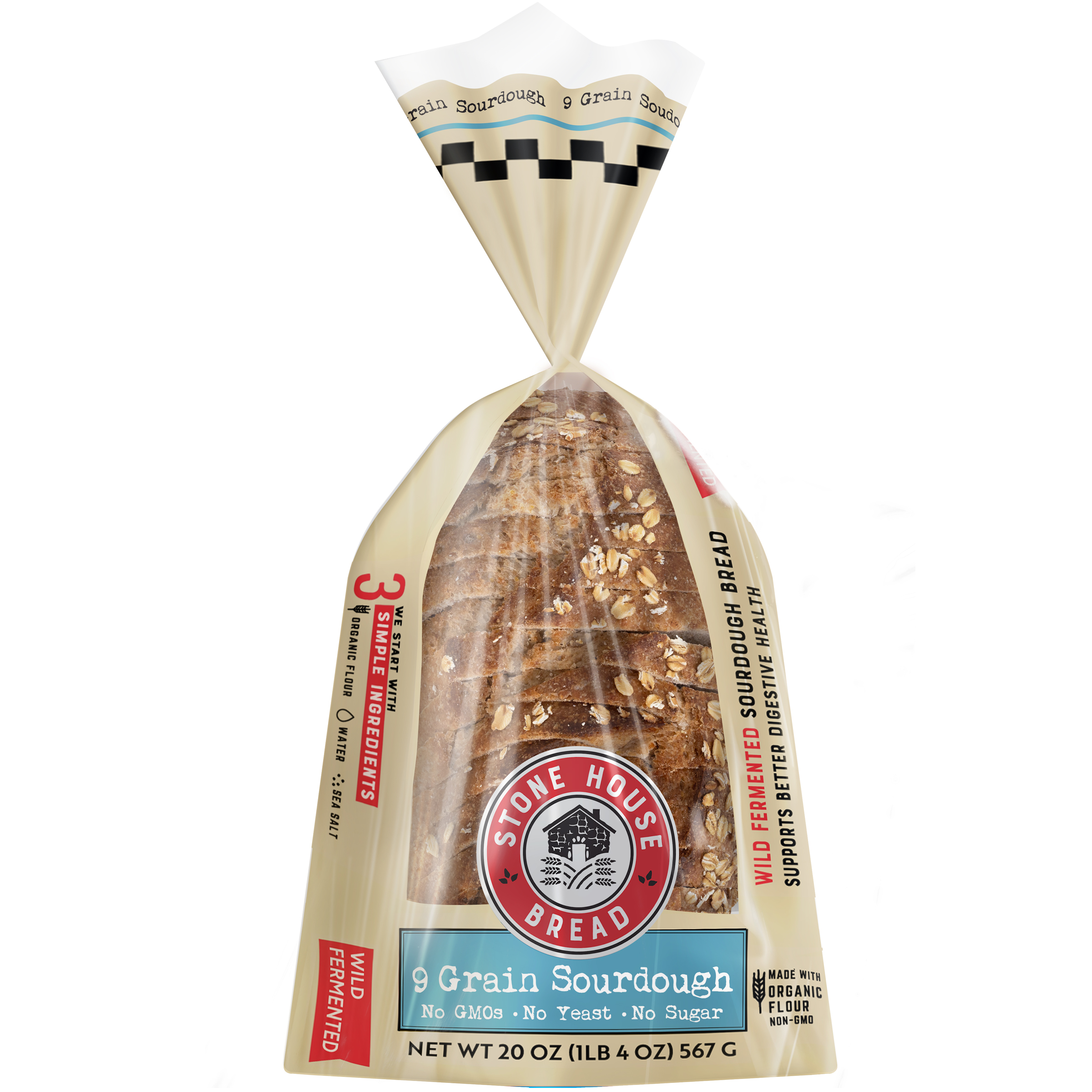


Stone House Bread Sprouted Sourdough
Analysis updated August 2026 · How Scout scores
At a glance
Summary
This sprouted sourdough bread features a clean ingredient list with organic sprouted wheat flour, quinoa, chia seeds, and other nutrient-rich grains, which enhance its nutritional profile. The use of cultured wheat as a natural preservative and the absence of harmful additives contribute positively to its healthiness. Despite being processed, the high-quality ingredients and minimal additives allow it to score well within its category.
Key ingredients 13
Certified organic unbleached sprouted wheat flourVery Good
Sprouted wheat flour is a nutrient-dense ingredient that enhances digestibility and nutrient absorption. The sprouting process increases the availability of vitamins and minerals. Being organic and unbleached further ensures minimal processing and chemical exposure.
Benefits
Rich in vitamins, minerals, and fiber, supporting digestive health and providing sustained energy.
QuinoaVery Good
Quinoa is a complete protein source, providing all essential amino acids. It is rich in fiber, vitamins, and minerals, supporting overall health. Its inclusion adds nutritional diversity to the product.
Benefits
Rich in protein, fiber, and essential nutrients, supporting a balanced diet.
Chia seedsVery Good
Chia seeds are rich in omega-3 fatty acids, fiber, and antioxidants. They support heart health and provide sustained energy. Their inclusion enhances the nutritional profile of the product.
Benefits
Rich in omega-3s and fiber, supporting heart health and digestion.
Flax seedVery Good
Flax seeds are high in omega-3 fatty acids, fiber, and lignans. They support heart health and have anti-inflammatory properties. Their inclusion enhances the nutritional profile of the product.
Benefits
Rich in omega-3s and fiber, supporting heart health and digestion.
Certified organic unbleached wheat flourGood
Organic unbleached wheat flour is a less processed form of flour that retains more nutrients compared to bleached flour. Being organic ensures it is free from synthetic pesticides and fertilizers. It provides essential carbohydrates and some protein.
Benefits
Provides carbohydrates for energy and some protein, supporting overall nutrition.
Cultured wheatGood
Cultured wheat is used as a natural preservative, enhancing the shelf life of the product without synthetic additives. It is produced through fermentation, which can improve gut health. This ingredient is a natural alternative to chemical preservatives.
Benefits
Acts as a natural preservative and may support gut health through fermentation.
Sea saltGood
Sea salt is a minimally processed source of sodium and trace minerals. It enhances flavor and provides essential electrolytes. Unlike refined salt, it retains natural minerals.
Risks
Excessive consumption may contribute to high blood pressure.
Benefits
Provides essential electrolytes and enhances flavor naturally.
MilletGood
Millet is a gluten-free grain that provides essential nutrients like magnesium and phosphorus. It is high in fiber, supporting digestive health. Its inclusion adds variety and nutritional value.
Benefits
Provides essential nutrients and fiber, supporting digestive health.
AmaranthGood
Amaranth is a gluten-free grain high in protein and essential amino acids. It is rich in iron, magnesium, and fiber, supporting overall health. Its inclusion adds nutritional diversity.
Benefits
Provides protein, fiber, and essential nutrients, supporting a balanced diet.
Sunflower seedsGood
Sunflower seeds are a good source of healthy fats, protein, and vitamin E. They support heart health and provide antioxidants. Their inclusion adds nutritional value and texture.
Benefits
Provides healthy fats, protein, and antioxidants, supporting heart health.
WaterNeutral
Water is a neutral ingredient used as a solvent and to provide moisture. It is essential for the dough formation but does not contribute nutritional value. Its presence is necessary for the baking process.
See more about Water →YeastNeutral
Yeast is used as a leavening agent to help the dough rise. It contributes to the texture and flavor of the bread. It is a standard ingredient in bread-making.
See more about Yeast →Plant-based enzymeNeutral
Plant-based enzymes are used to improve dough handling and texture. They are derived from natural sources and aid in the baking process. Their use is common in bread production.
Processing
Processed Foods
Get the full breakdown in the Scout appTake Scout shopping
Scan any product to see lab results, healthy alternatives, and your personalized analysis.
Download on theApp Store GET IT ONGoogle Play