
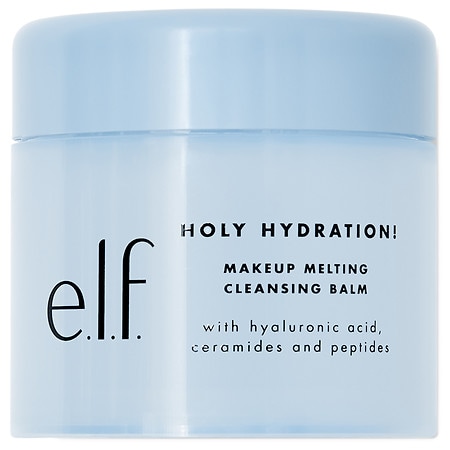
e.l.f. SKIN Holy Hydration Makeup Melting Cleansing Balm - 2 oz: Paraben-Free, Vegan, For Oily, Combination & Dry Skin
Analysis updated August 2026 · How Scout scores
At a glance
Summary
This cleansing balm contains beneficial ingredients like peptides, ceramides, and hyaluronic acid, which support skin hydration and barrier function. However, the presence of phenoxyethanol and fragrance can be concerning due to potential skin irritation and lack of transparency in fragrance components. The product is moderately processed, balancing beneficial skin actives with some less desirable additives.
Key ingredients 27
Palmitoyl Tripeptide-1Very Good
Palmitoyl Tripeptide-1 is a peptide that helps to stimulate collagen production. It is known for its anti-aging benefits and ability to improve skin elasticity. It is considered a beneficial ingredient in skincare.
Risks
There are minimal risks associated with this ingredient.
Benefits
It helps to reduce the appearance of fine lines and wrinkles.
Palmitoyl Tetrapeptide-7Very Good
Palmitoyl Tetrapeptide-7 is a peptide that helps to reduce inflammation and improve skin elasticity. It is known for its anti-aging benefits and ability to enhance skin firmness. It is considered a beneficial ingredient in skincare.
Risks
There are minimal risks associated with this ingredient.
Benefits
It helps to reduce the appearance of fine lines and improve skin texture.
Ceramide APVery Good
Ceramide AP is a lipid that helps to restore the skin barrier and retain moisture. It is essential for maintaining healthy skin and preventing moisture loss. It is considered a beneficial ingredient in skincare.
Risks
There are minimal risks associated with this ingredient.
Benefits
It helps to strengthen the skin barrier and improve hydration.
Ceramide EOPVery Good
Ceramide EOP is a lipid that helps to restore the skin barrier and retain moisture. It is essential for maintaining healthy skin and preventing moisture loss. It is considered a beneficial ingredient in skincare.
Risks
There are minimal risks associated with this ingredient.
Benefits
It helps to strengthen the skin barrier and improve hydration.
Hydrolyzed Sodium HyaluronateVery Good
Hydrolyzed Sodium Hyaluronate is a form of hyaluronic acid that helps to hydrate and plump the skin. It is known for its ability to retain moisture and improve skin texture. It is considered a beneficial ingredient in skincare.
Risks
There are minimal risks associated with this ingredient.
Benefits
It provides deep hydration and helps to reduce the appearance of fine lines.
PhytosphingosineVery Good
Phytosphingosine is a lipid that helps to restore the skin barrier and reduce inflammation. It is known for its ability to improve skin health and prevent moisture loss. It is considered a beneficial ingredient in skincare.
Risks
There are minimal risks associated with this ingredient.
Benefits
It helps to strengthen the skin barrier and reduce redness.
Ceramide NPGood
Ceramide NP is a lipid that helps to restore the skin barrier and retain moisture. It is essential for maintaining healthy skin and preventing moisture loss. It is considered a beneficial ingredient in skincare.
Risks
There are minimal risks associated with this ingredient.
Benefits
It helps to strengthen the skin barrier and improve hydration.
GlycerinGood
Glycerin is a humectant that helps to draw moisture into the skin. It is widely used in skincare for its hydrating properties and ability to improve skin texture. It is considered a beneficial ingredient in skincare.
Risks
There are minimal risks associated with this ingredient.
Benefits
It helps to keep the skin hydrated and soft.
Cetyl EthylhexanoateNeutral
Cetyl Ethylhexanoate is an emollient that helps to soften and smooth the skin. It is commonly used in cosmetics for its ability to improve texture. It is generally considered safe for use in skincare products.
Risks
There are minimal risks associated with this ingredient, though it may cause irritation in very sensitive skin.
Benefits
It provides a smooth application and helps to maintain skin hydration.
TriethylhexanoinNeutral
Triethylhexanoin is used as an emollient and skin conditioning agent. It helps to improve the texture and feel of the product. It is generally regarded as safe for use in cosmetics.
Risks
There are no significant risks associated with this ingredient.
Benefits
It enhances the spreadability of the product and provides a silky feel.
PEG-20 Glyceryl TriisostearateNeutral
PEG-20 Glyceryl Triisostearate is an emulsifier that helps to mix oil and water components. It is commonly used in cleansing products for its ability to remove makeup. It is considered safe for use in cosmetics.
Risks
There is a potential risk of skin irritation, especially in sensitive individuals.
Benefits
It effectively helps in cleansing the skin by breaking down oils and makeup.
Hydrogenated PolydeceneNeutral
Hydrogenated Polydecene is a synthetic polymer used as an emollient. It provides a smooth, non-greasy feel to the skin. It is generally considered safe for use in cosmetics.
Risks
There are minimal risks associated with this ingredient.
Benefits
It helps to improve the texture and spreadability of the product.
Synthetic WaxNeutral
Synthetic Wax is used to provide structure and stability to cosmetic products. It helps to thicken formulations and improve texture. It is generally considered safe for use in cosmetics.
Risks
There are minimal risks associated with this ingredient.
Benefits
It helps to stabilize the product and improve its application.
PEG-10 IsostearateNeutral
PEG-10 Isostearate is an emulsifier that helps to blend oil and water components. It is commonly used in cleansing products for its ability to remove makeup. It is considered safe for use in cosmetics.
Risks
There is a potential risk of skin irritation, especially in sensitive individuals.
Benefits
It aids in the effective removal of makeup and impurities from the skin.
Butylene GlycolNeutral
Butylene Glycol is a solvent and humectant that helps to improve the texture and spreadability of products. It is commonly used in cosmetics for its ability to enhance product performance. It is generally considered safe for use in cosmetics.
Risks
There is a potential risk of skin irritation, especially in sensitive individuals.
Benefits
It helps to improve the texture and application of the product.
Water (Aqua)Neutral
Water is used as a solvent in cosmetic formulations. It helps to dissolve other ingredients and improve product consistency. It is a common and safe ingredient in cosmetics.
Risks
There are no significant risks associated with this ingredient.
Benefits
It acts as a base for the formulation and helps to hydrate the skin.
Polysorbate 20Neutral
Polysorbate 20 is an emulsifier that helps to blend oil and water components. It is commonly used in cosmetics for its ability to stabilize formulations. It is generally considered safe for use in cosmetics.
Risks
There is a potential risk of skin irritation, especially in sensitive individuals.
Benefits
It helps to stabilize the product and improve its consistency.
CarbomerNeutral
Carbomer is a thickening agent used to stabilize and improve the texture of cosmetic products. It helps to create a smooth and consistent formulation. It is generally considered safe for use in cosmetics.
Risks
There are minimal risks associated with this ingredient.
Benefits
It helps to improve the texture and stability of the product.
Xanthan GumNeutral
Xanthan Gum is a thickening agent used to stabilize and improve the texture of cosmetic products. It helps to create a smooth and consistent formulation. It is generally considered safe for use in cosmetics.
Risks
There are minimal risks associated with this ingredient.
Benefits
It helps to improve the texture and stability of the product.
CholesterolNeutral
Cholesterol is a lipid that helps to restore the skin barrier and improve moisture retention. It is commonly used in skincare for its ability to enhance skin health. It is generally considered safe for use in cosmetics.
Risks
There are minimal risks associated with this ingredient.
Benefits
It helps to strengthen the skin barrier and improve hydration.
Sodium Lauroyl LactylateNeutral
Sodium Lauroyl Lactylate is an emulsifier and surfactant that helps to blend oil and water components. It is commonly used in cosmetics for its ability to improve product performance. It is generally considered safe for use in cosmetics.
Risks
There is a potential risk of skin irritation, especially in sensitive individuals.
Benefits
It helps to stabilize the product and improve its consistency.
EthylhexylglycerinNeutral
Ethylhexylglycerin is a preservative and skin conditioning agent. It is used to enhance the efficacy of other preservatives and improve skin feel. It is generally considered safe for use in cosmetics.
Risks
There are minimal risks associated with this ingredient.
Benefits
It helps to preserve the product and improve skin texture.
Caprylyl GlycolNeutral
Caprylyl Glycol is a humectant and skin conditioning agent. It is used to improve skin hydration and enhance product performance. It is generally considered safe for use in cosmetics.
Risks
There are minimal risks associated with this ingredient.
Benefits
It helps to improve skin hydration and texture.
GeraniolNeutral
Geraniol is a fragrance component that provides a floral scent to cosmetic products. It is naturally occurring in essential oils such as rose and citronella. It is generally considered safe for use in cosmetics.
Risks
There is a potential risk of skin irritation and allergic reactions, particularly in sensitive individuals.
Benefits
It provides a pleasant fragrance to the product.
PhenoxyethanolBad
Phenoxyethanol is a preservative used to prevent microbial growth in cosmetic products. It is effective in extending the shelf life of products. However, it can cause skin irritation and allergic reactions in some individuals.
Risks
There is a risk of skin irritation and allergic reactions, particularly in sensitive individuals.
Benefits
It helps to preserve the product and prevent contamination.
LinaloolBad
Processed additive flagged under Scout's ingredient doctrine.
Risks
There is a potential risk of skin irritation and allergic reactions, particularly in sensitive individuals.
Benefits
It provides a pleasant fragrance to the product.
Fragrance (Parfum)Very Bad
Fragrance (Parfum) is used to provide a pleasant scent to cosmetic products. However, it can contain a mixture of various chemicals that may cause skin irritation and allergic reactions. It is often criticized for its lack of transparency regarding specific components.
Risks
There is a risk of skin irritation and allergic reactions, particularly in sensitive individuals.
Benefits
It provides a pleasant fragrance to the product.
Get the full breakdown in the Scout appTake Scout shopping
Scan any product to see lab results, healthy alternatives, and your personalized analysis.
Download on theApp Store GET IT ONGoogle PlayAmazon pricing & content
Amazon price as of . Product prices and availability are accurate as of the date/time indicated and are subject to change. Any price and availability information displayed on Amazon.com at the time of purchase will apply to the purchase of this product.
CERTAIN CONTENT THAT APPEARS ON THIS SITE COMES FROM AMAZON. THIS CONTENT IS PROVIDED “AS IS” AND IS SUBJECT TO CHANGE OR REMOVAL AT ANY TIME.