
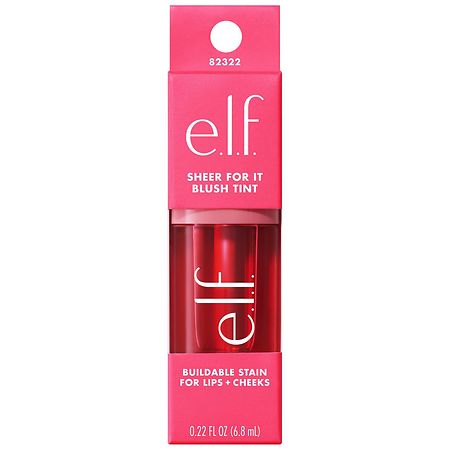


e.l.f. Sheer For It Blush Tint - Buildable Stain For Lips + Cheek - Pink Positive - 0.22 fl oz
Analysis updated October 2026 · How Scout scores
At a glance
Summary
This blush tint contains beneficial ingredients like glycerin and hydrolyzed sodium hyaluronate, which provide hydration and improve skin elasticity. However, it also includes synthetic dyes and PEG compounds, which are associated with moderate processing and potential skin irritation. The presence of phenoxyethanol as a preservative is common but can be a concern for sensitive skin types.
Key ingredients 20
Hydrolyzed Sodium HyaluronateVery Good
Hydrolyzed Sodium Hyaluronate is a form of hyaluronic acid that provides intense hydration to the skin. It is known for its ability to retain moisture and improve skin elasticity. It is considered highly beneficial for skin health.
Risks
There are minimal risks associated with this ingredient.
Benefits
It provides deep hydration and improves skin texture and elasticity.
GlycerinGood
Glycerin is a humectant that attracts moisture to the skin, helping to keep it hydrated. It is widely used in skincare for its moisturizing properties. It is considered safe and beneficial for most skin types.
Risks
There are minimal risks associated with glycerin, though it may cause irritation in very sensitive skin.
Benefits
Glycerin helps maintain skin hydration and improves skin barrier function.
Water (Aqua)Neutral
Water is a common solvent used in cosmetics to dissolve other ingredients. It helps in the application and absorption of the product. It is generally considered safe and non-irritating.
Risks
There are no significant risks associated with water in cosmetics.
Benefits
Water helps in hydrating the skin and acts as a base for other ingredients.
PPG-26-Buteth-26Neutral
PPG-26-Buteth-26 is a synthetic polymer used as an emollient and surfactant in cosmetics. It helps in improving the texture and spreadability of the product. It is generally considered safe for use in cosmetics.
Risks
There are no significant risks associated with this ingredient in the concentrations used in cosmetics.
Benefits
It enhances the texture and application of the product.
PEG-40 Hydrogenated Castor OilNeutral
PEG-40 Hydrogenated Castor Oil is an emulsifier and surfactant that helps blend oil and water-based ingredients. It is commonly used in cosmetics for its stabilizing properties. It is generally considered safe, though it may cause irritation in some individuals.
Risks
There is a potential risk of irritation, especially in sensitive skin.
Benefits
It helps in stabilizing formulations and improving product consistency.
HydroxyacetophenoneNeutral
Hydroxyacetophenone is an antioxidant and preservative booster used in cosmetics. It helps in stabilizing formulations and enhancing the efficacy of preservatives. It is generally considered safe for use in cosmetics.
Risks
There are minimal risks associated with this ingredient.
Benefits
It provides antioxidant benefits and enhances product stability.
Diethylhexyl SyringylidenemalonateNeutral
Diethylhexyl Syringylidenemalonate is an antioxidant used in cosmetics to protect the skin from free radical damage. It helps in maintaining the integrity of the product. It is considered safe for use in cosmetics.
Risks
There are no significant risks associated with this ingredient.
Benefits
It provides antioxidant protection and helps in maintaining product stability.
Xanthan GumNeutral
Xanthan Gum is a natural thickening agent used to stabilize and thicken cosmetic formulations. It helps in improving the texture and consistency of products. It is generally considered safe for use in cosmetics.
Risks
There are no significant risks associated with this ingredient.
Benefits
It helps in stabilizing formulations and improving product texture.
Caprylyl GlycolNeutral
Caprylyl Glycol is a skin conditioning agent and preservative used in cosmetics. It helps in moisturizing the skin and enhancing the efficacy of preservatives. It is generally considered safe for use in cosmetics.
Risks
There are minimal risks associated with this ingredient.
Benefits
It provides moisturizing benefits and enhances product preservation.
EthylhexylglycerinNeutral
Ethylhexylglycerin is a conditioning agent and preservative enhancer used in cosmetics. It helps in improving skin feel and boosting the effectiveness of preservatives. It is generally considered safe for use in cosmetics.
Risks
There are minimal risks associated with this ingredient.
Benefits
It enhances skin feel and improves product preservation.
Caprylic/Capric TriglycerideNeutral
Caprylic/Capric Triglyceride is an emollient derived from coconut oil and glycerin. It helps in moisturizing the skin and improving product texture. It is generally considered safe for use in cosmetics.
Risks
There are minimal risks associated with this ingredient.
Benefits
It provides moisturizing benefits and enhances product texture.
Sodium CitrateNeutral
Sodium Citrate is a buffering agent used to control the pH of cosmetic formulations. It helps in maintaining product stability and efficacy. It is generally considered safe for use in cosmetics.
Risks
There are no significant risks associated with this ingredient.
Benefits
It helps in maintaining product stability and pH balance.
Citric AcidNeutral
Citric Acid is used as a pH adjuster and exfoliant in cosmetics. It helps in maintaining the acidity of the product and can provide mild exfoliation. It is generally considered safe for use in cosmetics.
Risks
High concentrations can cause irritation, especially in sensitive skin.
Benefits
It helps in maintaining product pH and provides mild exfoliation.
Red 28 (CI 45410)Neutral
Red 28 is a synthetic dye used to impart color to cosmetic products. It is commonly used in makeup for its vibrant hue. It is generally considered safe for use in cosmetics.
Risks
There are minimal risks associated with this ingredient.
Benefits
It provides vibrant color to cosmetic products.
Yellow 6 (CI 15985)Neutral
Yellow 6 is a synthetic dye used to add color to cosmetic products. It is widely used for its bright yellow hue. It is generally considered safe for use in cosmetics.
Risks
There are minimal risks associated with this ingredient.
Benefits
It provides bright color to cosmetic products.
Red 40 (CI 16035)Neutral
Red 40 is a synthetic dye used to impart color to cosmetics. It is popular for its vibrant red hue. It is generally considered safe for use in cosmetics.
Risks
There are minimal risks associated with this ingredient.
Benefits
It provides vibrant color to cosmetic products.
Red 33 (CI 17200)Neutral
Red 33 is a synthetic dye used in cosmetics to provide color. It is commonly used for its bright red hue. It is generally considered safe for use in cosmetics.
Risks
There are minimal risks associated with this ingredient.
Benefits
It provides bright color to cosmetic products.
Blue 1 (CI 42090)Neutral
Blue 1 is a synthetic dye used to add color to cosmetics. It is known for its vibrant blue hue. It is generally considered safe for use in cosmetics.
Risks
There are minimal risks associated with this ingredient.
Benefits
It provides vibrant color to cosmetic products.
PhenoxyethanolBad
Processed additive flagged under Scout's ingredient doctrine.
Risks
High concentrations can cause irritation and allergic reactions.
Benefits
It helps in preserving the product and preventing contamination.
Disodium EDTABad
Processed additive flagged under Scout's ingredient doctrine.
Risks
There are minimal risks associated with this ingredient.
Benefits
It enhances product stability and prevents degradation.
Get the full breakdown in the Scout appTake Scout shopping
Scan any product to see lab results, healthy alternatives, and your personalized analysis.
Download on theApp Store GET IT ONGoogle Play