
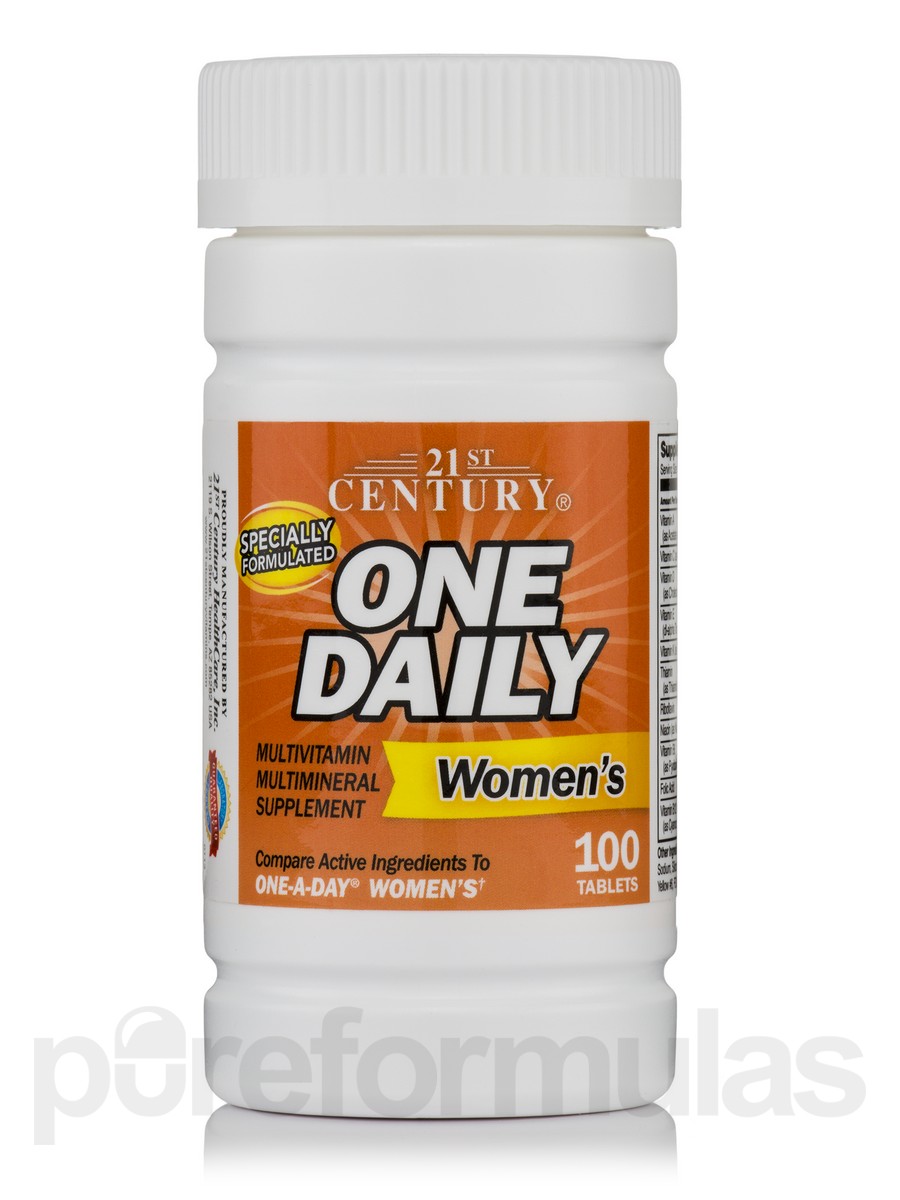


21st Century One Daily Women s 100 Tabs
Summary
This multivitamin contains a range of essential vitamins such as Vitamin A, C, D3, and E, which are beneficial for various bodily functions including immune support and bone health. However, the presence of synthetic additives like polyvinyl alcohol and titanium dioxide, which serve no nutritional purpose and may raise safety concerns, detracts from its overall quality. The formulation is moderately processed, which is typical for supplements, but the inclusion of these additives impacts its rating.
At a glance
Key ingredients 26
Vitamin AVery Good
Vitamin A is essential for maintaining healthy vision, skin, and immune function. It is a high-quality active ingredient in supplements, often derived from animal sources or synthesized. Its bioavailability is crucial for effective absorption and utilization in the body.
Risks
Excessive intake can lead to toxicity, causing liver damage and other health issues.
Benefits
Supports vision, immune function, and skin health.
Vitamin CVery Good
Vitamin C is a powerful antioxidant that supports immune health and skin integrity. It is commonly found in fruits and vegetables and is a high-quality active ingredient in supplements. Its water-soluble nature ensures it is easily absorbed and utilized by the body.
Risks
High doses may cause gastrointestinal discomfort.
Benefits
Enhances immune function and promotes collagen synthesis.
Vitamin D3Very Good
Vitamin D3 is crucial for calcium absorption and bone health. It is often derived from lanolin or fish oil, making it a high-quality active ingredient. Its role in maintaining bone density and immune function is well-documented.
Risks
Excessive intake can lead to hypercalcemia, affecting heart and kidney function.
Benefits
Supports bone health and immune system regulation.
Vitamin EVery Good
Vitamin E acts as an antioxidant, protecting cells from oxidative damage. It is typically derived from natural sources like nuts and seeds, ensuring high quality. Its fat-soluble nature aids in protecting cell membranes and supporting skin health.
Risks
High doses may interfere with blood clotting.
Benefits
Protects cells from oxidative stress and supports skin health.
Vitamin KVery Good
Vitamin K is essential for blood clotting and bone metabolism. It is often sourced from leafy greens or synthesized for supplements. Its role in activating proteins involved in blood coagulation and bone health is critical.
Risks
Can interact with anticoagulant medications.
Benefits
Supports blood clotting and bone health.
ThiaminVery Good
Thiamin (Vitamin B-1) is vital for energy metabolism and nerve function. It is commonly found in whole grains and is a high-quality active ingredient in supplements. Its role in converting carbohydrates into energy is essential for cellular function.
Benefits
Supports energy metabolism and nerve function.
RiboflavinVery Good
Riboflavin (Vitamin B-2) is important for energy production and cellular function. It is naturally present in dairy products and is a high-quality active ingredient. Its role in breaking down proteins, fats, and carbohydrates is crucial for energy production.
Benefits
Aids in energy production and cellular function.
NiacinVery Good
Niacin (Vitamin B-3) supports energy metabolism and DNA repair. It is found in meat and fish and is a high-quality active ingredient in supplements. Its role in converting nutrients into energy and maintaining healthy skin is well-recognized.
Risks
High doses can cause flushing and liver damage.
Benefits
Supports energy metabolism and skin health.
Vitamin B6Very Good
Vitamin B6 is crucial for amino acid metabolism and neurotransmitter synthesis. It is found in poultry and fish, making it a high-quality active ingredient. Its role in brain health and immune function is significant.
Risks
Excessive intake can lead to nerve damage.
Benefits
Supports brain health and immune function.
FolateVery Good
Folate (as Folic Acid) is essential for DNA synthesis and cell division. It is often added to supplements to prevent neural tube defects in pregnancy. Its role in red blood cell formation and fetal development is critical.
Risks
High doses may mask vitamin B12 deficiency.
Benefits
Supports DNA synthesis and fetal development.
Vitamin B12Very Good
Vitamin B12 is vital for nerve function and red blood cell formation. It is found in animal products and is a high-quality active ingredient in supplements. Its role in preventing anemia and supporting neurological health is well-established.
Benefits
Supports nerve function and red blood cell formation.
BiotinVery Good
Biotin is important for carbohydrate, fat, and protein metabolism. It is found in eggs and nuts, making it a high-quality active ingredient. Its role in maintaining healthy hair, skin, and nails is well-known.
Benefits
Supports metabolism and maintains healthy hair, skin, and nails.
Pantothenic AcidVery Good
Pantothenic Acid is essential for synthesizing coenzyme A, crucial for fatty acid metabolism. It is found in meat and vegetables, ensuring high quality. Its role in energy production and hormone synthesis is vital.
Benefits
Supports energy production and hormone synthesis.
CalciumVery Good
Calcium is crucial for bone health and muscle function. It is often derived from dairy or mineral sources, ensuring high quality. Its role in maintaining bone density and supporting cardiovascular health is significant.
Risks
Excessive intake can lead to kidney stones and impaired absorption of other minerals.
Benefits
Supports bone health and muscle function.
IronVery Good
Iron is essential for oxygen transport and energy production. It is often included in supplements to prevent anemia, especially in women. Its role in hemoglobin formation and energy metabolism is critical.
Risks
Excessive intake can cause gastrointestinal issues and toxicity.
Benefits
Prevents anemia and supports energy production.
ZincVery Good
Zinc is important for immune function and wound healing. It is found in meat and shellfish, making it a high-quality active ingredient. Its role in enzyme function and DNA synthesis is well-documented.
Risks
High doses can interfere with copper absorption and cause nausea.
Benefits
Supports immune function and wound healing.
IodineVery Good
Iodine is crucial for thyroid hormone production and metabolic regulation. It is often added to supplements to prevent deficiency. Its role in supporting metabolic rate and cognitive function is significant.
Risks
Excessive intake can lead to thyroid dysfunction.
Benefits
Supports thyroid function and metabolic regulation.
MagnesiumVery Good
Magnesium is essential for muscle and nerve function, as well as bone health. It is found in nuts and seeds, ensuring high quality. Its role in over 300 enzymatic reactions in the body is critical.
Risks
High doses can cause diarrhea and abdominal cramping.
Benefits
Supports muscle and nerve function, and bone health.
CelluloseNeutral
Cellulose is a common filler and binder used in supplements. It is derived from plant sources and is generally considered safe. Its role is primarily structural, with no significant nutritional impact.
See more about Cellulose →Magnesium OxideNeutral
Magnesium oxide is used as a magnesium supplement and antacid. It is a common form of magnesium in supplements due to its high magnesium content. However, its bioavailability is lower compared to other forms.
Risks
May cause gastrointestinal discomfort in high doses.
Benefits
Provides magnesium, which is essential for various bodily functions.
StarchNeutral
Starch is used as a filler and binder in supplements. It is derived from plant sources and is generally considered safe. Its role is primarily structural, with no significant nutritional impact.
Polyvinyl AlcoholBad
Polyvinyl alcohol is a synthetic polymer used as a coating agent in supplements. It is not naturally derived and may raise concerns about synthetic additives. Its role is primarily functional, with no nutritional benefits.
Risks
Potential concerns about synthetic additives and their long-term health effects.
Stearic AcidNeutral
Stearic acid is a fatty acid used as a lubricant in supplement manufacturing. It is derived from both animal and plant sources and is generally considered safe. Its role is primarily functional, with no significant nutritional impact.
See more about Stearic Acid →Croscarmellose SodiumNeutral
Croscarmellose sodium is a disintegrant used in tablets to aid dissolution. It is a chemically modified cellulose derivative and is generally considered safe. Its role is primarily functional, with no nutritional benefits.
Titanium DioxideBad
Titanium dioxide is used as a whitening agent in supplements. It is a synthetic additive with potential concerns about safety and long-term health effects. Its role is primarily aesthetic, with no nutritional benefits.
Risks
Potential concerns about safety and long-term health effects.
Silicon DioxideNeutral
Silicon dioxide is used as an anti-caking agent in supplements. It is naturally occurring and is generally considered safe. Its role is primarily functional, with no significant nutritional impact.
See more about Silicon Dioxide →Processing
Processed Foods
Get the full breakdown in the Scout app
Scan any product to see lab results, healthy alternatives, and your personalized analysis.
Download on theApp Store