
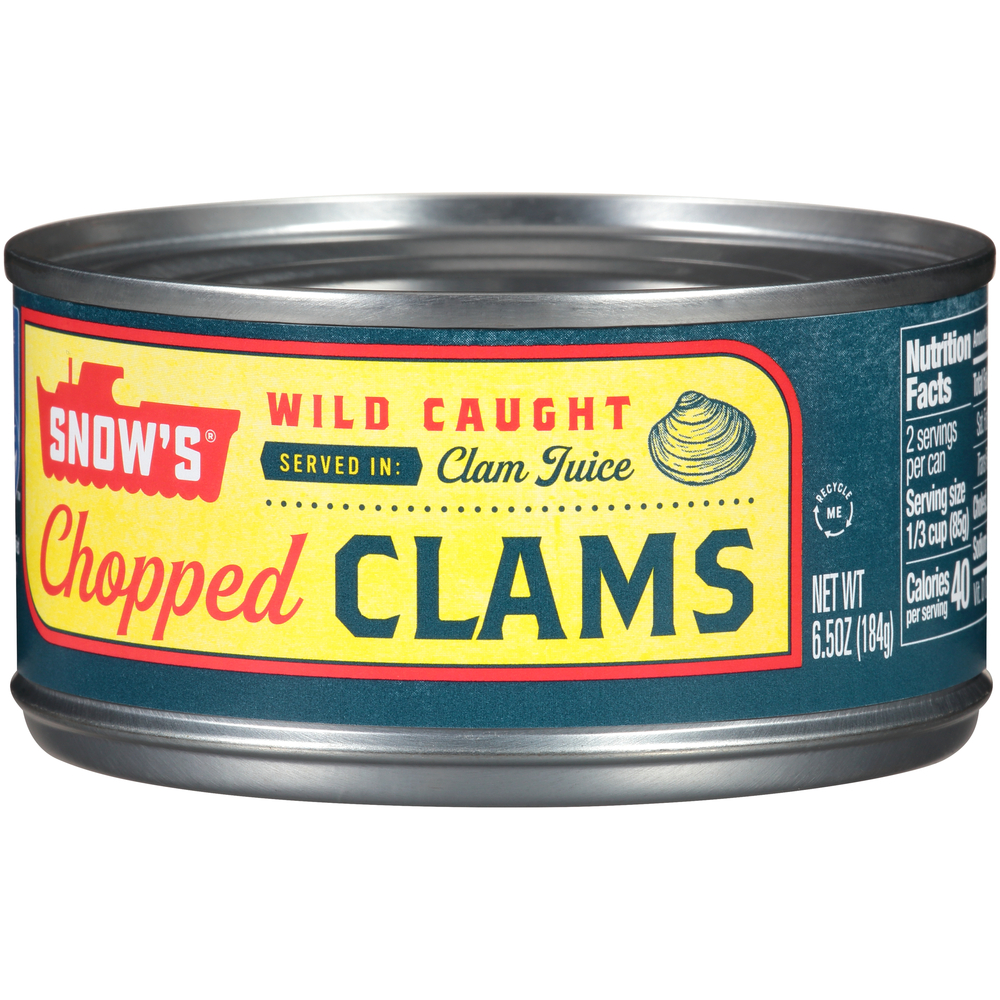


Snow’s Chopped Clams
Analysis updated August 2026 · How Scout scores
At a glance
Summary
This product contains clams, which are a good source of protein, but it also includes added sugar and sodium tripolyphosphate, a synthetic additive. The presence of these additives, along with the processed nature of the product, impacts its overall healthiness. While the clams provide nutritional benefits, the added ingredients and processing level limit the score.
Key ingredients 6
Clams in Clam JuiceGood
Clams are a natural source of protein and essential nutrients, making them a healthy ingredient in this product.
WaterNeutral
Water is used as a base and does not significantly impact the nutritional quality or healthfulness of the product.
See more about Water →SaltNeutral
Salt is added for flavor and preservation, but in moderation, it is generally acceptable in processed foods.
See more about Salt →SugarBad
Sugar is included to enhance flavor but can contribute to excessive calorie intake if consumed in large amounts.
See more about Sugar →Sodium TripolyphosphateBad
This additive is used as a preservative and stabilizer, but some consumers prefer to avoid artificial additives in their food.
See more about Sodium Tripolyphosphate →Calcium Disodium EDTABad
EDTA is a preservative that helps prevent spoilage, but it is an artificial chemical that some consumers choose to avoid.
See more about Calcium Disodium EDTA →Processing
Processed Foods
Get the full breakdown in the Scout appTake Scout shopping
Scan any product to see lab results, healthy alternatives, and your personalized analysis.
Download on theApp Store GET IT ONGoogle PlayAmazon pricing & content
Amazon price as of . Product prices and availability are accurate as of the date/time indicated and are subject to change. Any price and availability information displayed on Amazon.com at the time of purchase will apply to the purchase of this product.
CERTAIN CONTENT THAT APPEARS ON THIS SITE COMES FROM AMAZON. THIS CONTENT IS PROVIDED “AS IS” AND IS SUBJECT TO CHANGE OR REMOVAL AT ANY TIME.