
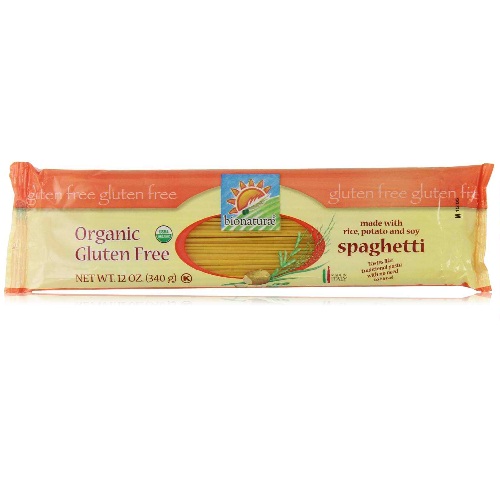


BIONATURAE, ORGANIC GLUTEN FREE SPAGHETTI
Analysis updated October 2026 · How Scout scores
At a glance
Summary
This product is made from organic ingredients, which is a positive aspect as it ensures the absence of synthetic pesticides and GMOs. However, it includes organic soy flour, which can contain anti-nutrients affecting mineral absorption, and the product is processed, limiting its score potential. The use of organic rice flour and the absence of harmful additives contribute positively to its rating.
Key ingredients 4
Organic rice flourGood
Organic rice flour is a clean, gluten-free carbohydrate source. It is minimally processed and retains some of the grain's natural nutrients. Being organic, it is free from synthetic pesticides and fertilizers.
Benefits
Provides a gluten-free source of carbohydrates and is suitable for those with gluten intolerance or celiac disease.
Organic potato starchNeutral
Organic potato starch is used as a thickening agent and provides a gluten-free alternative. It is highly processed and primarily serves as a carbohydrate source. Being organic, it avoids synthetic additives.
Risks
Excessive consumption may lead to rapid spikes in blood sugar levels.
Benefits
Offers a gluten-free thickening option and is suitable for gluten-sensitive individuals.
Organic rice starchNeutral
Organic rice starch is a refined carbohydrate used for texture and consistency. It is highly processed and lacks significant nutritional value. The organic certification ensures it is free from synthetic chemicals.
Risks
May contribute to high glycemic load if consumed in large quantities.
Benefits
Provides a gluten-free option for improving texture in food products.
Organic soy flourBad
Organic soy flour is a plant-based protein source but may contain anti-nutrients that affect mineral absorption. It is less beneficial compared to animal-based proteins. The organic label ensures it is non-GMO and free from synthetic pesticides.
Risks
Contains phytoestrogens which may affect hormone balance in sensitive individuals.
Benefits
Offers a plant-based protein source and is suitable for vegetarians and vegans.
Processing
Processed Foods
Get the full breakdown in the Scout appTake Scout shopping
Scan any product to see lab results, healthy alternatives, and your personalized analysis.
Download on theApp Store GET IT ONGoogle Play