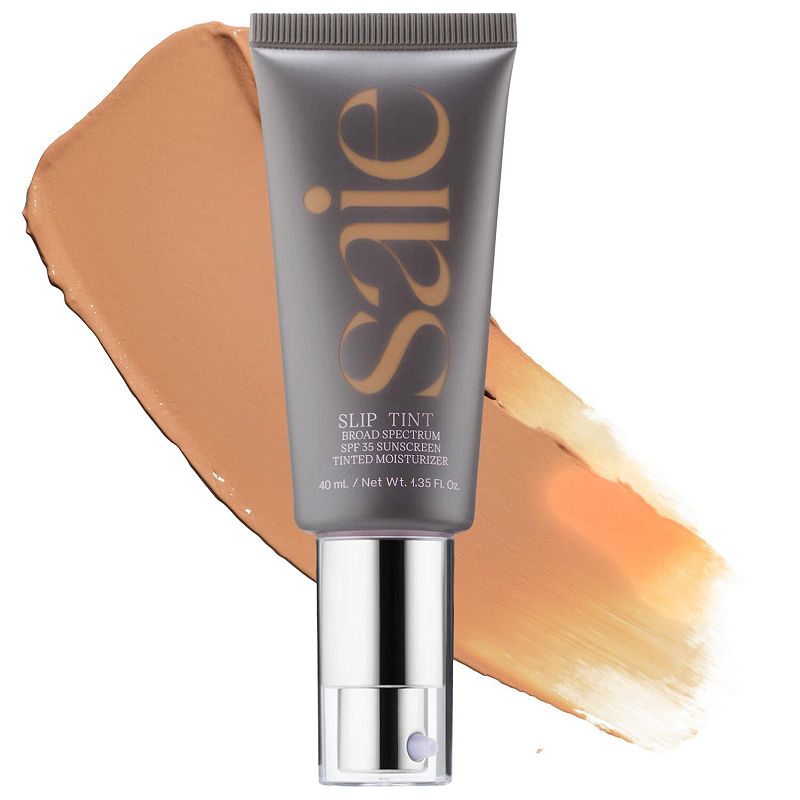
Saie Slip Tint Tinted Moisturizer - Four And Half: Medium - Golden
At a glance
Summary
This tinted moisturizer features a clean formulation with beneficial ingredients such as zinc oxide for sun protection, grape seed oil, and argan oil for moisturizing and antioxidant benefits. The inclusion of natural preservatives and skin-friendly components like jojoba esters and beeswax further enhances its safety profile. The absence of harsh chemicals or synthetic fragrances contributes to its high rating, making it suitable for sensitive skin. Its plastic packaging can shed microplastics into the product and lowers its score.
Key ingredients 27
Vitis Vinifera (Grape) Seed OilVery Good
Grape Seed Oil is rich in antioxidants and essential fatty acids. It helps to moisturize and protect the skin from environmental damage.
Risks
There are minimal risks, though it may cause allergic reactions in some individuals.
Benefits
It provides nourishment and helps in maintaining skin elasticity.
Argania Spinosa Kernel OilVery Good
Argan Oil is rich in essential fatty acids and vitamin E. It is known for its moisturizing and anti-aging properties.
Risks
There are minimal risks, though it may cause allergic reactions in some individuals.
Benefits
It deeply nourishes the skin and helps in reducing the appearance of fine lines.
Sodium Hyaluronate CrosspolymerVery Good
Sodium Hyaluronate Crosspolymer is a form of hyaluronic acid that provides long-lasting hydration. It helps to plump and smooth the skin.
Risks
There are minimal risks associated with its use in cosmetics.
Benefits
It enhances skin hydration and reduces the appearance of fine lines.
Jojoba EstersVery Good
Jojoba Esters are derived from jojoba oil and provide moisturizing and conditioning benefits. They mimic the skin's natural oils.
Risks
There are minimal risks, though it may cause mild irritation in very sensitive skin.
Benefits
They help in maintaining skin hydration and improving skin texture.
BeeswaxVery Good
Beeswax is a natural wax that provides a protective barrier on the skin. It helps to lock in moisture and protect against environmental damage.
Risks
There are minimal risks, though it may cause allergic reactions in some individuals.
Benefits
It enhances skin hydration and provides a natural barrier against irritants.
Aloe Barbadensis LeafVery Good
Aloe Vera is known for its soothing and hydrating properties. It helps to calm irritated skin and provide moisture.
Risks
There are minimal risks, though it may cause allergic reactions in some individuals.
Benefits
It provides soothing benefits and helps in maintaining skin hydration.
Zinc OxideGood
Zinc Oxide is a mineral sunscreen agent that provides broad-spectrum UV protection. It is non-comedogenic and suitable for sensitive skin types.
Risks
There are minimal risks associated with Zinc Oxide, though it may leave a white cast on darker skin tones.
Benefits
It offers effective sun protection and is often used in formulations for sensitive skin.
Tocopheryl AcetateGood
Tocopheryl Acetate is a form of Vitamin E, an antioxidant that helps protect the skin from free radical damage. It also has moisturizing properties.
Risks
There are minimal risks, though it may cause irritation in very sensitive skin.
Benefits
It supports skin health and helps in maintaining a youthful appearance.
Leuconostoc/Radish Root Ferment FiltrateGood
This ingredient is a natural preservative derived from fermented radish root. It helps to inhibit the growth of harmful bacteria in cosmetic products.
Risks
There are minimal risks associated with its use in cosmetics.
Benefits
It provides antimicrobial benefits and helps in preserving the product naturally.
GlycerinGood
Glycerin is a humectant that attracts moisture to the skin. It helps to keep the skin hydrated and soft.
Risks
There are minimal risks, though it may cause irritation in very sensitive skin.
Benefits
It enhances skin hydration and improves skin barrier function.
LactobacillusGood
Lactobacillus is a probiotic ingredient that helps to balance the skin's microbiome. It supports skin health and reduces inflammation.
Risks
There are minimal risks associated with its use in cosmetics.
Benefits
It promotes a healthy skin barrier and reduces the risk of irritation.
Viola Tricolor ExtractGood
Viola Tricolor Extract is a botanical ingredient known for its soothing and anti-inflammatory properties. It helps to calm irritated skin.
Risks
There are minimal risks, though it may cause allergic reactions in some individuals.
Benefits
It provides soothing benefits and helps in reducing skin redness.
BisabololGood
Bisabolol is a natural compound derived from chamomile that has anti-inflammatory and soothing properties. It helps to calm and protect the skin.
Risks
There are minimal risks, though it may cause irritation in very sensitive skin.
Benefits
It provides soothing benefits and helps in reducing skin irritation.
Glycyrrhiza Glabra (Licorice) Root ExtractGood
Licorice Root Extract is known for its skin brightening and anti-inflammatory properties. It helps to reduce hyperpigmentation and soothe irritated skin.
Risks
There are minimal risks, though it may cause allergic reactions in some individuals.
Benefits
It helps in brightening the skin and reducing the appearance of dark spots.
Sodium HyaluronateGood
Sodium Hyaluronate is a form of hyaluronic acid that provides deep hydration to the skin. It helps to plump and smooth the skin.
Risks
There are minimal risks associated with its use in cosmetics.
Benefits
It enhances skin hydration and reduces the appearance of fine lines.
Cocos Nucifera (Coconut) Fruit ExtractGood
Coconut Fruit Extract is rich in fatty acids and provides moisturizing benefits. It helps to nourish and soften the skin.
Risks
There are minimal risks, though it may cause allergic reactions in some individuals.
Benefits
It enhances skin hydration and provides nourishment.
Iron OxidesGood
Beneficial ingredient — whole-food or functional value in this product class.
Risks
There are minimal risks associated with their use in cosmetics.
Benefits
They provide natural color and are safe for use in cosmetics.
MicaGood
Beneficial ingredient — whole-food or functional value in this product class.
Risks
There are minimal risks, though it may cause irritation in very sensitive skin.
Benefits
It provides a natural shimmer and enhances the appearance of the product.
WaterNeutral
Water is a common solvent used in cosmetic formulations. It helps dissolve other ingredients and provides a base for the product.
Risks
There are no significant risks associated with water in cosmetic formulations.
Benefits
It hydrates the skin and helps in the application of the product.
Coco-Caprylate/CaprateNeutral
Coco-Caprylate/Caprate is an emollient derived from coconut oil and caprylic acid. It provides a lightweight, non-greasy feel to the skin.
Risks
There are minimal risks, though it may cause irritation in very sensitive individuals.
Benefits
It enhances skin softness and smoothness without leaving a greasy residue.
C15-19 AlkaneNeutral
C15-19 Alkane is a hydrocarbon used as an emollient and solvent in cosmetics. It provides a smooth application and enhances the texture of the product.
Risks
There are minimal risks associated with its use in cosmetics.
Benefits
It helps in improving the spreadability of the product.
Isocetyl Stearoyl StearateNeutral
Isocetyl Stearoyl Stearate is an ester used as an emollient and thickening agent. It provides a silky feel to the skin.
Risks
There are minimal risks, though it may cause mild irritation in sensitive skin.
Benefits
It enhances the texture and feel of the product on the skin.
TribeheninNeutral
Tribehenin is an emollient and thickening agent used in cosmetics. It provides a smooth application and enhances the texture of the product.
Risks
There are minimal risks associated with its use in cosmetics.
Benefits
It helps in improving the spreadability and feel of the product.
Glyceryl StearateNeutral
Glyceryl Stearate is an emulsifier that helps to blend oil and water-based ingredients. It provides a smooth texture to the product.
Risks
There are minimal risks associated with its use in cosmetics.
Benefits
It helps in stabilizing the formulation and improving product consistency.
Acacia Senegal GumNeutral
Acacia Senegal Gum is a natural gum used as a thickening agent in cosmetics. It provides a smooth texture and enhances product stability.
Risks
There are minimal risks associated with its use in cosmetics.
Benefits
It helps in improving the texture and consistency of the product.
Xanthan GumNeutral
Xanthan Gum is a natural thickening agent used in cosmetics. It provides a smooth texture and helps to stabilize the formulation.
Risks
There are minimal risks associated with its use in cosmetics.
Benefits
It enhances the texture and stability of the product.
Titanium DioxideNeutral
Titanium Dioxide is a mineral sunscreen agent that provides UV protection. It is often used in formulations for sensitive skin.
Risks
There are minimal risks, though it may leave a white cast on darker skin tones.
Benefits
It offers effective sun protection and is suitable for sensitive skin.
Get the full breakdown in the Scout appTake Scout shopping
Scan any product to see lab results, healthy alternatives, and your personalized analysis.
Are you Saie? Fix an error Get the badge Get tested
Amazon pricing & content
Amazon price as of . Product prices and availability are accurate as of the date/time indicated and are subject to change. Any price and availability information displayed on Amazon.com at the time of purchase will apply to the purchase of this product.
CERTAIN CONTENT THAT APPEARS ON THIS SITE COMES FROM AMAZON. THIS CONTENT IS PROVIDED “AS IS” AND IS SUBJECT TO CHANGE OR REMOVAL AT ANY TIME.