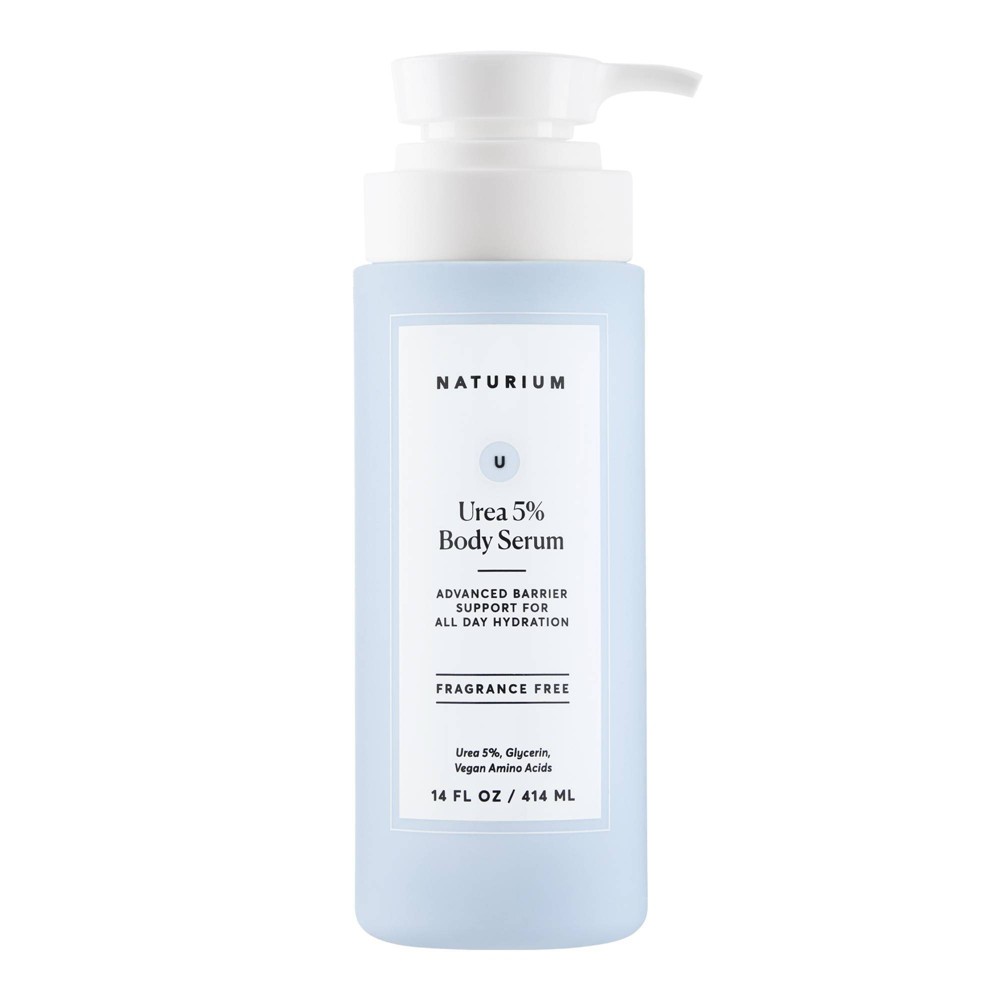
Naturium Urea 5% Body Serum - 14 fl oz
At a glance
Summary
This body serum contains a range of beneficial ingredients such as glycerin, urea, and meadowfoam seed oil, which provide hydration and moisturizing benefits. The presence of phenoxyethanol as a preservative is a minor concern due to its potential for skin irritation, but it is balanced by the overall clean and effective formulation. The product avoids major harmful chemicals and has a relatively short and recognizable ingredient list, contributing to its favorable rating. Its plastic packaging can shed microplastics into the product and lowers its score.
Key ingredients 22
UreaVery Good
Urea is a natural moisturizing factor that helps to maintain skin hydration. It also has mild exfoliating properties.
Risks
High concentrations can cause irritation, but it is generally safe in cosmetic formulations.
Benefits
Urea improves skin texture and hydration, making it softer and smoother.
Limnanthes Alba Seed OilVery Good
Also known as meadowfoam seed oil, it is a stable oil that provides moisturizing benefits. It is rich in fatty acids.
Risks
There are minimal risks, though it can cause allergic reactions in rare cases.
Benefits
It helps to lock in moisture and provides antioxidant benefits.
GlycerinGood
Glycerin is a humectant that attracts moisture to the skin. It is widely used in skincare for its hydrating properties.
Risks
There are minimal risks associated with glycerin, though it can cause irritation in very sensitive skin.
Benefits
Glycerin helps maintain skin hydration and improves skin barrier function.
Caprylic/Capric TriglycerideGood
This ingredient is an emollient derived from coconut oil and glycerin. It helps to smooth and soften the skin.
Risks
There are minimal risks, though it can cause breakouts in acne-prone skin.
Benefits
It provides a lightweight, non-greasy moisturizing effect.
Haematococcus Pluvialis ExtractGood
This extract is a source of astaxanthin, a powerful antioxidant. It helps protect the skin from oxidative stress.
Risks
There are minimal risks, though it can cause irritation in sensitive individuals.
Benefits
It provides antioxidant protection and may improve skin elasticity.
Magnesium PCAGood
Magnesium PCA is a mineral salt that helps to hydrate and condition the skin. It also has antioxidant properties.
Risks
There are minimal risks associated with this ingredient.
Benefits
It helps to maintain skin hydration and provides antioxidant benefits.
Collagen Amino AcidsGood
Collagen amino acids help to support skin elasticity and hydration. They are derived from the breakdown of collagen proteins.
Risks
There are minimal risks, though they may not penetrate deeply into the skin.
Benefits
They help to improve skin texture and hydration.
Rosmarinus Officinalis Leaf ExtractGood
Rosemary leaf extract is a natural antioxidant. It helps to protect the skin from oxidative damage.
Risks
There are minimal risks, though it can cause irritation in sensitive skin.
Benefits
It provides antioxidant protection and may have anti-inflammatory properties.
Sodium HyaluronateGood
Sodium hyaluronate is a form of hyaluronic acid, a powerful humectant. It helps to retain moisture in the skin.
Risks
There are minimal risks, though it can cause irritation in very sensitive skin.
Benefits
It provides intense hydration and helps to plump the skin.
WaterNeutral
Water is a common solvent used in cosmetic formulations. It helps dissolve other ingredients and provides a base for the product.
Risks
There are no significant risks associated with water in cosmetics.
Benefits
Water hydrates the skin and helps in the application of the product.
PropanediolNeutral
Propanediol is a glycol used as a solvent and skin-conditioning agent. It enhances the absorption of other ingredients.
Risks
It can cause irritation in sensitive skin types.
Benefits
Propanediol improves the texture and feel of the product on the skin.
Cetearyl AlcoholNeutral
Cetearyl alcohol is a fatty alcohol used as an emollient and thickener. It helps to stabilize and thicken formulations.
Risks
There are minimal risks, though it can cause irritation in sensitive skin.
Benefits
It provides a creamy texture and helps to soften the skin.
Sodium Stearoyl GlutamateNeutral
This ingredient is a mild surfactant and emulsifier. It helps to stabilize formulations and improve texture.
Risks
There are minimal risks associated with this ingredient.
Benefits
It helps to improve the texture and stability of the product.
HydroxyacetophenoneNeutral
Hydroxyacetophenone is an antioxidant and preservative. It helps to protect the product from degradation.
Risks
There are minimal risks associated with this ingredient.
Benefits
It helps to stabilize the formulation and provides antioxidant benefits.
Citric AcidNeutral
Citric acid is used to adjust the pH of cosmetic formulations. It also has mild exfoliating properties.
Risks
High concentrations can cause irritation, but it is generally safe in cosmetic formulations.
Benefits
It helps to maintain the stability and effectiveness of the product.
Sodium CitrateNeutral
Sodium citrate is used as a buffering agent to maintain pH balance. It helps to stabilize formulations.
Risks
There are minimal risks associated with this ingredient.
Benefits
It helps to maintain the stability and effectiveness of the product.
Sodium HydroxideNeutral
Sodium hydroxide is used to adjust the pH of cosmetic formulations. It is a strong base that neutralizes acids.
Risks
High concentrations can cause irritation, but it is generally safe in cosmetic formulations.
Benefits
It helps to maintain the stability and effectiveness of the product.
Tetrasodium Glutamate DiacetateNeutral
This ingredient is a chelating agent that helps to stabilize formulations. It binds metal ions to prevent degradation.
Risks
There are minimal risks associated with this ingredient.
Benefits
It helps to maintain the stability and effectiveness of the product.
EthylhexylglycerinNeutral
Ethylhexylglycerin is a preservative and skin-conditioning agent. It enhances the efficacy of other preservatives.
Risks
There are minimal risks, though it can cause irritation in sensitive skin.
Benefits
It helps to preserve the product and improve skin feel.
LecithinBad
Processed additive flagged under Scout's ingredient doctrine.
Risks
There are minimal risks, though it can cause irritation in sensitive skin.
Benefits
It helps to improve the texture and stability of the product.
Acrylates/C10-30 Alkyl Acrylate CrosspolymerBad
Processed additive flagged under Scout's ingredient doctrine.
Risks
There are minimal risks, though it can cause irritation in sensitive skin.
Benefits
It provides a smooth texture and helps to stabilize the formulation.
PhenoxyethanolBad
Phenoxyethanol is a preservative used to prevent microbial growth. It is effective but can be irritating to the skin.
Risks
It can cause irritation and allergic reactions, especially in sensitive individuals.
Benefits
It helps to preserve the product and extend its shelf life.
Processing
Processed Foods
Get the full breakdown in the Scout appTake Scout shopping
Scan any product to see lab results, healthy alternatives, and your personalized analysis.
Amazon pricing & content
Amazon price as of . Product prices and availability are accurate as of the date/time indicated and are subject to change. Any price and availability information displayed on Amazon.com at the time of purchase will apply to the purchase of this product.
CERTAIN CONTENT THAT APPEARS ON THIS SITE COMES FROM AMAZON. THIS CONTENT IS PROVIDED “AS IS” AND IS SUBJECT TO CHANGE OR REMOVAL AT ANY TIME.