
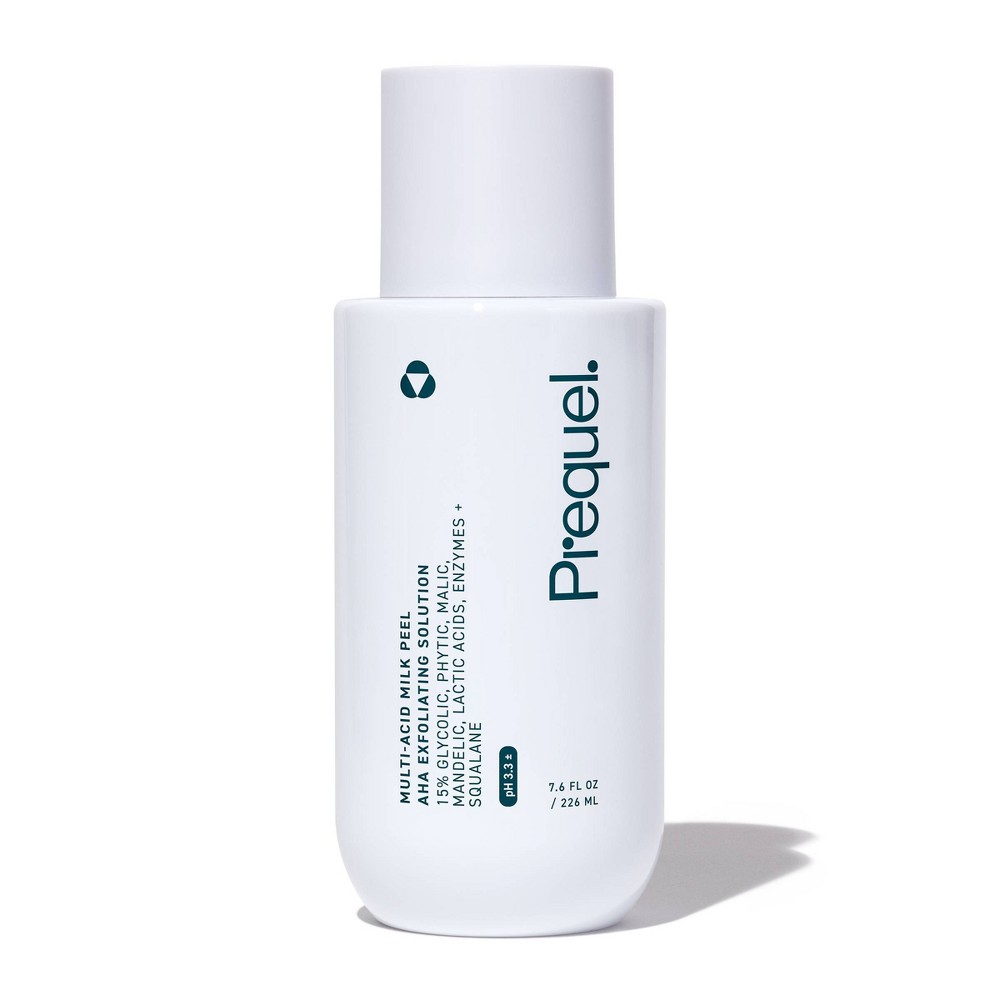

Prequel Multi-Acid Milk Peel - 7.6 fl oz: Exfoliating Unscented Liquid for Normal Skin, Face Treatment with Glycolic Acid
Analysis updated August 2026 · How Scout scores
At a glance
Summary
This product contains beneficial ingredients like glycolic acid, glycerin, and squalane, which are known for their exfoliating and moisturizing properties. However, the presence of sodium hydroxide and phenoxyethanol, which can cause skin irritation, slightly lowers its safety profile. The formulation is moderately processed with a mix of natural and synthetic components, resulting in a balanced score.
Key ingredients 28
SqualaneVery Good
Squalane is a highly effective emollient and natural antioxidant. It helps to moisturize and protect the skin barrier. It is widely used in skincare for its ability to enhance skin smoothness and hydration.
Risks
There are minimal risks associated with squalane in cosmetic formulations.
Benefits
Moisturizes and protects the skin, enhancing smoothness.
Glycolic AcidGood
Glycolic Acid is an alpha hydroxy acid (AHA) known for its exfoliating properties. It helps in removing dead skin cells and improving skin texture. It is widely used in skincare for its ability to promote cell turnover.
Risks
It can cause irritation or sensitivity, especially in higher concentrations.
Benefits
Glycolic Acid improves skin texture and promotes a brighter complexion.
GlycerinGood
Glycerin is a humectant that attracts moisture to the skin. It is widely used in skincare for its hydrating properties. It helps maintain skin's moisture balance and improves skin barrier function.
Risks
There are minimal risks associated with glycerin in cosmetic formulations.
Benefits
Glycerin provides hydration and helps maintain skin moisture.
Ethylhexyl OlivateGood
Ethylhexyl Olivate is derived from olive oil and is used as an emollient. It helps to soften and smooth the skin. It is considered a beneficial ingredient for its moisturizing properties.
Risks
There are minimal risks associated with this ingredient.
Benefits
Provides emollient properties and enhances skin smoothness.
Mandelic AcidGood
Mandelic Acid is an alpha hydroxy acid known for its gentle exfoliating properties. It is suitable for sensitive skin and helps improve skin texture. It is widely used in skincare for its ability to promote cell turnover.
Risks
May cause mild irritation in sensitive individuals.
Benefits
Gently exfoliates and improves skin texture.
Decyl GlucosideGood
Decyl Glucoside is a mild, non-ionic surfactant derived from glucose. It is known for its gentle cleansing properties and is suitable for sensitive skin. It is widely used in skincare for its ability to cleanse without stripping the skin barrier.
Risks
There are minimal risks associated with decyl glucoside in cosmetic formulations.
Benefits
Gently cleanses the skin without stripping natural oils.
Water (Aqua)Neutral
Water is a common solvent used in cosmetic formulations. It helps dissolve other ingredients and provides a base for the product. It does not have any direct benefits or risks.
Risks
There are no significant risks associated with water in cosmetic products.
Benefits
Water acts as a solvent and helps in the application of the product.
Sodium HydroxideNeutral
Standard formulation ingredient — neither beneficial nor harmful at typical use.
Risks
Potential skin irritation if used in high concentrations.
Benefits
Helps maintain the desired pH level of the product.
PropanediolNeutral
Propanediol is a glycol used as a solvent and skin-conditioning agent. It enhances the absorption of other ingredients. It is generally considered safe for use in cosmetics.
Risks
May cause mild irritation in sensitive individuals.
Benefits
Improves the texture and absorption of the product.
Hydroxyethyl Acrylate/Sodium Acryloyldimethyl Taurate CopolymerNeutral
This copolymer is used as a thickening agent and stabilizer in cosmetic formulations. It helps improve the texture and consistency of the product. It is generally considered safe for use in cosmetics.
Risks
There are no significant risks associated with this ingredient.
Benefits
Improves product texture and stability.
C13-14 IsoalkaneNeutral
C13-14 Isoalkane is used as an emollient and solvent in cosmetics. It helps to improve the spreadability of the product. It is generally considered safe for use in cosmetics.
Risks
There are no significant risks associated with this ingredient.
Benefits
Enhances product spreadability and texture.
C11-12 IsoalkaneNeutral
C11-12 Isoalkane is used as an emollient and solvent in cosmetics. It helps to improve the spreadability of the product. It is generally considered safe for use in cosmetics.
Risks
There are no significant risks associated with this ingredient.
Benefits
Enhances product spreadability and texture.
Phytic AcidNeutral
Phytic Acid is used as a chelating agent and antioxidant in cosmetics. It helps to stabilize the formulation and prevent oxidation. It is generally considered safe for use in cosmetics.
Risks
There are no significant risks associated with this ingredient.
Benefits
Acts as an antioxidant and stabilizes the formulation.
Malic AcidNeutral
Malic Acid is an alpha hydroxy acid used for its exfoliating properties. It helps to improve skin texture and promote cell turnover. It is generally considered safe for use in cosmetics.
Risks
May cause mild irritation in sensitive individuals.
Benefits
Improves skin texture and promotes exfoliation.
Lactic AcidNeutral
Standard formulation ingredient — neither beneficial nor harmful at typical use.
Risks
May cause mild irritation in sensitive individuals.
Benefits
Exfoliates and hydrates the skin, improving texture.
LipaseNeutral
Lipase is an enzyme used to break down fats in cosmetic formulations. It helps improve the texture and absorption of the product. It is generally considered safe for use in cosmetics.
Risks
There are no significant risks associated with this ingredient.
Benefits
Improves product texture and absorption.
ProteaseNeutral
Protease is an enzyme used to break down proteins in cosmetic formulations. It helps improve the texture and absorption of the product. It is generally considered safe for use in cosmetics.
Risks
There are no significant risks associated with this ingredient.
Benefits
Improves product texture and absorption.
Polyglyceryl-10 StearateNeutral
Polyglyceryl-10 Stearate is an emulsifier used to stabilize cosmetic formulations. It helps to blend oil and water components. It is generally considered safe for use in cosmetics.
Risks
There are no significant risks associated with this ingredient.
Benefits
Stabilizes formulations by blending oil and water.
C15-23 AlkaneNeutral
C15-23 Alkane is used as an emollient and solvent in cosmetics. It helps to improve the spreadability of the product. It is generally considered safe for use in cosmetics.
Risks
There are no significant risks associated with this ingredient.
Benefits
Enhances product spreadability and texture.
HydroxyacetophenoneNeutral
Hydroxyacetophenone is used as an antioxidant and preservative booster in cosmetics. It helps to stabilize the formulation and prevent oxidation. It is generally considered safe for use in cosmetics.
Risks
There are no significant risks associated with this ingredient.
Benefits
Acts as an antioxidant and stabilizes the formulation.
TricaprylinNeutral
Tricaprylin is used as an emollient and skin-conditioning agent in cosmetics. It helps to improve the texture and absorption of the product. It is generally considered safe for use in cosmetics.
Risks
There are no significant risks associated with this ingredient.
Benefits
Improves product texture and absorption.
Glyceryl OleateNeutral
Glyceryl Oleate is used as an emulsifier and skin-conditioning agent in cosmetics. It helps to blend oil and water components and improve skin texture. It is generally considered safe for use in cosmetics.
Risks
There are no significant risks associated with this ingredient.
Benefits
Stabilizes formulations and conditions the skin.
Ethylhexyl PolyhydroxystearateNeutral
Ethylhexyl Polyhydroxystearate is used as an emollient and skin-conditioning agent in cosmetics. It helps to improve the texture and absorption of the product. It is generally considered safe for use in cosmetics.
Risks
There are no significant risks associated with this ingredient.
Benefits
Improves product texture and absorption.
TetradecaneNeutral
Tetradecane is used as an emollient and solvent in cosmetics. It helps to improve the spreadability of the product. It is generally considered safe for use in cosmetics.
Risks
There are no significant risks associated with this ingredient.
Benefits
Enhances product spreadability and texture.
C13-14 AlkaneNeutral
C13-14 Alkane is used as an emollient and solvent in cosmetics. It helps to improve the spreadability of the product. It is generally considered safe for use in cosmetics.
Risks
There are no significant risks associated with this ingredient.
Benefits
Enhances product spreadability and texture.
MaltodextrinNeutral
Maltodextrin is used as a binding agent and texture enhancer in cosmetics. It helps to improve the consistency and stability of the product. It is generally considered safe for use in cosmetics.
Risks
There are no significant risks associated with this ingredient.
Benefits
Enhances product texture and stability.
Xanthan GumNeutral
Xanthan Gum is used as a thickening agent and stabilizer in cosmetics. It helps to improve the texture and consistency of the product. It is generally considered safe for use in cosmetics.
Risks
There are no significant risks associated with this ingredient.
Benefits
Improves product texture and stability.
PhenoxyethanolBad
Phenoxyethanol is a preservative used to prevent microbial growth in cosmetics. It can cause skin irritation and allergic reactions in some individuals. It is generally used in low concentrations to ensure product safety.
Risks
Potential skin irritation and allergic reactions.
Benefits
Prevents microbial growth, ensuring product safety.
Processing
Processed Foods
Get the full breakdown in the Scout appTake Scout shopping
Scan any product to see lab results, healthy alternatives, and your personalized analysis.
Download on theApp Store GET IT ONGoogle Play