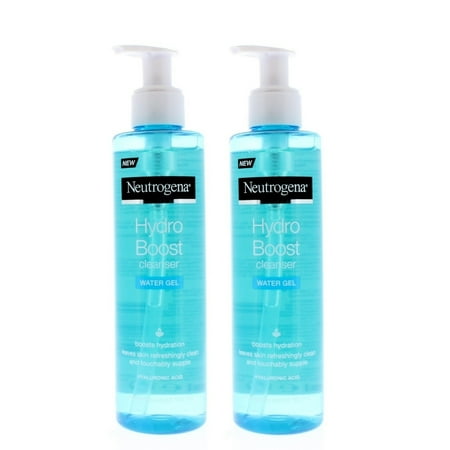
Neutrogena Hydro Boost Gel Cleanser 200ml Twin Pack Hydrating Face Wash
At a glance
Summary
This face wash contains beneficial ingredients like glycerin and hydrolyzed hyaluronic acid, which provide excellent moisturizing properties. However, the presence of synthetic ingredients such as phenoxyethanol and acrylates copolymer, along with the use of polyquaternium-10, indicates a moderate level of processing. While these ingredients are generally considered safe, they prevent the product from achieving a higher score typically reserved for formulations with more natural and minimally processed components. Its plastic packaging can shed microplastics into the product and lowers its score.
Key ingredients 17
Hydrolyzed Hyaluronic AcidVery Good
Hydrolyzed Hyaluronic Acid is a smaller molecule form of hyaluronic acid that penetrates the skin more easily. It is known for its excellent moisturizing properties.
Risks
There are no significant risks associated with this ingredient.
Benefits
It provides deep hydration and helps to improve skin elasticity and smoothness.
GlycerinGood
Glycerin is a humectant that attracts moisture to the skin, helping to keep it hydrated. It is widely used in skincare for its moisturizing properties.
Risks
Glycerin is generally safe, but in rare cases, it may cause irritation if used in high concentrations.
Benefits
It helps to maintain skin hydration and improve skin barrier function.
Sodium Cocoyl IsethionateGood
Sodium Cocoyl Isethionate is a mild surfactant derived from coconut oil, known for its gentle cleansing properties. It is often used in formulations for sensitive skin.
Risks
There are minimal risks associated with this ingredient, though it may cause mild irritation in very sensitive skin.
Benefits
It provides a gentle cleansing action while maintaining skin moisture.
WaterNeutral
Water is a common solvent used in cosmetics to dissolve other ingredients. It is essential for the formulation but does not provide active benefits or risks by itself.
Risks
There are no inherent risks associated with water in cosmetic formulations.
Benefits
Water helps to hydrate the skin by providing moisture.
Cocamidopropyl HydroxysultaineNeutral
Cocamidopropyl Hydroxysultaine is a mild surfactant used to create foam and cleanse the skin. It is derived from coconut oil and is considered gentle.
Risks
It may cause mild irritation in sensitive individuals.
Benefits
It effectively cleanses the skin without stripping natural oils.
Sodium Methyl Cocoyl TaurateNeutral
Sodium Methyl Cocoyl Taurate is a mild surfactant that helps to cleanse the skin. It is derived from coconut oil and is considered gentle.
Risks
It may cause mild irritation in sensitive individuals.
Benefits
It helps to cleanse the skin without causing excessive dryness.
Sodium ChlorideNeutral
Sodium Chloride, or table salt, is used to thicken the consistency of cosmetic products. It is generally considered safe in skincare formulations.
Risks
In high concentrations, it may cause dryness or irritation.
Benefits
It helps to improve the texture and stability of the product.
Sodium Hydrolyzed Potato Starch DodecenylsuccinateNeutral
This ingredient is used as a thickening agent and stabilizer in cosmetic formulations. It is derived from potato starch and is considered safe.
Risks
There are no significant risks associated with this ingredient.
Benefits
It helps to stabilize and thicken the product, improving its application.
Potassium Acrylates CopolymerNeutral
Potassium Acrylates Copolymer is used as a film-forming agent and thickener in cosmetics. It helps to improve the texture and spreadability of products.
Risks
It may cause mild irritation in sensitive individuals.
Benefits
It enhances the texture and application of the product.
HydroxyacetophenoneNeutral
Hydroxyacetophenone is an antioxidant and preservative used to enhance the stability of cosmetic formulations. It helps to protect the product from degradation.
Risks
There are minimal risks associated with this ingredient.
Benefits
It helps to maintain the integrity and shelf-life of the product.
Linoleamidopropyl PG-Dimonium Chloride PhosphateNeutral
This ingredient is used as a conditioning agent in cosmetics, helping to improve skin feel. It is derived from linoleic acid.
Risks
There are no significant risks associated with this ingredient.
Benefits
It helps to condition the skin, leaving it feeling soft and smooth.
Polyquaternium-10Neutral
Polyquaternium-10 is a conditioning agent used to improve the texture and feel of skin and hair. It is commonly used in personal care products.
Risks
It may cause mild irritation in sensitive individuals.
Benefits
It helps to condition and smooth the skin, enhancing the product's feel.
Sodium HydroxideNeutral
Sodium Hydroxide is used to adjust the pH of cosmetic formulations. It is a strong base and is used in small amounts to ensure product stability.
Risks
In high concentrations, it can be corrosive and cause irritation.
Benefits
It helps to maintain the desired pH level of the product.
Citric AcidNeutral
Citric Acid is used to adjust the pH of cosmetic products and as a mild exfoliant. It is derived from citrus fruits and is generally considered safe.
Risks
In high concentrations, it may cause skin irritation.
Benefits
It helps to maintain the pH balance and can provide mild exfoliation.
EthylhexylglycerinNeutral
Ethylhexylglycerin is used as a skin conditioning agent and preservative enhancer. It is considered safe and effective in cosmetic formulations.
Risks
There are minimal risks associated with this ingredient.
Benefits
It helps to condition the skin and enhance the efficacy of preservatives.
PhenoxyethanolBad
Processed additive flagged under Scout's ingredient doctrine.
Risks
In high concentrations, it may cause skin irritation or allergic reactions.
Benefits
It helps to preserve the product and extend its shelf life.
Disodium EDTABad
Processed additive flagged under Scout's ingredient doctrine.
Risks
There are minimal risks associated with this ingredient.
Benefits
It enhances the stability and performance of the product.
Get the full breakdown in the Scout appTake Scout shopping
Scan any product to see lab results, healthy alternatives, and your personalized analysis.
Are you Neutrogena? Fix an error Get the badge Get tested
Amazon pricing & content
Amazon price as of . Product prices and availability are accurate as of the date/time indicated and are subject to change. Any price and availability information displayed on Amazon.com at the time of purchase will apply to the purchase of this product.
CERTAIN CONTENT THAT APPEARS ON THIS SITE COMES FROM AMAZON. THIS CONTENT IS PROVIDED “AS IS” AND IS SUBJECT TO CHANGE OR REMOVAL AT ANY TIME.