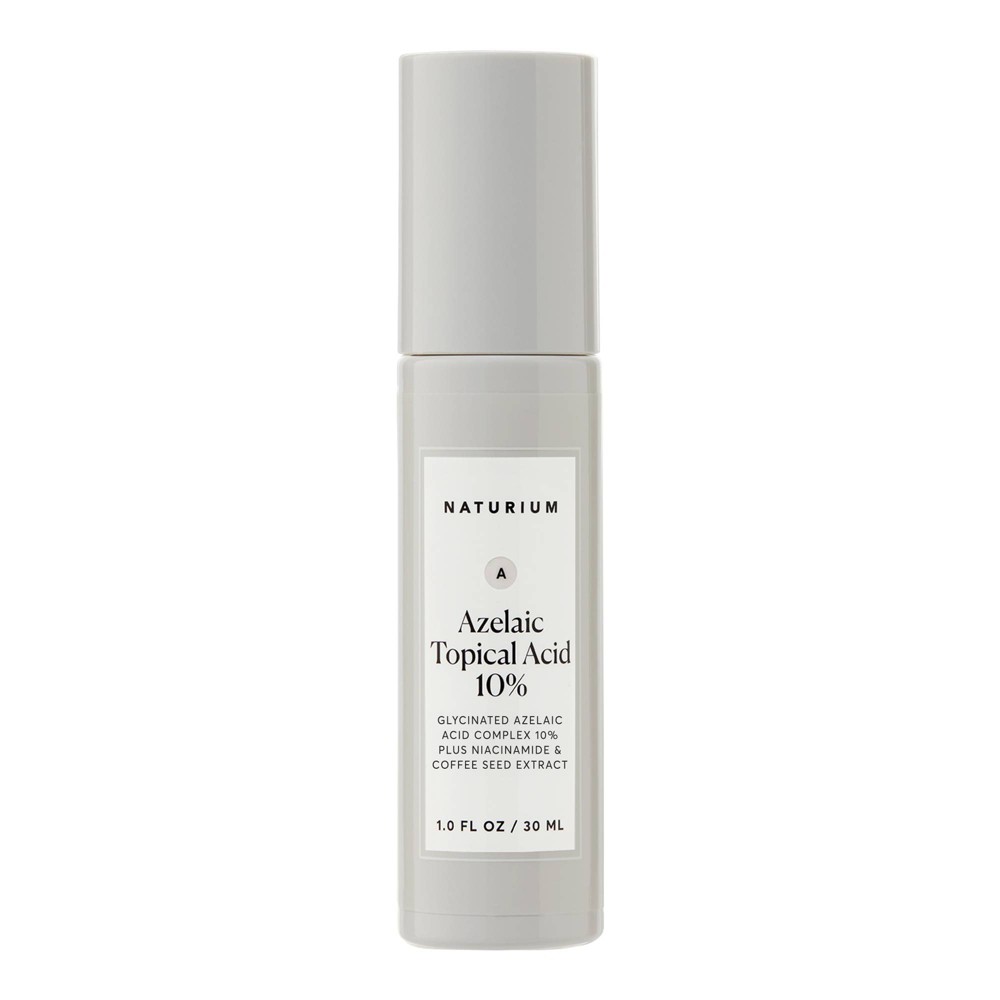
Naturium Azelaic Topical Acid 10% - 1 fl oz: Paraben-Free, Contains Vitamin C, Vegan, For Face & Neck
At a glance
Summary
This face wash contains several beneficial ingredients such as niacinamide, ethyl ascorbic acid, and sodium hyaluronate, which are known for their skin-brightening and hydrating properties. However, the presence of phenoxyethanol, a preservative that can cause skin irritation, slightly detracts from its overall safety profile. The product is mostly composed of safe and effective ingredients, but the inclusion of a synthetic preservative affects its rating. Its plastic packaging can shed microplastics into the product and lowers its score.
Key ingredients 18
Ethyl Ascorbic AcidVery Good
Ethyl Ascorbic Acid is a stable form of Vitamin C with antioxidant properties. It helps to brighten the skin and reduce signs of aging. It is effective in improving skin tone and texture.
Risks
May cause mild irritation in sensitive skin types.
Benefits
It brightens the skin and reduces signs of aging.
Potassium Azeloyl DiglycinateGood
Potassium Azeloyl Diglycinate is a derivative of azelaic acid known for its skin brightening and anti-inflammatory properties. It helps to reduce redness and improve skin tone. It is beneficial for acne-prone skin.
Risks
May cause mild irritation in sensitive skin types.
Benefits
It helps to reduce redness and improve skin tone.
NiacinamideGood
Niacinamide is a form of Vitamin B3 known for its anti-inflammatory and skin brightening properties. It helps to improve skin elasticity and reduce the appearance of pores. It is highly beneficial for overall skin health.
Risks
In rare cases, it may cause mild irritation.
Benefits
It improves skin elasticity and reduces the appearance of pores.
Coffea Arabica (Coffee) Seed ExtractGood
Coffee Seed Extract is rich in antioxidants and has anti-inflammatory properties. It helps to protect the skin from environmental damage and reduce puffiness. It is beneficial for revitalizing the skin.
Risks
May cause mild irritation in sensitive skin types.
Benefits
It protects the skin from environmental damage and reduces puffiness.
Sodium HyaluronateGood
Sodium Hyaluronate is a form of hyaluronic acid known for its excellent moisture-retaining properties. It helps to hydrate the skin and improve its elasticity. It is highly beneficial for maintaining skin hydration.
Risks
There are no significant risks associated with this ingredient.
Benefits
It hydrates the skin and improves its elasticity.
GlycerinGood
Glycerin is a humectant that attracts moisture to the skin. It helps to keep the skin hydrated and soft. It is beneficial for maintaining skin moisture balance.
Risks
There are no significant risks associated with this ingredient.
Benefits
It keeps the skin hydrated and soft.
TocopherolGood
Tocopherol, also known as Vitamin E, is an antioxidant that helps to protect the skin from free radical damage. It improves skin hydration and has anti-aging benefits. It is beneficial for overall skin health.
Risks
There are no significant risks associated with this ingredient.
Benefits
It protects the skin from free radical damage and improves hydration.
WaterNeutral
Water is a common solvent used in cosmetics to dissolve other ingredients. It helps in the application and absorption of the product. It does not have any direct benefits or risks.
Risks
There are no significant risks associated with water in cosmetics.
Benefits
Water helps in the application and absorption of the product.
PropanediolNeutral
Propanediol is a glycol used as a solvent and skin-conditioning agent. It helps to improve the texture and feel of the product. It is generally considered safe for use in cosmetics.
Risks
In rare cases, it may cause skin irritation.
Benefits
It improves the texture and feel of the product.
Polyacrylate Crosspolymer-6Neutral
Polyacrylate Crosspolymer-6 is used as a thickening agent in cosmetics. It helps to stabilize emulsions and improve product texture. It is generally considered safe for use in cosmetics.
Risks
There are no significant risks associated with this ingredient.
Benefits
It stabilizes emulsions and improves product texture.
Caprylyl GlycolNeutral
Caprylyl Glycol is used as a skin conditioning agent and preservative. It helps to improve the moisture content of the skin. It is generally considered safe for use in cosmetics.
Risks
There are no significant risks associated with this ingredient.
Benefits
It improves the moisture content of the skin.
PhenylpropanolNeutral
Phenylpropanol is used as a fragrance ingredient and preservative. It helps to enhance the scent of the product. It is generally considered safe for use in cosmetics.
Risks
May cause mild irritation in sensitive skin types.
Benefits
It enhances the scent of the product.
Citric AcidNeutral
Citric Acid is used to adjust the pH of cosmetics and has mild exfoliating properties. It helps to maintain the stability of the product. It is generally considered safe for use in cosmetics.
Risks
May cause mild irritation in sensitive skin types.
Benefits
It helps to maintain the stability of the product.
Potassium ChlorideNeutral
Potassium Chloride is used as a viscosity-increasing agent in cosmetics. It helps to improve the texture and consistency of the product. It is generally considered safe for use in cosmetics.
Risks
There are no significant risks associated with this ingredient.
Benefits
It improves the texture and consistency of the product.
ChlorphenesinNeutral
Chlorphenesin is used as a preservative in cosmetics. It helps to prevent the growth of bacteria and fungi. It is generally considered safe for use in cosmetics.
Risks
May cause mild irritation in sensitive skin types.
Benefits
It prevents the growth of bacteria and fungi.
PhenoxyethanolBad
Phenoxyethanol is a preservative used to prevent microbial growth in cosmetics. It is effective in extending the shelf life of products. However, it can cause skin irritation and allergic reactions in some individuals.
Risks
It can cause skin irritation and allergic reactions.
Benefits
It prevents microbial growth and extends the shelf life of products.
Potassium SorbateBad
Synthetic preservative — flagged in daily-use products.
Risks
May cause mild irritation in sensitive skin types.
Benefits
It prevents the growth of mold and yeast.
Sodium BenzoateBad
Synthetic preservative that can form benzene in the presence of vitamin C.
Risks
May cause mild irritation in sensitive skin types.
Benefits
It prevents microbial growth and extends the shelf life of products.
Processing
Processed Foods
Get the full breakdown in the Scout appTake Scout shopping
Scan any product to see lab results, healthy alternatives, and your personalized analysis.
Amazon pricing & content
Amazon price as of . Product prices and availability are accurate as of the date/time indicated and are subject to change. Any price and availability information displayed on Amazon.com at the time of purchase will apply to the purchase of this product.
CERTAIN CONTENT THAT APPEARS ON THIS SITE COMES FROM AMAZON. THIS CONTENT IS PROVIDED “AS IS” AND IS SUBJECT TO CHANGE OR REMOVAL AT ANY TIME.