
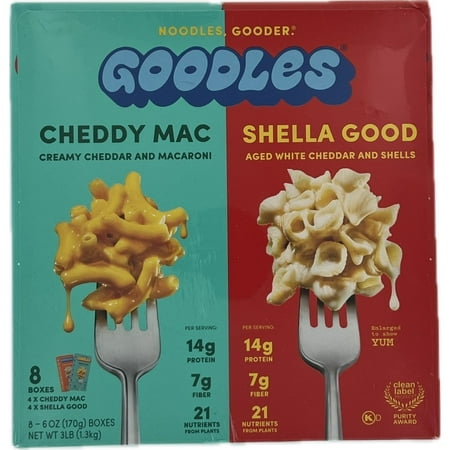

Goodles Mac & Cheese Variety Cheddy Mac & Shella Good 6 Ounce (Pack of 8)
Summary
This mac and cheese product contains a mix of beneficial ingredients like chickpea protein and nutrients from vegetables, which enhance its nutritional profile. However, it is classified as ultra-processed due to the presence of additives like disodium phosphate and a high level of processing. While it offers some nutritional benefits, the processing level and presence of synthetic additives limit its overall healthiness.
At a glance
Key ingredients 25
Goodles shellsNeutral
Goodles shells are the pasta base of the product, made primarily from wheat flour. They provide carbohydrates necessary for energy. However, they are processed and do not offer significant nutritional benefits beyond basic energy provision.
Risks
Processed wheat products may contribute to blood sugar spikes and are not suitable for those with gluten intolerance.
Benefits
Provides a source of carbohydrates which are essential for energy.
Wheat flourNeutral
Wheat flour is a staple ingredient in pasta, providing structure and texture. It is a refined carbohydrate, which can lead to quick energy release. However, it lacks the fiber and nutrients found in whole grain alternatives.
Risks
Refined wheat flour can cause rapid blood sugar spikes and is not suitable for those with gluten intolerance.
Benefits
Acts as a primary source of carbohydrates, providing energy.
Chickpea proteinGood
Chickpea protein is a plant-based protein source that contributes to the protein content of the product. It is less processed compared to soy protein isolates and provides a good amino acid profile. It also adds fiber and micronutrients like iron and magnesium.
Benefits
Provides plant-based protein and fiber, supporting muscle maintenance and digestive health.
Wheat proteinNeutral
Wheat protein is used to enhance the protein content of the pasta. It is a plant-based protein that complements the amino acid profile of the product. However, it is not as complete as animal-based proteins.
Risks
May not be suitable for individuals with gluten intolerance or wheat allergies.
Benefits
Contributes to the overall protein content, supporting dietary protein intake.
Nutrients extracted from broccoliVery Good
Broccoli extracts provide vitamins and minerals such as vitamin C and K, as well as antioxidants. These nutrients support immune function and overall health. The extraction process retains beneficial compounds while removing bulk fiber.
Benefits
Rich in vitamins and antioxidants that support immune health and reduce oxidative stress.
SpinachVery Good
Spinach is a nutrient-dense leafy green that provides vitamins A, C, and K, as well as iron and calcium. It supports bone health and immune function. The inclusion of spinach enhances the nutritional profile of the product.
Benefits
Provides essential vitamins and minerals that support overall health and wellness.
KaleVery Good
Kale is a highly nutritious leafy green rich in vitamins A, C, and K, as well as antioxidants. It supports cardiovascular health and has anti-inflammatory properties. Its inclusion boosts the nutritional value of the product.
Benefits
Rich in antioxidants and vitamins that promote heart health and reduce inflammation.
PumpkinGood
Pumpkin is a nutrient-rich vegetable that provides beta-carotene, fiber, and vitamins. It supports eye health and digestion. The use of pumpkin adds natural sweetness and nutritional benefits to the product.
Benefits
Provides beta-carotene and fiber, supporting eye health and digestion.
Sweet potatoGood
Sweet potato is a nutritious root vegetable high in beta-carotene, fiber, and vitamins. It supports immune function and digestive health. Its inclusion adds natural sweetness and enhances the nutritional profile.
Benefits
Rich in beta-carotene and fiber, promoting immune health and digestion.
Sunflower seedNeutral
Sunflower seeds are a source of healthy fats, protein, and vitamin E. They contribute to the nutritional content but are not a primary ingredient. Their presence is minimal and does not significantly impact the overall health profile.
Benefits
Provides healthy fats and vitamin E, supporting skin health.
CranberryGood
Cranberries are rich in antioxidants and vitamin C, supporting immune health and urinary tract health. Their inclusion adds a slight tartness and nutritional benefits to the product.
Benefits
Rich in antioxidants and vitamin C, promoting immune and urinary tract health.
ChlorellaGood
Chlorella is a nutrient-dense algae rich in vitamins, minerals, and antioxidants. It supports detoxification and immune function. Its inclusion enhances the nutritional profile of the product.
Benefits
Provides vitamins and antioxidants that support detoxification and immune health.
Maitake mushroomGood
Maitake mushrooms are known for their immune-boosting properties and are rich in beta-glucans. They support immune health and may have anti-cancer properties. Their inclusion adds nutritional benefits to the product.
Benefits
Rich in beta-glucans, supporting immune health and potentially reducing cancer risk.
Shiitake mushroomGood
Shiitake mushrooms are rich in vitamins, minerals, and antioxidants, supporting immune health and cardiovascular function. They add umami flavor and nutritional benefits to the product.
Benefits
Provides vitamins and antioxidants that support immune and cardiovascular health.
Cheddar cheese blendNeutral
Cheddar cheese blend provides flavor and contributes to the protein and calcium content. It is a processed dairy product that can be high in saturated fats. Its inclusion is primarily for taste and texture.
Risks
High in saturated fats, which may impact heart health if consumed in excess.
Benefits
Provides protein and calcium, supporting bone health.
Cultured milkNeutral
Cultured milk is used in cheese production, providing probiotics and enhancing flavor. It is a source of calcium and protein. Its benefits are limited by the processing involved in cheese production.
Benefits
Provides probiotics and calcium, supporting gut and bone health.
WheyGood
Whey is a high-quality protein source that supports muscle growth and repair. It is rich in essential amino acids and is easily absorbed. Its inclusion enhances the protein content of the product.
Benefits
Provides high-quality protein that supports muscle maintenance and repair.
ButtermilkNeutral
Buttermilk is used for flavor and texture in dairy products. It provides some calcium and protein but is not a significant source of nutrients. Its inclusion is primarily for taste enhancement.
Benefits
Provides flavor and some calcium, supporting bone health.
SaltNeutral
Salt is used for flavor enhancement and preservation. It is essential for bodily functions but should be consumed in moderation. Excessive intake can lead to health issues such as hypertension.
Risks
High sodium intake can lead to hypertension and cardiovascular issues.
Benefits
Essential for maintaining fluid balance and nerve function.
Disodium phosphateBad
Disodium phosphate is a food additive used as an emulsifier and stabilizer. It is a synthetic ingredient that can contribute to phosphate overload. Excessive consumption may impact kidney function and bone health.
Risks
May contribute to phosphate overload, affecting kidney function and bone health.
Lactic acidNeutral
Lactic acid is used as a preservative and flavoring agent. It is naturally occurring and generally recognized as safe. It helps maintain product acidity and flavor.
Benefits
Helps preserve food and enhance flavor.
EnzymesNeutral
Enzymes are used in food processing to aid in cheese production and improve texture. They are naturally occurring and generally safe. Their role is primarily functional in food processing.
Benefits
Aid in food processing and improve texture.
ButterNeutral
Butter is used for flavor and texture, providing saturated fats and some vitamins. It is a natural dairy product but should be consumed in moderation due to its fat content. Its inclusion is primarily for taste enhancement.
Risks
High in saturated fats, which may impact heart health if consumed in excess.
Benefits
Provides flavor and some vitamins, supporting overall taste and nutrition.
CreamNeutral
Cream is used for richness and flavor, providing fats and some vitamins. It is a natural dairy product but is high in saturated fats. Its inclusion is primarily for taste and texture.
Risks
High in saturated fats, which may impact heart health if consumed in excess.
Benefits
Provides richness and flavor, enhancing the overall taste.
Tapioca flourNeutral
Tapioca flour is used as a thickening agent and to improve texture. It is a gluten-free carbohydrate source but offers limited nutritional benefits. Its role is primarily functional in food processing.
Benefits
Provides a gluten-free thickening option, improving texture.
Processing
Ultra-Processed Foods
Get the full breakdown in the Scout app
Scan any product to see lab results, healthy alternatives, and your personalized analysis.
Download on theApp Store