
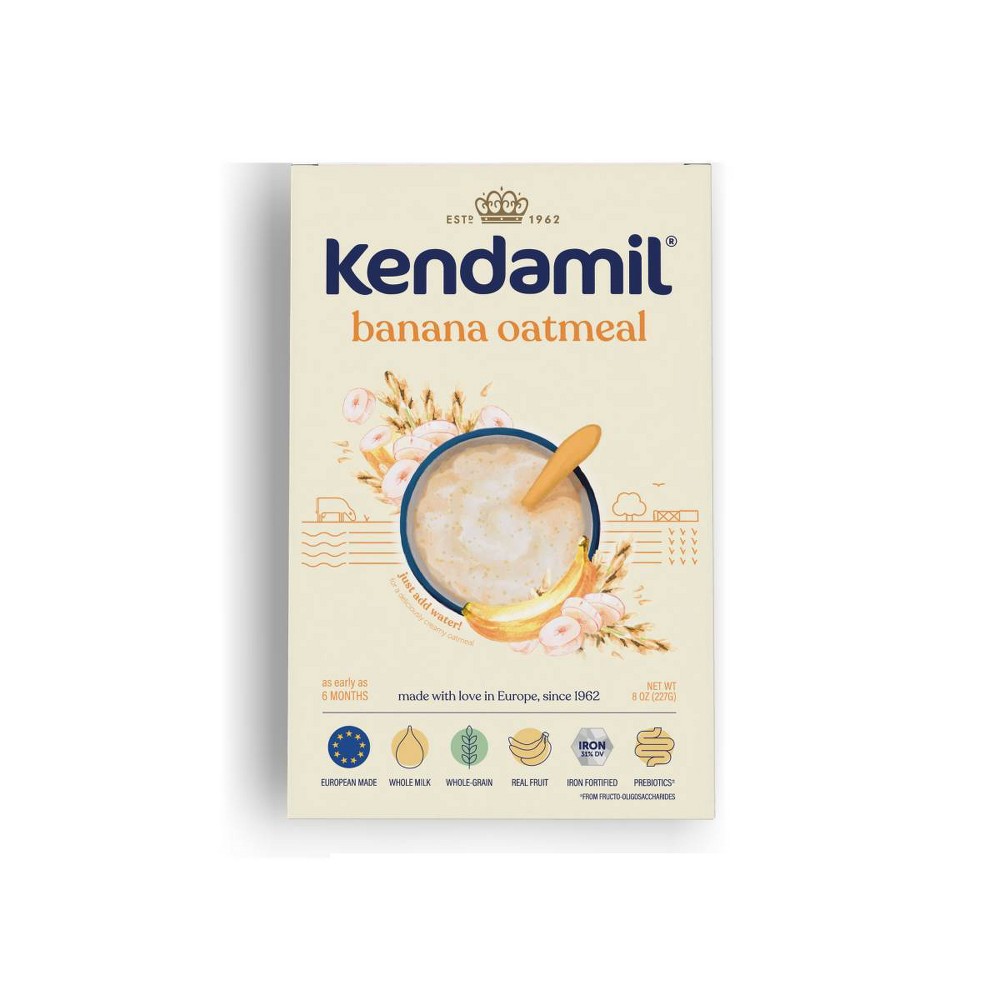
Kendamil Banana Creamy Oatmeal Cereal - 8oz: Age Level 6 Months+, 1st Stage, Baby Cereals, Mix Ready
Analysis updated September 2026 · How Scout scores
At a glance
Summary
This baby cereal contains beneficial ingredients such as whole grain oat flour, milk powders, and banana flakes, which provide essential nutrients and fiber. However, it is classified as ultra-processed due to the inclusion of hydrolyzed wheat flour and natural flavorings, which are less transparent and often highly processed. The product's processing level limits its score despite the presence of nutritious components.
Key ingredients 22
Whole Grain Oat FlourGood
Whole grain oat flour is a nutritious source of fiber and essential nutrients. It is minimally processed, retaining the bran and germ which provide vitamins and minerals. Oats are known for their heart health benefits and ability to stabilize blood sugar levels.
Benefits
Rich in dietary fiber, which supports digestive health and may help lower cholesterol levels.
Whole Milk PowderGood
Whole milk powder is a source of high-quality protein and essential fats. It retains most of the nutrients found in fresh milk, including calcium and vitamin D. The drying process preserves these nutrients while extending shelf life.
Risks
May not be suitable for individuals with lactose intolerance or milk allergies.
Benefits
Rich in calcium and vitamin D, supporting bone health and development.
Skimmed Milk PowderGood
Skimmed milk powder provides protein and essential nutrients with reduced fat content. It is a good source of calcium and other vitamins, supporting bone health. The drying process helps preserve these nutrients for longer storage.
Risks
May not be suitable for individuals with lactose intolerance or milk allergies.
Benefits
Offers a low-fat source of protein and calcium, beneficial for bone health.
Banana FlakesGood
Banana flakes are made from dehydrated bananas, providing natural sweetness and nutrients. They are a source of potassium and dietary fiber, supporting heart health and digestion. The minimal processing retains most of the fruit's nutritional benefits.
Benefits
Rich in potassium, which supports heart health and muscle function.
InulinGood
Beneficial ingredient — whole-food or functional value in this product class.
Risks
Excessive intake may cause bloating or gastrointestinal discomfort.
Benefits
Acts as a prebiotic, supporting the growth of beneficial gut bacteria.
Whey PowderGood
Whey powder is a high-quality protein source derived from milk. It contains essential amino acids that support muscle growth and repair. The processing retains its nutritional value while making it easy to incorporate into foods.
Risks
May not be suitable for individuals with lactose intolerance or milk allergies.
Benefits
Provides essential amino acids, supporting muscle growth and repair.
Vitamin DGood
Vitamin D is essential for calcium absorption and bone health. It is often added to foods to prevent deficiencies, especially in populations with limited sun exposure. Adequate vitamin D levels support immune function and overall health.
Benefits
Supports calcium absorption, bone health, and immune function.
Vitamin C (Ascorbic Acid)Good
Vitamin C is a powerful antioxidant that supports immune function and collagen synthesis. Ascorbic acid is a stable form used in food fortification. It enhances iron absorption and protects against oxidative stress.
Benefits
Supports immune function, collagen synthesis, and enhances iron absorption.
NiacinamideGood
Vitamin B3 — evidence-backed skin and metabolic benefits.
Benefits
Supports energy metabolism, skin health, and has anti-inflammatory properties.
Vitamin B12Good
Vitamin B12 is essential for nerve function and red blood cell formation. It is often added to foods to prevent deficiencies, especially in vegetarians and the elderly. Adequate B12 levels support energy production and neurological health.
Benefits
Supports nerve function, red blood cell formation, and energy production.
Hydrolyzed Wheat FlourNeutral
Hydrolyzed wheat flour is processed to break down gluten and proteins, making it easier to digest. It is often used to improve texture and digestibility in baby foods. However, it may still pose a risk for individuals with wheat allergies or gluten sensitivities.
Risks
May pose a risk for individuals with wheat allergies or gluten sensitivities.
Benefits
Provides carbohydrates and some protein, contributing to energy and growth.
Barley Malt ExtractNeutral
Barley malt extract is used as a natural sweetener and flavor enhancer. It is derived from sprouted barley grains and contains some vitamins and minerals. However, it is a source of sugar and should be consumed in moderation.
Risks
Contains sugar, which should be consumed in moderation to avoid negative health impacts.
Benefits
Provides a natural source of sweetness and some vitamins and minerals.
Calcium CarbonateNeutral
Calcium carbonate is a common mineral supplement used to fortify foods with calcium. It is highly bioavailable and supports bone health. However, excessive intake can lead to hypercalcemia or kidney stones.
Risks
Excessive intake can lead to hypercalcemia or kidney stones.
Benefits
Supports bone health by providing a bioavailable source of calcium.
Zinc SulfateNeutral
Zinc sulfate is used to fortify foods with zinc, an essential mineral for immune function. It is highly bioavailable and supports various bodily functions. However, excessive intake can cause nausea or interfere with copper absorption.
Risks
Excessive intake can cause nausea or interfere with copper absorption.
Benefits
Supports immune function and various enzymatic processes in the body.
Iron PyrophosphateNeutral
Iron pyrophosphate is used to fortify foods with iron, essential for oxygen transport in the blood. It is a stable form of iron with moderate bioavailability. However, excessive intake can lead to gastrointestinal issues or iron overload.
Risks
Excessive intake can lead to gastrointestinal issues or iron overload.
Benefits
Essential for oxygen transport and energy production in the body.
Vitamin A (Acetate)Neutral
Vitamin A acetate is a synthetic form of vitamin A used to fortify foods. It supports vision, immune function, and skin health. However, excessive intake can lead to toxicity, especially in supplement form.
Risks
Excessive intake can lead to vitamin A toxicity, particularly in supplement form.
Benefits
Supports vision, immune function, and skin health.
Vitamin E (Alpha Tocopheryl Acetate)Neutral
Vitamin E is an antioxidant that protects cells from oxidative damage. Alpha tocopheryl acetate is a stable form used in food fortification. While beneficial, excessive intake can interfere with blood clotting.
Risks
Excessive intake can interfere with blood clotting.
Benefits
Acts as an antioxidant, protecting cells from oxidative damage.
Vitamin B1 (Thiamine Hydrochloride)Neutral
Vitamin B1, or thiamine, is essential for energy metabolism and nerve function. Thiamine hydrochloride is a stable form used in food fortification. It is crucial for converting carbohydrates into energy.
Benefits
Supports energy metabolism and nerve function.
Vitamin B2 (Riboflavin)Neutral
Vitamin B2, or riboflavin, is important for energy production and cellular function. It is often added to foods to prevent deficiencies. Riboflavin also supports skin health and vision.
Benefits
Supports energy production, skin health, and vision.
Vitamin B6 (Pyridoxine Hydrochloride)Neutral
Vitamin B6 is essential for protein metabolism and cognitive development. Pyridoxine hydrochloride is a stable form used in food fortification. It also supports immune function and neurotransmitter synthesis.
Benefits
Supports protein metabolism, cognitive development, and immune function.
Folic AcidNeutral
Standard formulation ingredient — neither beneficial nor harmful at typical use.
Benefits
Supports DNA synthesis, cell division, and is crucial during pregnancy.
Natural FlavoringsBad
Natural flavorings are used to enhance taste but can be a catch-all term for various additives. They lack transparency, making it difficult to assess their health impact. While derived from natural sources, they are often highly processed.
Risks
Lack of transparency can make it difficult to identify potential allergens or sensitivities.
Processing
Ultra-Processed Foods
Get the full breakdown in the Scout appTake Scout shopping
Scan any product to see lab results, healthy alternatives, and your personalized analysis.
Download on theApp Store GET IT ONGoogle Play