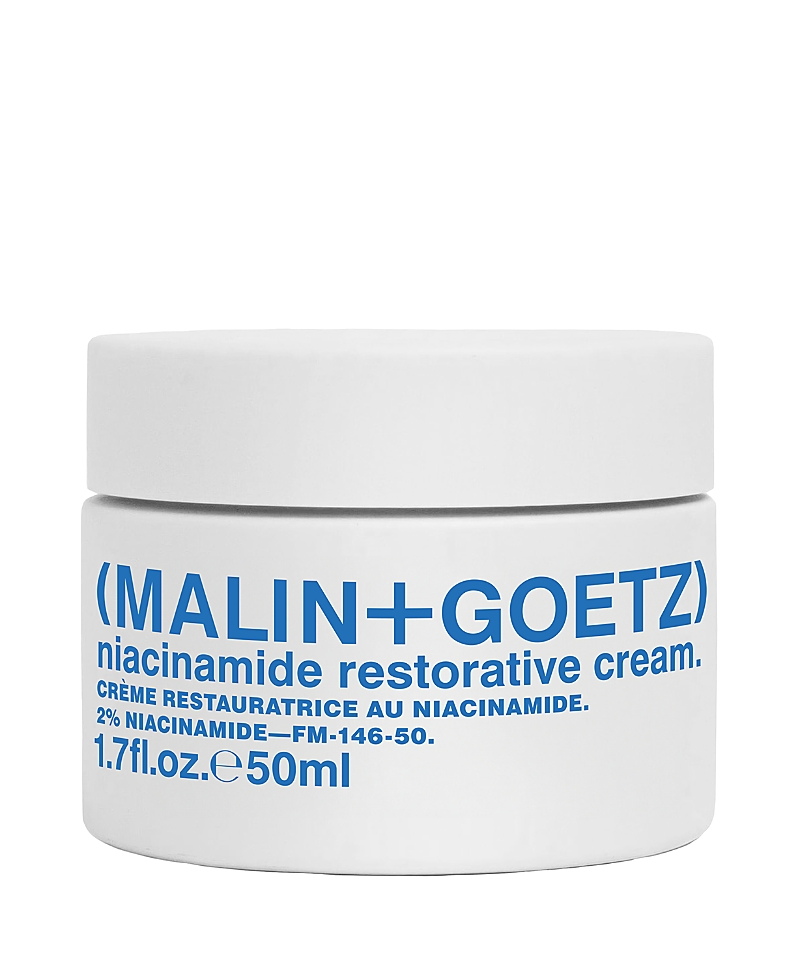
Malin and Goetz Niacinamide Restorative Face Cream 1.7 oz.
At a glance
Summary
This moisturizer contains a blend of beneficial ingredients such as niacinamide, squalane, and sodium hyaluronate, which are known for their hydrating and skin-repairing properties. The presence of phenoxyethanol as a preservative is a minor concern due to potential irritation, but it is generally considered safe in low concentrations. Overall, the product features a clean formulation with minimal synthetic additives, contributing to its high rating. Its plastic packaging can shed microplastics into the product and lowers its score.
Key ingredients 9
squalaneVery Good
Squalane is a highly effective emollient that mimics the skin's natural oils, providing deep hydration without clogging pores. It is suitable for all skin types and helps to improve skin elasticity. It is a stable and non-irritating ingredient.
Risks
There are minimal risks associated with squalane.
Benefits
It provides lightweight hydration and helps to improve skin texture and elasticity.
panthenolVery Good
Panthenol, also known as pro-vitamin B5, is a humectant that attracts moisture to the skin, promoting hydration and healing. It is soothing and helps to improve skin barrier function. It is widely used in skincare for its moisturizing and calming properties.
Risks
There are minimal risks, though it may cause irritation in very sensitive skin.
Benefits
It helps to hydrate, soothe, and improve the skin's barrier function.
glycerinGood
Glycerin is a humectant that attracts moisture to the skin, helping to keep it hydrated. It is well-tolerated by most skin types and enhances the skin's natural barrier function. It is a common ingredient in moisturizers due to its effectiveness.
Risks
There are minimal risks associated with glycerin, though it may cause irritation in very sensitive skin.
Benefits
Glycerin helps to maintain skin hydration and improve skin barrier function.
caprylic/capric triglycerideGood
Caprylic/capric triglyceride is derived from coconut oil and glycerin, and is used as an emollient. It helps to smooth and soften the skin without leaving a greasy residue. It is well-tolerated by most skin types.
Risks
There are minimal risks, though it may cause irritation in very sensitive skin.
Benefits
It provides lightweight moisture and enhances the spreadability of the product.
niacinamideGood
Niacinamide is a form of Vitamin B3 that offers multiple skin benefits, including improving skin tone, reducing redness, and enhancing barrier function. It is well-researched and suitable for all skin types. It is a popular ingredient in skincare for its versatility and effectiveness.
Risks
There are minimal risks, though high concentrations may cause irritation in sensitive skin.
Benefits
It helps to improve skin texture, reduce inflammation, and enhance skin barrier function.
sodium hyaluronateGood
Sodium hyaluronate is a salt form of hyaluronic acid, known for its ability to hold up to 1000 times its weight in water. It provides intense hydration and plumps the skin, reducing the appearance of fine lines. It is suitable for all skin types and is non-irritating.
Risks
There are minimal risks associated with sodium hyaluronate.
Benefits
It provides deep hydration and helps to plump and smooth the skin.
water / aqua / eauNeutral
Water is a universal solvent and is used as a base in many cosmetic formulations. It helps dissolve other ingredients and provides hydration. It is generally considered safe and non-irritating.
Risks
There are no significant risks associated with water in cosmetics.
Benefits
Water helps to hydrate the skin and improve the texture of the product.
dimethiconeBad
Occlusive silicone film-former — flagged under clean-beauty doctrine.
Risks
Dimethicone can potentially clog pores in some individuals, leading to breakouts.
Benefits
It provides a silky texture and helps to lock in moisture.
phenoxyethanolBad
Phenoxyethanol is a preservative used to prevent microbial growth in cosmetics. While effective, it can cause irritation and allergic reactions in some individuals. It is considered safe in concentrations up to 1%, but caution is advised for sensitive skin.
Risks
It may cause irritation or allergic reactions, especially in sensitive individuals.
Benefits
It helps to preserve the product and prevent microbial contamination.
Get the full breakdown in the Scout appTake Scout shopping
Scan any product to see lab results, healthy alternatives, and your personalized analysis.
Are you MALIN+GOETZ? Fix an error Get the badge Get tested
Amazon pricing & content
Amazon price as of . Product prices and availability are accurate as of the date/time indicated and are subject to change. Any price and availability information displayed on Amazon.com at the time of purchase will apply to the purchase of this product.
CERTAIN CONTENT THAT APPEARS ON THIS SITE COMES FROM AMAZON. THIS CONTENT IS PROVIDED “AS IS” AND IS SUBJECT TO CHANGE OR REMOVAL AT ANY TIME.