
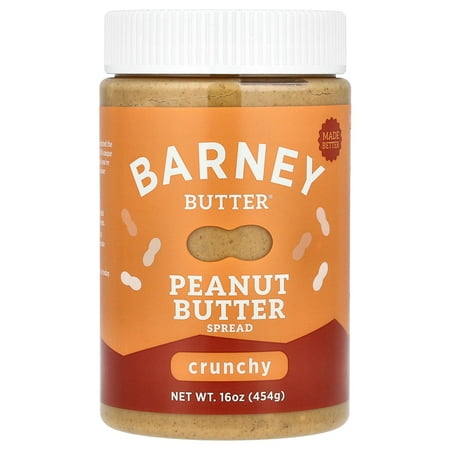


Barney Butter Peanut Butter Spread Crunchy 16 oz (454 g)
Analysis updated October 2026 · How Scout scores
At a glance
Summary
This peanut butter spread contains peanuts, which are a good source of protein and healthy fats, and sea salt, which is a natural flavor enhancer. However, the presence of organic sugar adds unnecessary refined sugars, impacting its health profile. The product is moderately processed, which limits its score despite the use of sustainable palm oil.
Key ingredients 4
PeanutsGood
Peanuts are a good source of protein and healthy fats, contributing to heart health. They contain essential nutrients like magnesium and vitamin E. As a whole food, they provide fiber and antioxidants.
Risks
Peanuts can be a common allergen and may cause severe allergic reactions in sensitive individuals.
Benefits
Rich in monounsaturated fats and protein, supporting heart health and muscle maintenance. Contains antioxidants that may reduce oxidative stress.
Sea saltGood
Sea salt is a natural source of sodium and trace minerals, enhancing flavor. It is less processed than table salt, retaining more minerals. Used in moderation, it can be part of a balanced diet.
Risks
Excessive sodium intake can lead to high blood pressure and cardiovascular issues.
Benefits
Provides essential sodium and trace minerals that support electrolyte balance and nerve function.
Sustainable palm oilNeutral
Sustainable palm oil is used to improve texture and shelf stability. It is less harmful to the environment compared to non-sustainable sources. However, it is still a saturated fat and should be consumed in moderation.
Risks
Excessive consumption of saturated fats may contribute to heart disease.
Benefits
Provides a stable fat source that helps maintain product consistency without trans fats.
Organic sugarBad
Organic sugar is a refined sugar that can contribute to increased calorie intake without providing essential nutrients. Despite being organic, it still impacts blood sugar levels. Regular consumption of added sugars is linked to various health issues.
Risks
High intake of added sugars can lead to obesity, type 2 diabetes, and heart disease.
Processing
Processed Foods
Get the full breakdown in the Scout appTake Scout shopping
Scan any product to see lab results, healthy alternatives, and your personalized analysis.
Download on theApp Store GET IT ONGoogle Play