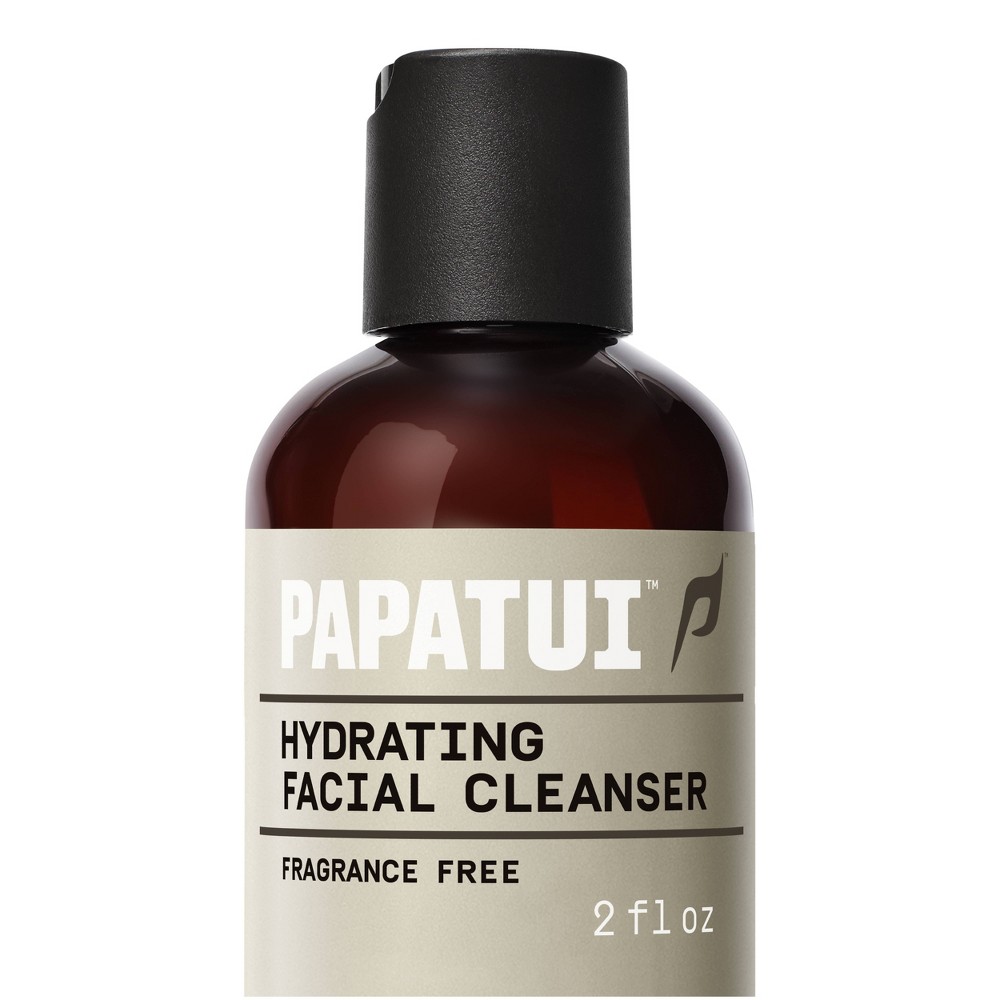
Papatui Hydrating Men's Paraben-Free Niacinamide and Hyaluronic Acid Mini Face Cleanser - Unscented - 2 fl oz
At a glance
Summary
This face cleanser features a blend of beneficial ingredients such as niacinamide, hyaluronic acid, and ceramides, which are known for their moisturizing and skin-repairing properties. The product avoids harsh chemicals like parabens and synthetic fragrances, contributing to its safety profile. However, the presence of acrylates and phenoxyethanol, while common in skincare, slightly affects the overall ingredient safety score. Its plastic packaging can shed microplastics into the product and lowers its score.
Key ingredients 26
Ceramide APVery Good
Ceramide AP is a type of ceramide that supports the skin's natural barrier function. It helps to lock in moisture and prevent transepidermal water loss.
Risks
There are no significant risks associated with ceramides.
Benefits
Ceramide AP enhances skin hydration and resilience, making it beneficial for dry or sensitive skin.
Ceramide EOPVery Good
Ceramide EOP is a lipid molecule that plays a crucial role in maintaining the skin's barrier function. It helps to keep the skin hydrated and protected.
Risks
There are no significant risks associated with ceramides.
Benefits
Ceramide EOP helps to improve skin texture and reduce dryness, enhancing overall skin health.
Aloe Barbadensis Leaf JuiceVery Good
Aloe Barbadensis Leaf Juice is known for its soothing and moisturizing properties. It helps to calm irritated skin and provides hydration.
Risks
There are minimal risks, though some individuals may experience allergic reactions.
Benefits
Aloe Vera helps to soothe and hydrate the skin, making it ideal for sensitive or irritated skin.
PanthenolVery Good
Panthenol, also known as Provitamin B5, is a moisturizing agent that helps to improve skin hydration and elasticity. It is known for its soothing properties.
Risks
There are minimal risks, though it may cause irritation in rare cases.
Benefits
Panthenol helps to soothe and moisturize the skin, promoting a healthy skin barrier.
GlycerinGood
Glycerin is a humectant that attracts moisture to the skin, helping to keep it hydrated. It is widely used in skincare for its moisturizing properties.
Risks
There are minimal risks associated with glycerin, though it can be sticky in high concentrations.
Benefits
Glycerin helps to maintain skin hydration and improve skin barrier function.
NiacinamideGood
Niacinamide is a form of Vitamin B3 that is known for its anti-inflammatory and skin-brightening properties. It helps to improve skin texture and reduce the appearance of pores.
Risks
There are minimal risks, though some individuals may experience mild irritation.
Benefits
Niacinamide helps to strengthen the skin barrier, reduce redness, and improve overall skin tone.
Ceramide NPGood
Ceramide NP is a lipid that helps to restore the skin barrier and retain moisture. It is essential for maintaining healthy skin.
Risks
There are no significant risks associated with ceramides.
Benefits
Ceramide NP helps to improve skin hydration and protect against environmental damage.
Salicylic AcidGood
Salicylic Acid is a beta hydroxy acid that exfoliates the skin and helps to unclog pores. It is effective in treating acne and improving skin texture.
Risks
Overuse can lead to skin irritation and dryness, especially in sensitive skin.
Benefits
Salicylic Acid helps to reduce acne, improve skin clarity, and promote a smoother complexion.
Sodium HyaluronateGood
Sodium Hyaluronate is a salt form of Hyaluronic Acid that attracts and retains moisture in the skin. It is known for its excellent hydrating properties.
Risks
There are minimal risks, though it may cause irritation in rare cases.
Benefits
Sodium Hyaluronate helps to plump the skin, reduce the appearance of fine lines, and enhance skin hydration.
PhytosphingosineGood
Phytosphingosine is a lipid that helps to restore the skin barrier and reduce inflammation. It is beneficial for maintaining healthy skin.
Risks
There are minimal risks, though it may cause irritation in rare cases.
Benefits
Phytosphingosine helps to improve skin hydration and reduce redness, enhancing overall skin health.
CholesterolGood
Cholesterol is a lipid that helps to maintain the skin's barrier function and retain moisture. It is essential for healthy skin.
Risks
There are no significant risks associated with cholesterol in cosmetics.
Benefits
Cholesterol helps to improve skin hydration and protect against environmental damage.
WaterNeutral
Water is a common solvent used in cosmetics to dissolve other ingredients. It helps in forming emulsions and acts as a base for the formulation.
Risks
There are no significant risks associated with water in cosmetics.
Benefits
Water helps in hydrating the skin and is essential for the formulation of most cosmetic products.
Cocamidopropyl BetaineNeutral
Cocamidopropyl Betaine is a mild surfactant derived from coconut oil, used to create foam and cleanse the skin. It is considered less irritating than harsher surfactants.
Risks
It may cause skin irritation in some individuals, especially those with sensitive skin.
Benefits
It provides gentle cleansing and helps to reduce the harshness of other surfactants in the formulation.
Cocamidopropyl HydroxysultaineNeutral
Cocamidopropyl Hydroxysultaine is a surfactant and foam booster derived from coconut oil. It is used to enhance the texture and cleansing ability of products.
Risks
Potential for mild skin irritation exists, particularly in sensitive individuals.
Benefits
It helps to improve the foaming and cleansing properties of the product while being gentle on the skin.
Disodium CocoamphodiacetateNeutral
Disodium Cocoamphodiacetate is a mild surfactant used to cleanse the skin without stripping natural oils. It is derived from coconut oil and is considered gentle.
Risks
There is a low risk of skin irritation, but it is generally well-tolerated.
Benefits
It provides gentle cleansing and is suitable for sensitive skin types.
Sodium Lauroyl LactylateNeutral
Sodium Lauroyl Lactylate is a mild surfactant and emulsifier used to stabilize formulations. It is derived from lauric acid and lactic acid.
Risks
There is a low risk of skin irritation, but it is generally considered safe.
Benefits
It helps to improve the texture and stability of cosmetic formulations.
Xanthan GumNeutral
Xanthan Gum is a natural thickening agent used to stabilize emulsions and improve product texture. It is derived from fermented sugars.
Risks
There are minimal risks, though it may cause irritation in rare cases.
Benefits
Xanthan Gum helps to improve the texture and stability of cosmetic formulations.
Trisodium Ethylenediamine DisuccinateNeutral
This ingredient is a chelating agent used to bind metal ions and improve the stability of cosmetic formulations. It helps to enhance the efficacy of preservatives.
Risks
There are minimal risks associated with this ingredient.
Benefits
It helps to improve the stability and shelf life of cosmetic products.
CarbomerNeutral
Carbomer is a thickening agent used to stabilize emulsions and improve product texture. It is a synthetic polymer that helps to create a smooth consistency.
Risks
There are minimal risks, though it may cause irritation in rare cases.
Benefits
Carbomer helps to improve the texture and stability of cosmetic formulations.
Sodium ChlorideNeutral
Sodium Chloride, or table salt, is used as a thickening agent and to adjust the viscosity of cosmetic formulations. It is a common ingredient in many products.
Risks
In high concentrations, it can cause skin irritation and dryness.
Benefits
Sodium Chloride helps to improve the texture and consistency of cosmetic products.
Citric AcidNeutral
Citric Acid is used to adjust the pH of cosmetic formulations and as a mild exfoliant. It is derived from citrus fruits and is commonly used in skincare.
Risks
In high concentrations, it can cause skin irritation and sensitivity.
Benefits
Citric Acid helps to balance the pH of products and can provide mild exfoliation benefits.
EthylhexylglycerinNeutral
Ethylhexylglycerin is used as a preservative and skin-conditioning agent in cosmetics. It is often used in combination with other preservatives to enhance efficacy.
Risks
There are minimal risks, though it may cause irritation in rare cases.
Benefits
Ethylhexylglycerin helps to improve the preservation and skin feel of cosmetic products.
PhenoxyethanolBad
Processed additive flagged under Scout's ingredient doctrine.
Risks
It can cause skin irritation in some individuals, particularly in high concentrations.
Benefits
Phenoxyethanol helps to extend the shelf life of cosmetic products by preventing contamination.
Acrylates/C10-30 Alkyl Acrylate CrosspolymerBad
Processed additive flagged under Scout's ingredient doctrine.
Risks
There is a low risk of skin irritation, but it is generally considered safe.
Benefits
It enhances the texture and stability of cosmetic formulations, providing a smooth application.
Potassium SorbateBad
Synthetic preservative — flagged in daily-use products.
Risks
It can cause skin irritation in some individuals, particularly in sensitive skin.
Benefits
Potassium Sorbate helps to preserve the integrity and safety of cosmetic products.
Sodium BenzoateBad
Synthetic preservative that can form benzene in the presence of vitamin C.
Risks
It can cause skin irritation in some individuals, particularly in high concentrations.
Benefits
Sodium Benzoate helps to extend the shelf life of cosmetic products by preventing contamination.
Get the full breakdown in the Scout appTake Scout shopping
Scan any product to see lab results, healthy alternatives, and your personalized analysis.
Are you Papatui? Fix an error Get the badge Get tested
Amazon pricing & content
Amazon price as of . Product prices and availability are accurate as of the date/time indicated and are subject to change. Any price and availability information displayed on Amazon.com at the time of purchase will apply to the purchase of this product.
CERTAIN CONTENT THAT APPEARS ON THIS SITE COMES FROM AMAZON. THIS CONTENT IS PROVIDED “AS IS” AND IS SUBJECT TO CHANGE OR REMOVAL AT ANY TIME.