
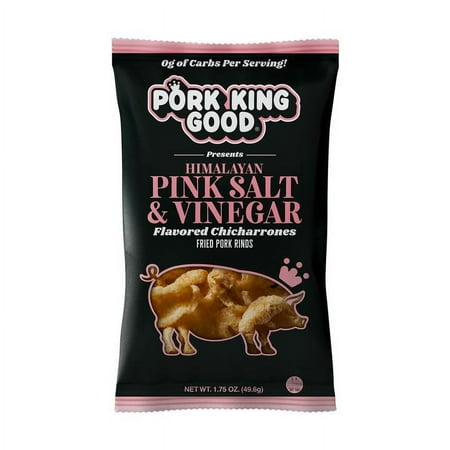
Pork King Good Himalayan Pink Salt & Vinegar Pork Rinds 1.75 oz Bag
Analysis updated August 2026 · How Scout scores
At a glance
Summary
This product is a processed snack with a relatively clean ingredient list, featuring pork rinds and natural salts. The presence of sodium diacetate, a synthetic additive, contributes to its processed nature but is balanced by the absence of seed oils and artificial colors. The minimal use of additives and the inclusion of mineral-rich salts help maintain a reasonable score within the processed food category.
Key ingredients 5
Himalayan SaltGood
Himalayan salt is a mineral-rich, unrefined salt that contains trace elements. It is less processed than regular table salt, retaining its natural mineral content. This makes it a preferred choice for those seeking natural sodium sources.
Risks
Excessive sodium intake can lead to high blood pressure and other cardiovascular issues.
Benefits
Contains trace minerals like magnesium and potassium, which can support overall health.
Sea SaltGood
Sea salt is a natural salt obtained through the evaporation of seawater. It retains trace minerals that are often removed in table salt processing. Its natural composition makes it a healthier alternative to refined salts.
Risks
High sodium content can contribute to hypertension if consumed excessively.
Benefits
Provides essential minerals and can enhance the flavor of foods naturally.
Pork RindsNeutral
Pork rinds are a high-protein snack derived from the skin of pigs. They are fried or roasted, which can increase their fat content. While they provide protein, they lack essential nutrients found in less processed meats.
Risks
High in saturated fats, which may contribute to heart disease if consumed in excess.
Benefits
Provides a source of protein and can be a low-carb snack option.
Citric AcidNeutral
Citric acid is a natural acid found in citrus fruits, commonly used as a preservative and flavor enhancer. It is widely used in the food industry for its ability to add a sour taste and preserve freshness. Although naturally occurring, the citric acid used in foods is often industrially produced.
Risks
Excessive consumption may lead to tooth enamel erosion and digestive issues.
Benefits
Acts as a natural preservative and can enhance the flavor profile of foods.
Sodium DiacetateBad
Sodium diacetate is a synthetic compound used as a preservative and flavoring agent. It is often used to impart a vinegar-like flavor in processed foods. While generally recognized as safe, it is an additive that contributes to the processed nature of foods.
Risks
May cause digestive discomfort in sensitive individuals when consumed in large amounts.
Benefits
Helps preserve food and enhance flavor, extending shelf life.
Processing
Processed Foods
Get the full breakdown in the Scout appTake Scout shopping
Scan any product to see lab results, healthy alternatives, and your personalized analysis.
Download on theApp Store GET IT ONGoogle Play