
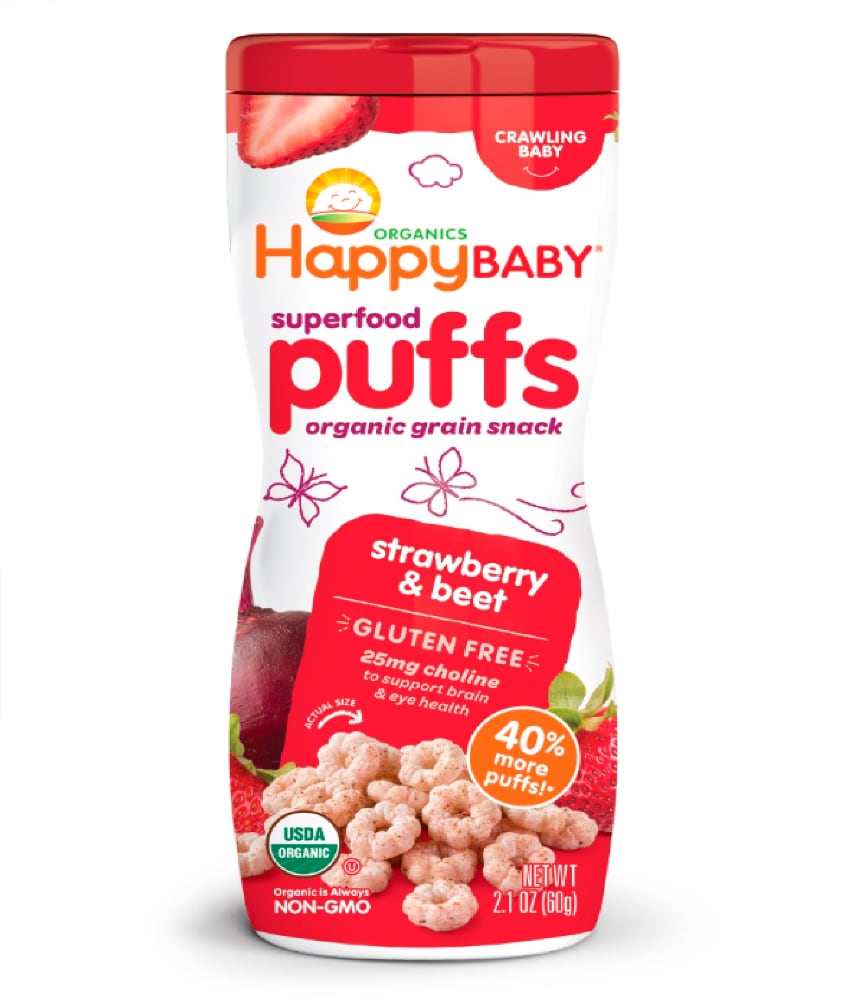



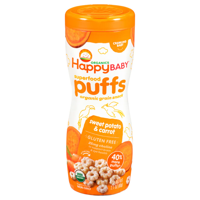
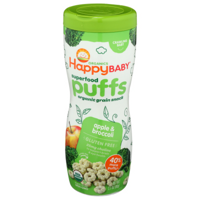
Happy Baby Organics Gluten Free Superfood Puffs Organic Grain Snack Strawberry & Beet - 2.1oz
Analysis updated April 2026 · How Scout scores
At a glance
Summary
This product is ultra-processed, which limits its healthiness despite having some organic ingredients like brown rice flour and strawberry powder. The presence of additives and the high level of processing detract from its nutritional value, although it does not contain harmful seed oils or artificial sweeteners. The organic certification of key ingredients is a positive aspect, but the overall processing level and additive content prevent a higher score.
Key ingredients 20
Organic Brown Rice FlourGood
Organic brown rice flour is a whole grain ingredient that provides fiber and essential nutrients. Being organic, it is free from synthetic pesticides and fertilizers, which enhances its nutritional profile. It serves as a gluten-free alternative to wheat flour, making it suitable for those with gluten sensitivities.
Benefits
Provides dietary fiber and essential nutrients like magnesium and phosphorus. Its organic nature ensures it is free from harmful chemicals.
Organic Strawberry PowderGood
Organic strawberry powder is made from dehydrated strawberries and retains many of the fruit's nutrients. It is rich in antioxidants and vitamin C, contributing to its health benefits. The organic certification ensures it is free from synthetic chemicals.
Benefits
Rich in antioxidants and vitamin C, supporting immune health and reducing oxidative stress.
Mixed TocopherolsGood
Beneficial ingredient — whole-food or functional value in this product class.
Benefits
Helps maintain product freshness by preventing oxidation, extending shelf life.
NiacinamideGood
Vitamin B3 — evidence-backed skin and metabolic benefits.
Benefits
Supports energy metabolism and skin health by providing vitamin B3.
Organic White Rice FlourNeutral
Organic white rice flour is a refined grain product that is gluten-free. It lacks the fiber and nutrients found in whole grain flours due to the removal of the bran and germ. However, being organic, it is free from synthetic additives and pesticides.
Risks
May contribute to rapid spikes in blood sugar levels due to its high glycemic index.
Benefits
Provides a gluten-free option for baking and cooking, suitable for those with gluten intolerance.
Dicalcium PhosphateNeutral
Dicalcium phosphate is a calcium supplement used to fortify foods with calcium. It is a common additive in processed foods to enhance nutritional content. While it provides calcium, it does not offer additional health benefits beyond supplementation.
Risks
Excessive intake may lead to imbalances in calcium and phosphate levels.
Benefits
Provides a source of calcium, supporting bone health and development.
Choline BitartrateNeutral
Choline bitartrate is a form of choline used to fortify foods and support brain health. It is essential for neurotransmitter synthesis and cell membrane integrity. While beneficial, it is typically consumed in small amounts in fortified foods.
Benefits
Supports brain health and cognitive function by contributing to neurotransmitter synthesis.
Potassium ChlorideNeutral
Potassium chloride is used as a salt substitute and to fortify foods with potassium. It helps maintain electrolyte balance and supports muscle function. While beneficial, excessive intake can lead to hyperkalemia in susceptible individuals.
Risks
Excessive intake may lead to hyperkalemia, especially in individuals with kidney issues.
Benefits
Supports electrolyte balance and muscle function, contributing to overall health.
Calcium CarbonateNeutral
Calcium carbonate is a common calcium supplement used to fortify foods. It is an inexpensive source of calcium, supporting bone health. While beneficial for calcium intake, it does not provide additional nutrients.
Risks
Excessive intake may lead to kidney stones or hypercalcemia.
Benefits
Provides a source of calcium, essential for bone health and development.
Sodium AscorbateNeutral
Sodium ascorbate is a form of vitamin C used to fortify foods and enhance antioxidant content. It is more stable than ascorbic acid and is used to prevent oxidation. While beneficial for vitamin C intake, it does not provide additional nutrients.
Benefits
Provides vitamin C, supporting immune health and acting as an antioxidant.
Tricalcium PhosphateNeutral
Tricalcium phosphate is used to fortify foods with calcium and phosphorus. It supports bone health and is commonly used in processed foods. While beneficial for mineral intake, it does not provide additional nutrients.
Risks
Excessive intake may lead to imbalances in calcium and phosphate levels.
Benefits
Provides calcium and phosphorus, essential for bone health and development.
Ferric PyrophosphateNeutral
Ferric pyrophosphate is an iron supplement used to fortify foods. It is a source of iron, essential for oxygen transport and energy production. While beneficial for iron intake, it does not provide additional nutrients.
Risks
Excessive intake may lead to iron overload, especially in individuals with hemochromatosis.
Benefits
Provides iron, supporting oxygen transport and energy production in the body.
Dl-alpha-tocopheryl AcetateNeutral
Dl-alpha-tocopheryl acetate is a synthetic form of vitamin E used to fortify foods. It acts as an antioxidant, protecting cells from oxidative damage. While beneficial for vitamin E intake, it is less bioavailable than natural forms.
Benefits
Provides vitamin E, supporting antioxidant activity and protecting cells from damage.
Vitamin A AcetateNeutral
Vitamin A acetate is a synthetic form of vitamin A used to fortify foods. It supports vision, immune function, and skin health. While beneficial for vitamin A intake, excessive consumption can lead to toxicity.
Risks
Excessive intake may lead to vitamin A toxicity, causing liver damage and other health issues.
Benefits
Supports vision, immune function, and skin health by providing vitamin A.
CholecalciferolNeutral
Cholecalciferol, or vitamin D3, is used to fortify foods and support bone health. It aids in calcium absorption and is essential for maintaining healthy bones. While beneficial for vitamin D intake, it is typically consumed in small amounts in fortified foods.
Benefits
Supports bone health and calcium absorption by providing vitamin D3.
Calcium D-pantothenateNeutral
Calcium D-pantothenate is a form of vitamin B5 used to fortify foods. It supports energy metabolism and the synthesis of coenzyme A. While beneficial for vitamin B5 intake, it is typically consumed in small amounts in fortified foods.
Benefits
Supports energy metabolism and the synthesis of coenzyme A by providing vitamin B5.
Zinc OxideNeutral
Zinc oxide is used to fortify foods with zinc, supporting immune function and wound healing. It is a common additive in processed foods to enhance nutritional content. While beneficial for zinc intake, it does not provide additional nutrients.
Risks
Excessive intake may lead to zinc toxicity, causing nausea and immune dysfunction.
Benefits
Supports immune function and wound healing by providing zinc.
Thiamine MononitrateNeutral
Thiamine mononitrate is a form of vitamin B1 used to fortify foods. It supports energy metabolism and nerve function. While beneficial for vitamin B1 intake, it is typically consumed in small amounts in fortified foods.
Benefits
Supports energy metabolism and nerve function by providing vitamin B1.
CyanocobalaminNeutral
Cyanocobalamin is a form of vitamin B12 used to fortify foods. It supports red blood cell formation and neurological function. While beneficial for vitamin B12 intake, it is typically consumed in small amounts in fortified foods.
Benefits
Supports red blood cell formation and neurological function by providing vitamin B12.
Organic Apple Juice ConcentrateBad
Processed additive flagged under Scout's ingredient doctrine.
Risks
High in natural sugars, which can contribute to increased calorie intake and potential weight gain if consumed in excess.
Benefits
Provides a natural source of sweetness and some vitamins like vitamin C.
Processing
Ultra-Processed Foods
Get the full breakdown in the Scout appTake Scout shopping
Scan any product to see lab results, healthy alternatives, and your personalized analysis.
Download on theApp Store GET IT ONGoogle PlayAmazon pricing & content
Amazon price as of . Product prices and availability are accurate as of the date/time indicated and are subject to change. Any price and availability information displayed on Amazon.com at the time of purchase will apply to the purchase of this product.
CERTAIN CONTENT THAT APPEARS ON THIS SITE COMES FROM AMAZON. THIS CONTENT IS PROVIDED “AS IS” AND IS SUBJECT TO CHANGE OR REMOVAL AT ANY TIME.