
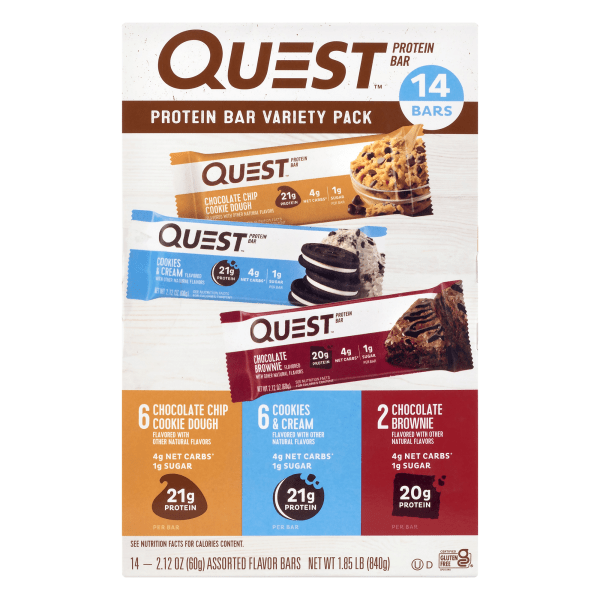


Quest Protein Bars Gluten Free Variety Pack (14 ct.)
Summary
This protein bar contains high-quality protein sources like milk protein isolate and whey protein isolate, which are beneficial for muscle repair and growth. However, the presence of artificial sweeteners such as sucralose and the use of natural flavors, which lack transparency, are concerns. The product is also highly processed, with multiple additives, which affects its overall healthiness despite the beneficial ingredients.
At a glance
Key ingredients 15
Milk Protein IsolateGood
Milk protein isolate is a high-quality protein source derived from milk, providing a complete amino acid profile. It is minimally processed to retain its nutritional value and is effective for muscle repair and growth. Compared to plant-based proteins, it offers superior bioavailability and digestibility.
Benefits
Rich in essential amino acids, supporting muscle recovery and growth.
Whey Protein IsolateVery Good
Whey protein isolate is a highly refined protein source with minimal lactose and fat, making it ideal for those seeking lean protein intake. It undergoes a filtration process to concentrate the protein content, enhancing its effectiveness for muscle building. It is considered one of the best protein sources due to its high biological value.
Benefits
Excellent source of high-quality protein, promoting muscle synthesis and recovery.
PolydextroseNeutral
Polydextrose is a synthetic polymer of glucose used as a low-calorie bulking agent and fiber source. It is highly processed and primarily used to improve texture and add fiber to food products. While it contributes to dietary fiber intake, it does not provide the same health benefits as natural fibers.
Risks
Excessive consumption may cause gastrointestinal discomfort such as bloating or gas.
Benefits
Contributes to dietary fiber intake, aiding in digestion.
Prebiotic FiberGood
Prebiotic fiber is beneficial for gut health as it promotes the growth of beneficial bacteria in the digestive tract. It is typically derived from natural sources and supports a healthy microbiome. Compared to regular fiber, prebiotic fiber specifically enhances gut flora balance.
Benefits
Supports digestive health by promoting beneficial gut bacteria.
AlmondsGood
Almonds are a nutrient-dense nut rich in healthy fats, protein, and vitamins such as vitamin E. They are minimally processed and provide a natural source of energy and satiety. Compared to other nuts, almonds have a favorable nutrient profile with high monounsaturated fat content.
Benefits
Rich in healthy fats and antioxidants, supporting heart health and reducing inflammation.
WaterNeutral
Water is used as a solvent and processing aid in food products. It is essential for hydration but does not contribute significant nutritional value in this context. Its presence is necessary for texture and consistency in food formulations.
Benefits
Essential for hydration and maintaining product consistency.
Unsweetened ChocolateNeutral
Unsweetened chocolate provides a rich cocoa flavor without added sugars, contributing to the taste profile of the product. It is minimally processed and retains natural antioxidants found in cocoa. While it adds flavor, it does not significantly impact the nutritional profile of the product.
Benefits
Contains antioxidants that may support heart health.
ErythritolNeutral
Erythritol is a sugar alcohol used as a low-calorie sweetener, providing sweetness without raising blood sugar levels. It is naturally found in some fruits and is well-tolerated by most people. Compared to other sugar alcohols, erythritol is less likely to cause digestive issues.
Risks
Excessive consumption may cause mild digestive discomfort.
Benefits
Provides sweetness with minimal impact on blood sugar levels.
GlycerinNeutral
Glycerin is a humectant used to retain moisture and improve texture in food products. It is derived from natural sources and is generally recognized as safe. While it contributes to product texture, it does not offer significant nutritional benefits.
Benefits
Helps maintain moisture and texture in food products.
Cocoa ButterNeutral
Cocoa butter is a natural fat extracted from cocoa beans, used to enhance flavor and texture. It is minimally processed and provides a source of healthy fats. While it adds richness to the product, it does not significantly impact the overall nutritional profile.
Benefits
Contains healthy fats that may support heart health.
Natural FlavorsBad
Natural flavors are a catch-all term for flavoring agents derived from natural sources, but their exact composition is often undisclosed. They are highly processed and can contain a variety of chemical compounds. The lack of transparency and potential for allergenic compounds is a concern.
Risks
Potential for undisclosed allergens and chemical additives.
Sea SaltGood
Unrefined sea salt — a minimally processed, natural source of sodium and essential trace minerals, and a legitimate whole-food seasoning. Treated as a positive ingredient.
Risks
Excessive consumption may contribute to high blood pressure.
Benefits
Contains trace minerals and enhances flavor.
Sunflower LecithinNeutral
Sunflower lecithin is an emulsifier derived from sunflower seeds, used to improve texture and consistency. It is less processed than soy lecithin and is generally considered safe. While it aids in product formulation, it does not provide significant nutritional benefits.
Benefits
Improves texture and consistency in food products.
Stevia SweetenerNeutral
Stevia sweetener is a natural, zero-calorie sweetener derived from the stevia plant. It is minimally processed and provides sweetness without affecting blood sugar levels. Compared to artificial sweeteners, stevia is considered a healthier alternative.
Benefits
Provides sweetness without calories or blood sugar impact.
SucraloseBad
Sucralose is an artificial sweetener used to provide sweetness without calories, but it is highly processed and may affect gut health. It is chemically altered to be non-caloric, raising concerns about its long-term health effects. Compared to natural sweeteners, sucralose is less favorable due to potential health concerns.
Risks
May negatively impact gut microbiota and cause digestive issues.
Benefits
Provides sweetness without adding calories.
Processing
Ultra-Processed Foods
Get the full breakdown in the Scout app
Scan any product to see lab results, healthy alternatives, and your personalized analysis.
Download on theApp Store