
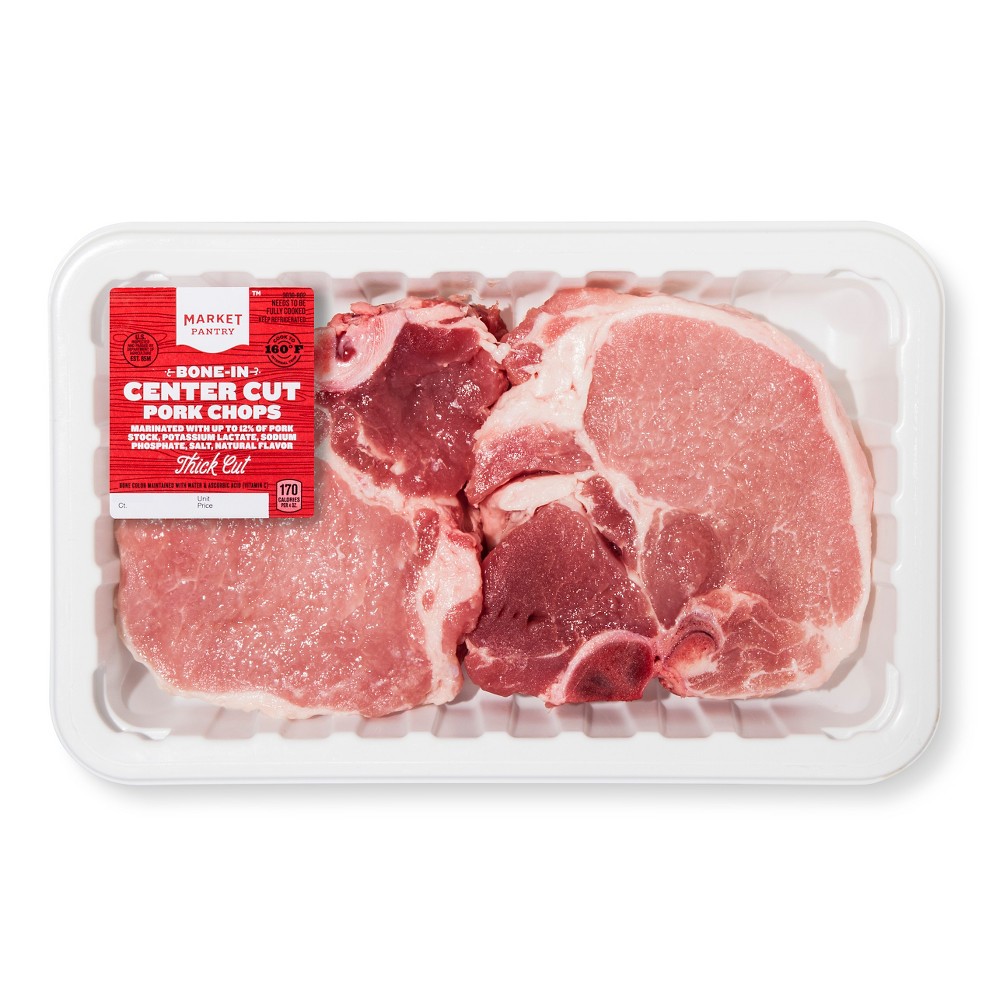

Bone-in Center Cut Pork Chops - 1.13-2.19lbs - price per lb - Market Pantry
Analysis updated July 2026 · How Scout scores
At a glance
Summary
This product is a processed food with added sodium phosphate, which serves as an emulsifier and preservative. While the pork itself is a good source of protein, the inclusion of sodium phosphate can contribute to an increased intake of phosphates, potentially affecting kidney function and bone health if consumed excessively. The processing level limits the score, despite the absence of other harmful additives.
Key ingredients 4
Pork stockNeutral
Pork stock is a liquid made by simmering pork bones and meat, providing flavor and some nutrients. It is minimally processed and typically contains collagen and minerals. However, it does not offer significant nutritional benefits beyond flavor enhancement.
Benefits
Provides flavor and some collagen, which may support joint health.
Potassium lactateNeutral
Potassium lactate is a salt derived from lactic acid, used as a preservative and to enhance flavor. It is generally recognized as safe and helps maintain moisture in meat products. While it does not offer direct health benefits, it aids in food preservation.
Risks
Excessive consumption may lead to an imbalance in electrolytes, but this is unlikely in typical dietary amounts.
Benefits
Helps preserve food and maintain moisture, extending shelf life.
SaltNeutral
Salt is a common seasoning and preservative, essential for flavor and food preservation. It is a source of sodium, necessary for various bodily functions. However, excessive consumption can lead to health issues such as hypertension.
Risks
High sodium intake is associated with increased risk of hypertension and cardiovascular diseases.
Benefits
Essential for maintaining fluid balance and nerve function in the body.
Sodium phosphateBad
Sodium phosphate is used as an emulsifier and preservative in processed foods. It can contribute to an increased intake of phosphates, which may affect kidney function and bone health if consumed in excess. Its use in processed foods is common, but moderation is advised.
Risks
High intake of phosphates can lead to imbalances affecting kidney function and bone health.
Processing
Processed Foods
Get the full breakdown in the Scout appTake Scout shopping
Scan any product to see lab results, healthy alternatives, and your personalized analysis.
Download on theApp Store GET IT ONGoogle Play