


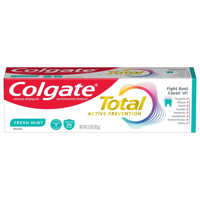
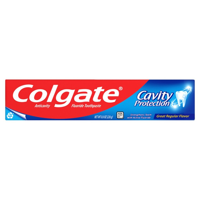

Colgate Total Whitening Paste Toothpaste
At a glance
Summary
Colgate Total Whitening Paste scores 1/100. Lead Safe Mama (Feb 2025) detected 539 ppb lead — among the highest readings in the 2025 toothpaste survey. Suspected sources: hydrated silica + titanium dioxide. Stacks stannous fluoride, SLS, titanium dioxide, PEG-12, dual saccharin + sucralose sweeteners, and trisodium phosphate. Owned by Colgate-Palmolive Company.
Contaminants 4
Source: Lead Safe Mama 2025
Lead 539 ppb High
Detected at a high level — at or above health-based exposure limits. Regular exposure at this level is a genuine health concern. No safe level of lead exposure exists per the CDC, AAP, and WHO; chronic ingestion is linked to lowered IQ in children, neurodevelopmental harm, and cardiovascular and kidney effects in adults. Suspected source: hydrated silica abrasive feedstock.
Lead Safe Mama 3rd-party lab testing (April 2025) detected 539 ppb lead — the highest lead reading among major mainstream toothpaste brands lab-tested in the 2025 survey.
Mercury 10.4 ppb Low
A low level of mercury — present but modest; a sourcing-quality note rather than a safety concern at typical intake.
Lead Safe Mama 3rd-party lab testing (April 2025) detected 10.4 ppb mercury.
Arsenic <10 ppb Not detected
Not detected — below the laboratory's detection limit. This is the strictest possible result: no measurable amount was found.
Lead Safe Mama 2025 lab testing reported arsenic below the 10 ppb low threshold of detection — no arsenic measurable in this product.
Cadmium <5 ppb Not detected
Not detected — below the laboratory's detection limit. This is the strictest possible result: no measurable amount was found.
Lead Safe Mama 2025 lab testing reported cadmium below the 5 ppb low threshold of detection — no cadmium measurable in this product.
Key ingredients 19
Stannous Fluoride 0.454%Very Bad
Active anticavity/antigingivitis/antisensitivity ingredient (0.15% w/v fluoride ion). Fluoride is classified by The Lancet (2014) as a developmental neurotoxicant; chronic ingestion is linked to dental fluorosis, lowered IQ in children (NTP 2024 monograph), and thyroid suppression.
See more about Stannous Fluoride 0.454% →Sodium Lauryl SulfateVery Bad
Harsh anionic surfactant. Documented trigger for recurrent aphthous (canker) ulcers (Herlofson & Barkvoll 1996); strips protective oral mucin; common contact irritant. Cleaner toothpastes use coconut-derived alternatives.
See more about Sodium Lauryl Sulfate →Titanium DioxideVery Bad
Whitening pigment. Banned as a food additive in the European Union since 2022 after EFSA concluded it cannot be considered safe due to genotoxicity concerns from nanoparticle fractions. IARC Group 2B (possibly carcinogenic to humans) when inhaled.
See more about Titanium Dioxide →PEG-12Bad
Polyethylene glycol thickener and solvent. PEGs are commonly contaminated with 1,4-dioxane (EPA likely human carcinogen, IARC Group 2B) and ethylene oxide (IARC Group 1) as ethoxylation byproducts unless explicitly purified.
See more about PEG-12 →Tetrasodium PyrophosphateBad
Tartar-control phosphate. Long-term use is associated with enamel erosion and gum irritation; high systemic phosphate intake is linked to kidney stress and cardiovascular calcification.
See more about Tetrasodium Pyrophosphate →Flavor (undisclosed)Bad
Proprietary flavor blend. Can hide dozens of synthetic aroma chemicals, phthalate carriers, and allergens with zero consumer disclosure under FDA trade-secret rules.
See more about Flavor (undisclosed) →Sodium SaccharinBad
Synthetic sweetener used purely for taste. Associated with gut microbiome disruption (Suez et al. 2014); was on the U.S. NTP carcinogen list until 2000.
See more about Sodium Saccharin →SucraloseBad
Synthetic chlorinated sweetener. Recent peer-reviewed work (Schiffman et al. 2023) shows DNA damage and gut-barrier disruption at typical exposure levels. No reason to ingest a synthetic sweetener through toothpaste.
See more about Sucralose →WaterNeutral
Solvent base.
See more about Water →SorbitolNeutral
Sugar alcohol humectant; non-cariogenic.
See more about Sorbitol →Hydrated SilicaNeutral
Standard mild toothpaste abrasive — safe at typical use.
See more about Hydrated Silica →Zinc PhosphateNeutral
Antimicrobial / tartar-control mineral. Generally considered safe at toothpaste concentrations.
See more about Zinc Phosphate →Cellulose GumNeutral
Plant-derived thickener (carboxymethylcellulose). Inert and safe in topical oral care.
See more about Cellulose Gum →Sodium CitrateNeutral
pH buffer; inert at typical concentrations.
See more about Sodium Citrate →Microcrystalline CelluloseNeutral
Plant-derived bulking agent and thickener.
See more about Microcrystalline Cellulose →Cocamidopropyl BetaineNeutral
Coconut-derived surfactant — milder than sulfates, though an occasional allergen.
See more about Cocamidopropyl Betaine →Xanthan GumNeutral
Plant-derived thickener; safe.
See more about Xanthan Gum →Citric AcidNeutral
Common acidulant and preservative — safe at typical use levels, neither beneficial nor harmful.
See more about Citric Acid →GlycerinGood
Humectant that draws moisture to the skin — a beneficial base ingredient.
See more about Glycerin →Get the full breakdown in the Scout appTake Scout shopping
Scan any product to see lab results, healthy alternatives, and your personalized analysis.
Download on theApp Store GET IT ONGoogle PlayAmazon pricing & content
Amazon price as of . Product prices and availability are accurate as of the date/time indicated and are subject to change. Any price and availability information displayed on Amazon.com at the time of purchase will apply to the purchase of this product.
CERTAIN CONTENT THAT APPEARS ON THIS SITE COMES FROM AMAZON. THIS CONTENT IS PROVIDED “AS IS” AND IS SUBJECT TO CHANGE OR REMOVAL AT ANY TIME.