
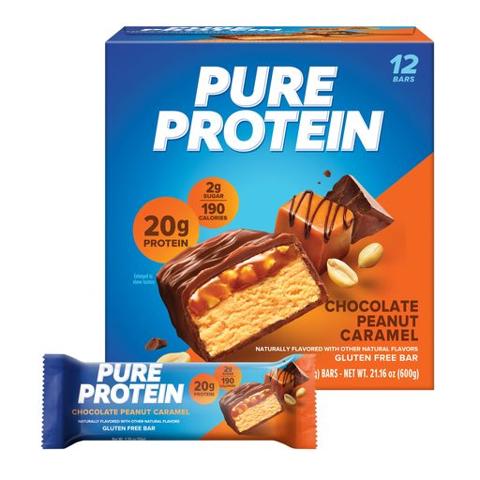


Pure Protein Protein Bars
At a glance
Summary
Pure Protein Protein Bars deliver 20g of protein per bar but rely on a heavily processed ingredient list featuring four different sweetening systems (maltitol syrup, maltitol, sugar, and sucralose), fractionated palm kernel oil, soy lecithin, soy protein isolate, refined peanut oil, glycerine, and tapioca starch. Despite the high protein content and gluten-free marketing, ten harmful substances and NOVA 4 ultra-processed classification severely undermine its nutritional value.
Key ingredients 18
Maltitol SyrupBad
Maltitol syrup is the liquid form of the sugar alcohol maltitol, with a higher glycemic index than solid maltitol and greater absorption rate. It is well-documented to cause significant gastrointestinal distress including bloating, gas, and diarrhea, especially at the 6g sugar alcohol level in this product.
Risks
Causes significant gastrointestinal distress. Higher glycemic response than other sugar alcohols. Liquid form absorbs faster than solid maltitol.
Benefits
Provides sweetness with fewer calories than sugar.
MaltitolBad
Maltitol is a sugar alcohol that raises blood sugar more than other sugar alcohols like erythritol or xylitol. Doubled up with maltitol syrup in this product, compounding the gastrointestinal distress risk.
Risks
Causes bloating, gas, and diarrhea. Raises blood sugar more than other sugar alcohols. Stacked with maltitol syrup for double exposure.
Benefits
Provides sweetness with fewer calories than sugar.
Fractionated Palm Kernel OilBad
Fractionated palm kernel oil is an industrially processed tropical oil that has been separated into specific fat fractions. It is high in saturated fatty acids (lauric and myristic acids) associated with cardiovascular concerns. The fractionation process is an industrial chemical separation.
Risks
High in saturated fat associated with cardiovascular disease. Industrially processed. Associated with environmental destruction.
Benefits
Provides texture and coating properties.
SugarBad
Added refined sugar in a product already using maltitol syrup, maltitol, and sucralose. Four different sweetening systems in one product is a hallmark of ultra-processing. Unnecessary in a product marketed as a health food.
Risks
Contributes to blood sugar spikes and metabolic issues. Redundant with three other sweeteners already present.
Benefits
Provides sweetness and flavor.
Soy LecithinBad
Soy lecithin is a highly processed emulsifier extracted from soybeans using chemical solvents. It is a common allergen and the majority of soy in the US is genetically modified. The industrial extraction process raises concerns about chemical residues.
Risks
Common allergen. Typically derived from GMO soybeans. Extracted using chemical solvents like hexane.
Benefits
Functions as an emulsifier to improve product texture.
SucraloseBad
Sucralose is a chlorinated artificial sweetener linked to disruption of the gut microbiome and potential insulin response issues. It is the fourth sweetening system in this product, stacked on top of maltitol syrup, maltitol, and sugar.
Risks
May disrupt gut microbiome balance. Fourth sweetener in the product compounding metabolic confusion.
Benefits
Provides zero-calorie sweetness.
Soy Protein IsolateBad
Soy protein isolate is a heavily processed protein extracted from soybeans using chemical solvents like hexane. The majority of soy in the US is genetically modified. It contains phytoestrogens that may disrupt hormonal balance and is used as a cheap filler protein inferior to whey in bioavailability.
Risks
Typically GMO-derived. Extracted using chemical solvents. Contains phytoestrogens that may affect hormone levels. Inferior bioavailability compared to whey.
Benefits
Provides additional protein at lower cost.
Peanut OilBad
Refined peanut oil is industrially processed using chemical solvents, stripping beneficial compounds found in whole peanuts. The refining process and high omega-6 content make it a pro-inflammatory fat source.
Risks
Industrially refined with chemical solvents. High omega-6 content promotes chronic inflammation. Stripped of beneficial compounds found in whole peanuts.
Benefits
Provides texture.
Natural FlavorBad
Umbrella term that can hide dozens of undisclosed synthetic flavor constituents.
Risks
Processed flavoring compound with limited transparency beyond the colorants.
Benefits
Enhances flavor. Annatto and turmeric are natural colorants.
GlycerineNeutral
Standard formulation ingredient — neither beneficial nor harmful at typical use.
Risks
Processed additive with no nutritional benefit. Contributes to ultra-processed formulation.
Benefits
Maintains product moisture and texture.
Tapioca StarchNeutral
Refined but benign starch used for texture.
Risks
Provides empty calories with no nutritional value. Highly processed filler ingredient.
Benefits
Provides texture and volume.
Cocoa processed with alkaliNeutral
Dutch-processed cocoa has a milder flavor but reduced antioxidant content compared to natural cocoa due to the alkalization process.
Risks
Reduced antioxidant content compared to natural cocoa.
Benefits
Provides chocolate flavor with some remaining cocoa nutrients.
SaltNeutral
Standard flavor enhancer at 200mg sodium per bar, which is moderate-high for a snack item.
Risks
200mg sodium is moderate-high for a single snack. Excessive sodium intake can contribute to hypertension.
Benefits
Enhances flavor and is essential for fluid balance.
Calcium CarbonateNeutral
Basic calcium supplement form with low bioavailability compared to chelated forms. Functional but not premium.
Risks
Low bioavailability compared to chelated calcium forms.
Benefits
Provides supplemental calcium for bone health.
Whey Protein ConcentrateGood
Whey protein concentrate is a well-studied protein source with a complete amino acid profile and good bioavailability. It supports muscle protein synthesis and recovery, though it retains more lactose and fat than isolate forms.
Risks
May cause digestive issues in lactose-sensitive individuals.
Benefits
Complete amino acid profile supporting muscle growth and recovery.
Milk Protein IsolateGood
Milk protein isolate is a high-quality complete protein containing both whey and casein fractions. It provides sustained amino acid release for prolonged muscle protein synthesis.
Risks
May cause digestive issues in individuals with dairy sensitivity.
Benefits
Supports sustained muscle recovery through both fast-acting whey and slow-releasing casein.
Hydrolyzed CollagenGood
Hydrolyzed collagen supports skin, joint, and connective tissue health. It provides specific amino acids like glycine and proline that are underrepresented in other protein sources.
Benefits
Supports skin elasticity, joint health, and connective tissue integrity.
Peanuts and Almond ButterGood
Whole food sources of healthy monounsaturated fats, fiber, vitamin E, and plant protein. Peanuts and almond butter contribute meaningful nutrition beyond just protein.
Risks
Common allergens. High calorie density.
Benefits
Provide healthy fats, fiber, and micronutrients from whole food sources.
Processing
Ultra-Processed Foods
Get the full breakdown in the Scout appTake Scout shopping
Scan any product to see lab results, healthy alternatives, and your personalized analysis.
Download on theApp Store GET IT ONGoogle PlayAmazon pricing & content
Amazon price as of . Product prices and availability are accurate as of the date/time indicated and are subject to change. Any price and availability information displayed on Amazon.com at the time of purchase will apply to the purchase of this product.
CERTAIN CONTENT THAT APPEARS ON THIS SITE COMES FROM AMAZON. THIS CONTENT IS PROVIDED “AS IS” AND IS SUBJECT TO CHANGE OR REMOVAL AT ANY TIME.