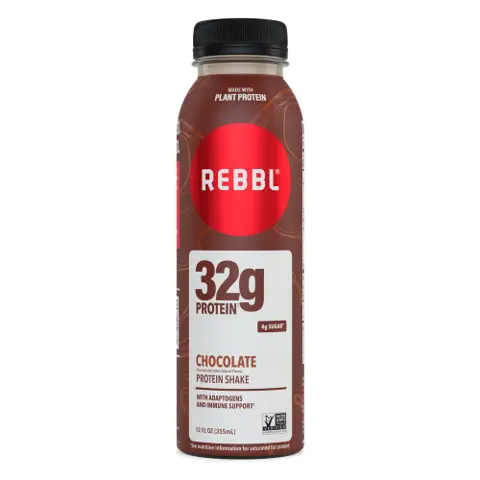
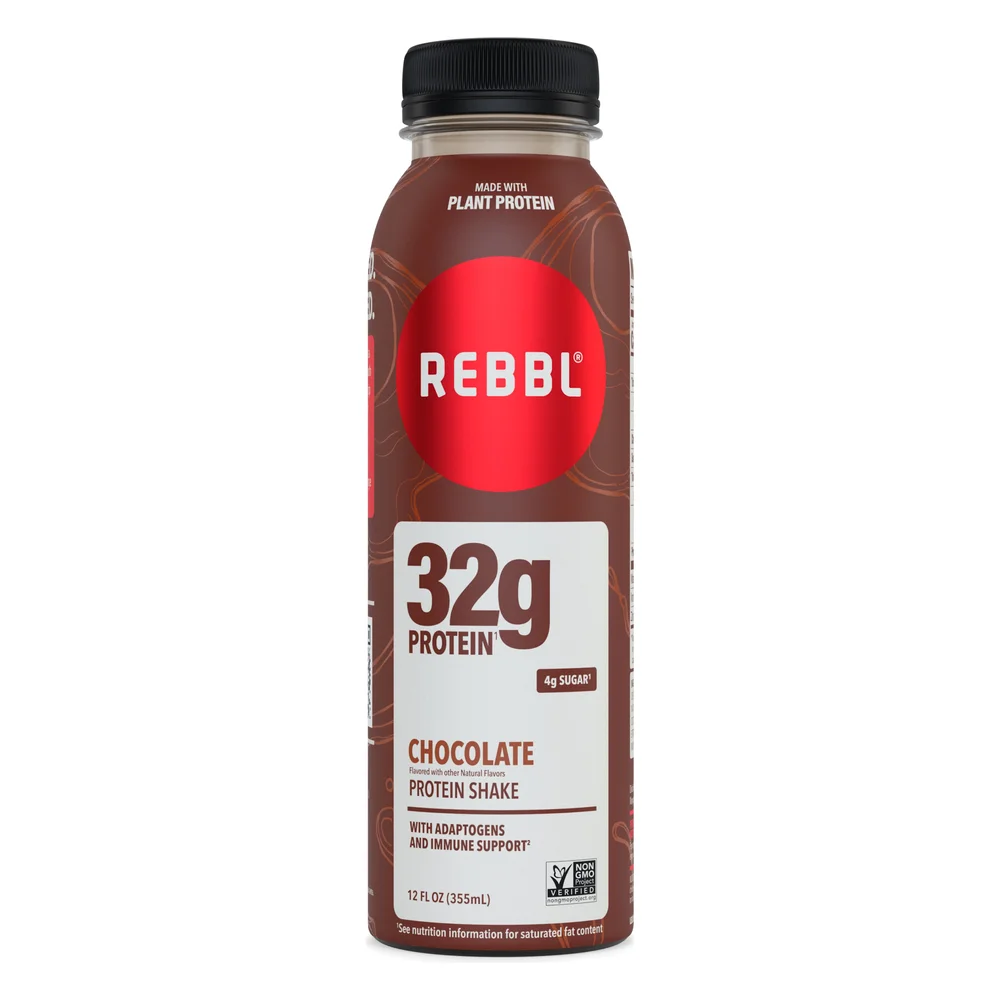
REBBL 32g Chocolate Protein Shake
At a glance
Summary
The Rebel Protein Shake Chocolate features a blend of plant-based proteins and beneficial ingredients like coconut milk and coconut cream, which provide healthy fats and a creamy texture. The use of natural sweeteners such as stevia and monk fruit is a positive aspect, avoiding artificial sweeteners. However, the inclusion of 'natural flavor' and a few additives like gellan gum slightly detracts from its clean label appeal, though these are common in flavored protein products.
Key ingredients 17
Coconut MilkGood
Coconut milk is a natural source of healthy fats and provides a creamy texture to the shake. It is minimally processed and contains medium-chain triglycerides (MCTs) which are easily metabolized for energy. Compared to seed oils, coconut milk offers a more stable fat profile with potential health benefits.
Risks
Excessive consumption may lead to increased calorie intake and potential weight gain.
Benefits
Rich in MCTs that can support energy levels and may aid in weight management.
Coconut CreamGood
Coconut cream is a concentrated source of coconut fats, providing a rich texture and flavor. It is less processed than many other fat sources and contains beneficial MCTs. Its natural origin and nutrient profile make it a favorable ingredient in moderation.
Risks
High in calories and saturated fats, which could contribute to weight gain if consumed in excess.
Benefits
Provides MCTs that are quickly metabolized for energy and may support metabolic health.
Vanilla ExtractGood
Beneficial ingredient — whole-food or functional value in this product class.
Benefits
Adds natural flavor and aroma to foods and beverages.
Monk Fruit ExtractGood
Beneficial ingredient — whole-food or functional value in this product class.
Benefits
Provides a natural, calorie-free sweetening option suitable for those managing sugar intake.
Plant Protein BlendNeutral
The plant protein blend includes various plant-based proteins, offering a diverse amino acid profile. While plant proteins are generally less complete than animal proteins, they are suitable for vegan diets. The blend's quality depends on the specific proteins used and their processing.
Risks
May not provide a complete amino acid profile compared to animal-based proteins.
Benefits
Suitable for those following a plant-based diet and can contribute to daily protein intake.
Upcycled Barley ProteinNeutral
Upcycled barley protein is derived from barley, offering a sustainable protein source. It is a byproduct of other processes, reducing waste and environmental impact. While it provides protein, its amino acid profile may not be as complete as animal sources.
Risks
Potentially lower in essential amino acids compared to animal-based proteins.
Benefits
Environmentally friendly and contributes to protein intake with minimal waste.
Pea ProteinNeutral
Pea protein is a popular plant-based protein known for its digestibility and hypoallergenic properties. It is a good source of iron and can support muscle growth. However, it lacks some essential amino acids found in animal proteins.
Risks
May not provide a complete amino acid profile on its own.
Benefits
Easily digestible and suitable for those with allergies to dairy or soy.
Upcycled Rice ProteinNeutral
Upcycled rice protein is a sustainable protein source derived from rice, offering a plant-based alternative. It is often used in combination with other proteins to improve amino acid balance. Its environmental benefits include reduced waste.
Risks
Incomplete amino acid profile when used alone.
Benefits
Sustainable and contributes to protein intake with minimal environmental impact.
Agave InulinNeutral
Agave inulin is a natural prebiotic fiber that supports digestive health. It is derived from the agave plant and can help promote beneficial gut bacteria. While beneficial for digestion, it does not provide significant nutritional value beyond fiber.
Risks
Excessive intake may cause digestive discomfort such as bloating or gas.
Benefits
Supports gut health by promoting the growth of beneficial bacteria.
Coconut SugarNeutral
Coconut sugar is a natural sweetener with a lower glycemic index than regular sugar. It is less processed and retains some nutrients from the coconut palm. However, it is still a form of sugar and should be consumed in moderation.
Risks
Can contribute to increased blood sugar levels if consumed in large amounts.
Benefits
Provides a more natural alternative to refined sugars with a lower glycemic impact.
Alkalized Cocoa PowderNeutral
Alkalized cocoa powder is treated to reduce acidity, enhancing flavor and solubility. It retains antioxidants found in cocoa, though processing may reduce some beneficial compounds. It adds chocolate flavor without significant health risks.
Risks
Processing may reduce some antioxidant content compared to raw cocoa.
Benefits
Provides rich chocolate flavor and some antioxidants.
Pink SaltNeutral
Pink salt is a mineral-rich salt that contains trace elements not found in regular table salt. It is less processed and can add flavor to foods. However, it should be used in moderation to avoid excessive sodium intake.
Risks
Excessive consumption can lead to high sodium intake, affecting blood pressure.
Benefits
Contains trace minerals that may offer additional health benefits compared to regular salt.
Stevia ExtractNeutral
Stevia extract is a natural, zero-calorie sweetener derived from the stevia plant. It is used as a sugar substitute and has no significant health concerns. It provides sweetness without affecting blood sugar levels.
Benefits
Offers a calorie-free alternative to sugar, suitable for those managing blood sugar levels.
AcaciaNeutral
Acacia is a natural gum used as a stabilizer and source of dietary fiber. It is derived from the sap of acacia trees and is minimally processed. While it provides fiber, it does not offer significant nutritional benefits beyond that.
Risks
Excessive intake may cause digestive discomfort such as bloating or gas.
Benefits
Acts as a stabilizer and provides dietary fiber, supporting digestive health.
Gellan GumNeutral
Gellan gum is a polysaccharide used as a gelling agent and stabilizer in foods. It is produced through bacterial fermentation and is considered safe for consumption. It helps maintain texture and consistency in food products.
Benefits
Helps stabilize and maintain the texture of food products.
Zinc GluconateNeutral
Zinc gluconate is a form of zinc used as a dietary supplement to support immune function. It is well-absorbed and commonly used in supplements. While beneficial for zinc intake, it should be consumed in appropriate amounts to avoid toxicity.
Risks
Excessive intake can lead to zinc toxicity, causing nausea and other health issues.
Benefits
Supports immune function and overall health as a source of zinc.
Natural FlavorBad
Natural flavors are often used to enhance taste but can be a catch-all for various additives. They are highly processed and lack transparency regarding their exact composition. This can be concerning for those seeking clean label products.
Risks
Lack of transparency and potential for undisclosed additives.
Benefits
Enhances flavor without adding calories.
Processing
Ultra-Processed Foods
Get the full breakdown in the Scout appTake Scout shopping
Scan any product to see lab results, healthy alternatives, and your personalized analysis.
Are you REBBL? Fix an error Get the badge Get tested
Amazon pricing & content
Amazon price as of . Product prices and availability are accurate as of the date/time indicated and are subject to change. Any price and availability information displayed on Amazon.com at the time of purchase will apply to the purchase of this product.
Amazon prices for other products on this page as of – . Product prices and availability are accurate as of the date/time indicated and are subject to change. Any price and availability information displayed on Amazon.com at the time of purchase will apply to the purchase of this product.
CERTAIN CONTENT THAT APPEARS ON THIS SITE COMES FROM AMAZON. THIS CONTENT IS PROVIDED “AS IS” AND IS SUBJECT TO CHANGE OR REMOVAL AT ANY TIME.