
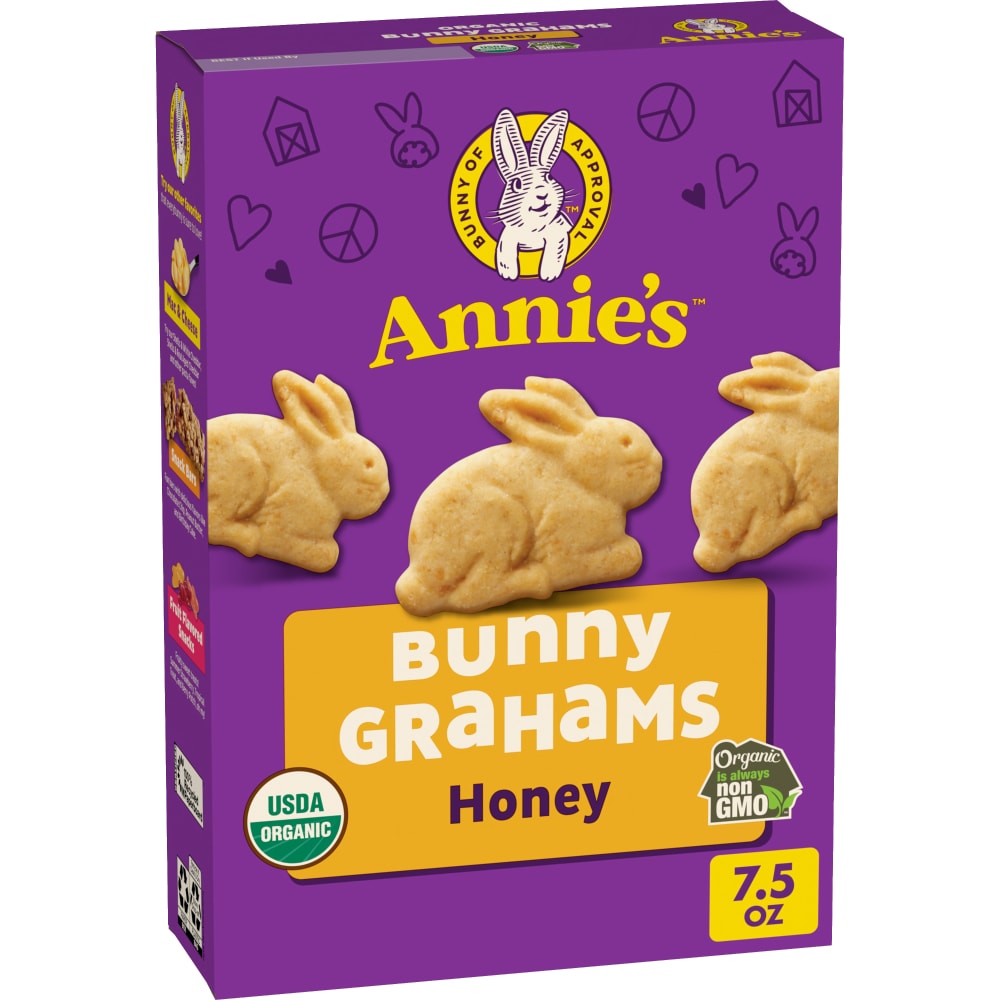


Annie's Organic Honey Bunny Grahams
Analysis updated May 2026 · How Scout scores
At a glance
Summary
Annie's Organic Honey Bunny Grahams contain beneficial ingredients like organic whole wheat flour and organic honey, which provide fiber and natural sweetness. However, the presence of sunflower oil, a seed oil high in omega-6 fatty acids, and the use of natural flavors contribute to a lower score. The product is also highly processed, which limits its overall healthiness despite the organic certification and some nutritious components.
Key ingredients 10
Organic whole wheat flourGood
Organic whole wheat flour is a nutritious ingredient providing fiber and essential nutrients. Being organic, it is free from synthetic pesticides and fertilizers. It supports digestive health and provides a steady release of energy.
Risks
May cause allergic reactions in individuals with wheat allergies or gluten intolerance.
Benefits
Rich in dietary fiber, vitamins, and minerals, supporting overall health and digestion.
Organic whole oat flourGood
Organic whole oat flour is a whole grain flour that offers a good source of fiber and protein. The organic certification ensures it is grown without harmful chemicals. It contributes to heart health and helps maintain stable blood sugar levels.
Risks
May cause allergic reactions in individuals with oat allergies.
Benefits
Provides beta-glucans which are beneficial for heart health and cholesterol management.
Organic honeyGood
Organic honey is a natural sweetener with antioxidant properties. It is less processed than refined sugars and contains trace amounts of vitamins and minerals. It can provide a quick source of energy and has antimicrobial properties.
Risks
Should be consumed in moderation due to its high sugar content.
Benefits
Contains antioxidants and has antimicrobial properties, offering some health benefits over refined sugars.
Sea saltGood
Unrefined sea salt — a minimally processed, natural source of sodium and essential trace minerals, and a legitimate whole-food seasoning. Treated as a positive ingredient.
Risks
Excessive sodium intake can lead to hypertension and cardiovascular issues.
Benefits
Provides essential minerals and enhances flavor.
Calcium carbonateNeutral
Calcium carbonate is used as a calcium supplement and food additive. It helps fortify foods with calcium, supporting bone health. It is generally recognized as safe when used in food products.
Risks
Excessive intake can lead to hypercalcemia and digestive issues.
Benefits
Provides a source of calcium, which is essential for bone health.
Baking sodaNeutral
Baking soda is a leavening agent that helps baked goods rise. It is a common and safe ingredient in baking. It reacts with acidic components to produce carbon dioxide, aiding in texture development.
Benefits
Contributes to the texture and rise of baked goods.
Mixed tocopherols (vitamin e)Neutral
Mixed tocopherols are used as antioxidants to preserve freshness. They are a form of vitamin E, which is beneficial for skin and immune health. However, in this context, they primarily serve a preservative function.
Benefits
Acts as an antioxidant, helping to preserve the product and providing some vitamin E.
Organic cane sugarBad
Processed additive flagged under Scout's ingredient doctrine.
Risks
Excessive consumption can lead to health issues such as obesity and dental cavities.
Benefits
Provides a natural source of sweetness with minimal processing.
Natural flavorBad
Natural flavors are additives used to enhance taste, but their exact composition is often undisclosed. They can contain a variety of compounds, some of which may not be beneficial. The lack of transparency and potential for synthetic processing raises concerns.
Risks
Potential for undisclosed synthetic processing and allergenic compounds.
Organic expeller-pressed sunflower oilVery Bad
Sunflower oil is a seed oil high in omega-6 fatty acids, which can promote inflammation if consumed in excess. The expeller-pressed method is a mechanical extraction process that avoids chemical solvents. Despite being organic, it is still considered a less healthy fat option compared to alternatives like olive oil.
Risks
High omega-6 content may promote inflammation when consumed in excess.
Processing
Ultra-Processed Foods
Get the full breakdown in the Scout appTake Scout shopping
Scan any product to see lab results, healthy alternatives, and your personalized analysis.
Download on theApp Store GET IT ONGoogle Play