
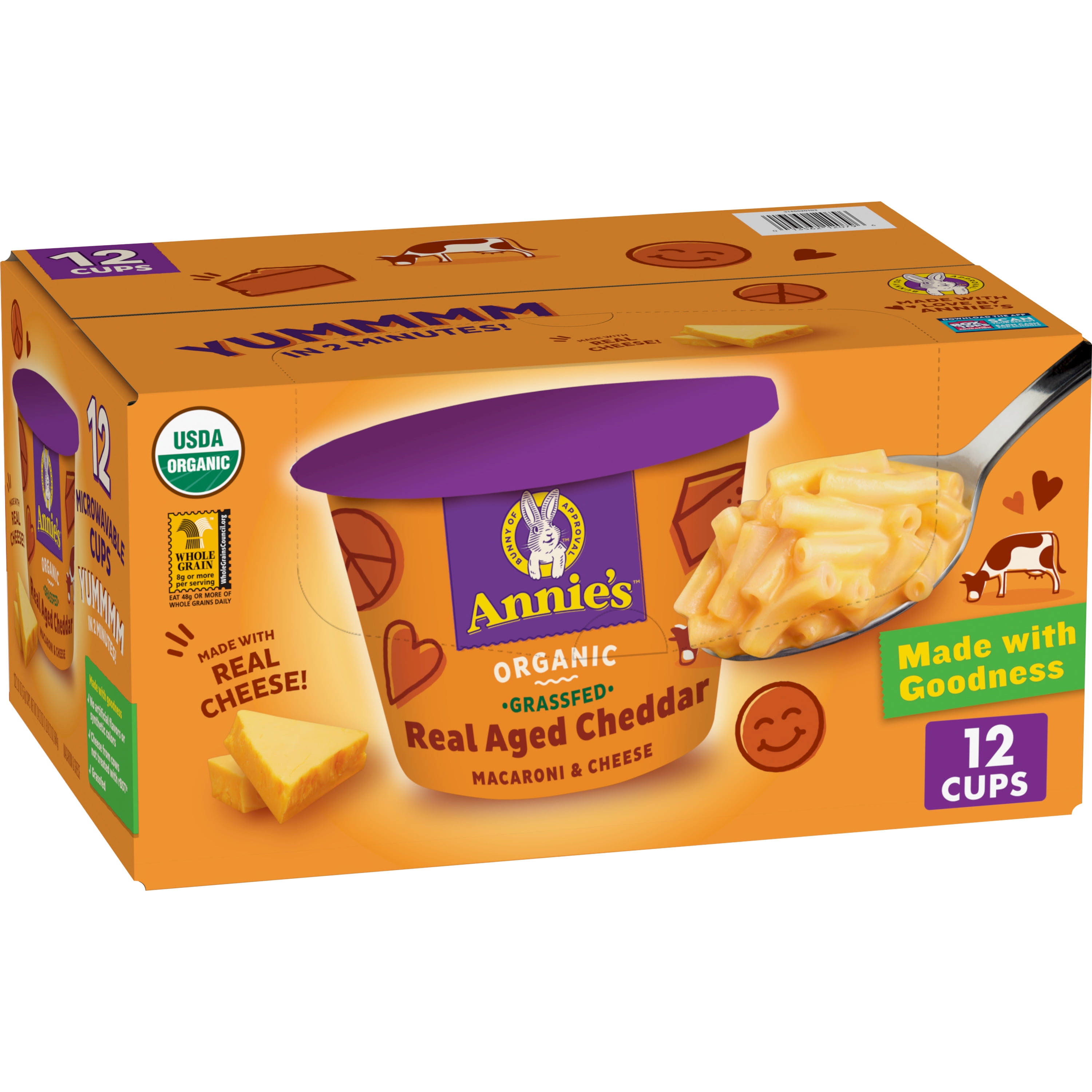


Annie's Organic Grass Fed Real Aged Cheddar Macaroni & Cheese Microwavable Cup 12 Pack
Analysis updated April 2026 · How Scout scores
At a glance
Summary
This product features several organic ingredients, including grass-fed cheddar cheese and whole grain pasta, which contribute positively to its nutritional profile. However, it is classified as highly processed due to the presence of additives like disodium phosphate and silicon dioxide, which are used for stabilization and anticaking. The processing level and the use of synthetic additives limit its overall healthiness despite the organic certification and beneficial ingredients.
Key ingredients 15
Organic Dried Cheddar CheeseVery Good
Organic dried cheddar cheese is made from pasteurized organic milk, providing a source of high-quality protein and calcium. The organic certification ensures no synthetic hormones or antibiotics are used. Grass-fed dairy may offer higher omega-3 fatty acids and CLA content.
Risks
Contains lactose, which may be a concern for individuals with lactose intolerance.
Benefits
Rich in protein and calcium, supporting bone health and muscle maintenance.
Organic WheyVery Good
Organic whey is a high-quality protein source derived from milk, rich in essential amino acids. The organic certification ensures no synthetic hormones or antibiotics are used. It supports muscle growth and recovery.
Risks
Contains lactose, which may be a concern for individuals with lactose intolerance.
Benefits
Excellent source of protein, supporting muscle maintenance and recovery.
Organic PastaGood
Organic pasta is made from organic wheat flour and organic whole grain wheat flour, providing a source of complex carbohydrates. The use of organic ingredients reduces exposure to pesticides and synthetic fertilizers. Whole grain content adds fiber, supporting digestive health.
Risks
Contains gluten, which may be a concern for individuals with celiac disease or gluten sensitivity.
Benefits
Provides complex carbohydrates and fiber, supporting energy levels and digestive health.
Organic Nonfat MilkGood
Organic nonfat milk is a source of protein and calcium without the added fat content. The organic certification ensures the milk is free from synthetic hormones and antibiotics. It supports bone health and provides essential nutrients.
Risks
Contains lactose, which may be a concern for individuals with lactose intolerance.
Benefits
Provides protein and calcium, essential for bone health and muscle function.
Organic Coconut OilGood
Organic coconut oil is a source of medium-chain triglycerides (MCTs), which are easily metabolized for energy. The organic certification ensures no chemical solvents are used in processing. It may support weight management and provide antimicrobial properties.
Risks
High in saturated fats, which should be consumed in moderation.
Benefits
Contains MCTs that can support energy levels and metabolic health.
Organic ButterGood
Organic butter is made from cream and provides a source of fat-soluble vitamins like A, D, E, and K. The organic certification ensures no synthetic hormones or antibiotics are used. Grass-fed butter may offer higher levels of beneficial fatty acids.
Risks
High in saturated fats, which should be consumed in moderation.
Benefits
Rich in fat-soluble vitamins and beneficial fatty acids.
Cultured Organic MilkGood
Cultured organic milk is fermented with beneficial bacteria, enhancing its probiotic content. The organic certification ensures no synthetic hormones or antibiotics are used. It supports gut health and digestion.
Risks
Contains lactose, which may be a concern for individuals with lactose intolerance.
Benefits
Supports gut health through probiotic content.
Organic Tapioca StarchNeutral
Organic tapioca starch is used as a thickening agent and is derived from the cassava root. It is a gluten-free carbohydrate source, making it suitable for those with gluten intolerance. However, it offers minimal nutritional benefits beyond its thickening properties.
Benefits
Provides a gluten-free thickening option for food products.
Organic Corn StarchNeutral
Organic corn starch is used as a thickening agent and is derived from organic corn. It is a gluten-free carbohydrate source, suitable for those with gluten intolerance. However, it offers minimal nutritional benefits beyond its thickening properties.
Benefits
Provides a gluten-free thickening option for food products.
SaltNeutral
Salt is used to enhance flavor and is a necessary electrolyte for bodily functions. However, excessive consumption can lead to health issues such as hypertension. It is important to consume salt in moderation.
Risks
Excessive intake can lead to high blood pressure and cardiovascular issues.
Benefits
Essential for maintaining fluid balance and nerve function.
Potassium ChlorideNeutral
Potassium chloride is used as a salt substitute to reduce sodium content in foods. It provides potassium, an essential mineral for heart and muscle function. However, excessive intake can lead to hyperkalemia, especially in individuals with kidney issues.
Risks
Excessive intake can lead to hyperkalemia, particularly in those with kidney problems.
Benefits
Provides potassium, supporting heart and muscle function.
Organic Annatto ExtractNeutral
Organic annatto extract is used as a natural coloring agent derived from the seeds of the achiote tree. It provides a natural alternative to synthetic dyes. While it is generally safe, some individuals may experience allergic reactions.
Risks
May cause allergic reactions in sensitive individuals.
Benefits
Provides natural coloring without synthetic dyes.
Silicon DioxideNeutral
Silicon dioxide is used as an anticaking agent to prevent clumping in powdered products. It is generally recognized as safe when used in small amounts. It does not provide any nutritional benefits.
Benefits
Prevents clumping, ensuring product consistency.
Organic Sunflower LecithinBad
Processed additive flagged under Scout's ingredient doctrine.
Benefits
Acts as a natural emulsifier, improving product texture.
Disodium PhosphateBad
Disodium phosphate is used as an emulsifier and stabilizer in processed foods. It is a synthetic additive that can contribute to an imbalance in phosphate levels when consumed in excess. High phosphate intake is linked to kidney stress and bone mineral disruption.
Risks
Excessive intake can lead to kidney stress and bone mineral disruption.
Processing
Ultra-Processed Foods
Get the full breakdown in the Scout appTake Scout shopping
Scan any product to see lab results, healthy alternatives, and your personalized analysis.
Download on theApp Store GET IT ONGoogle Play