
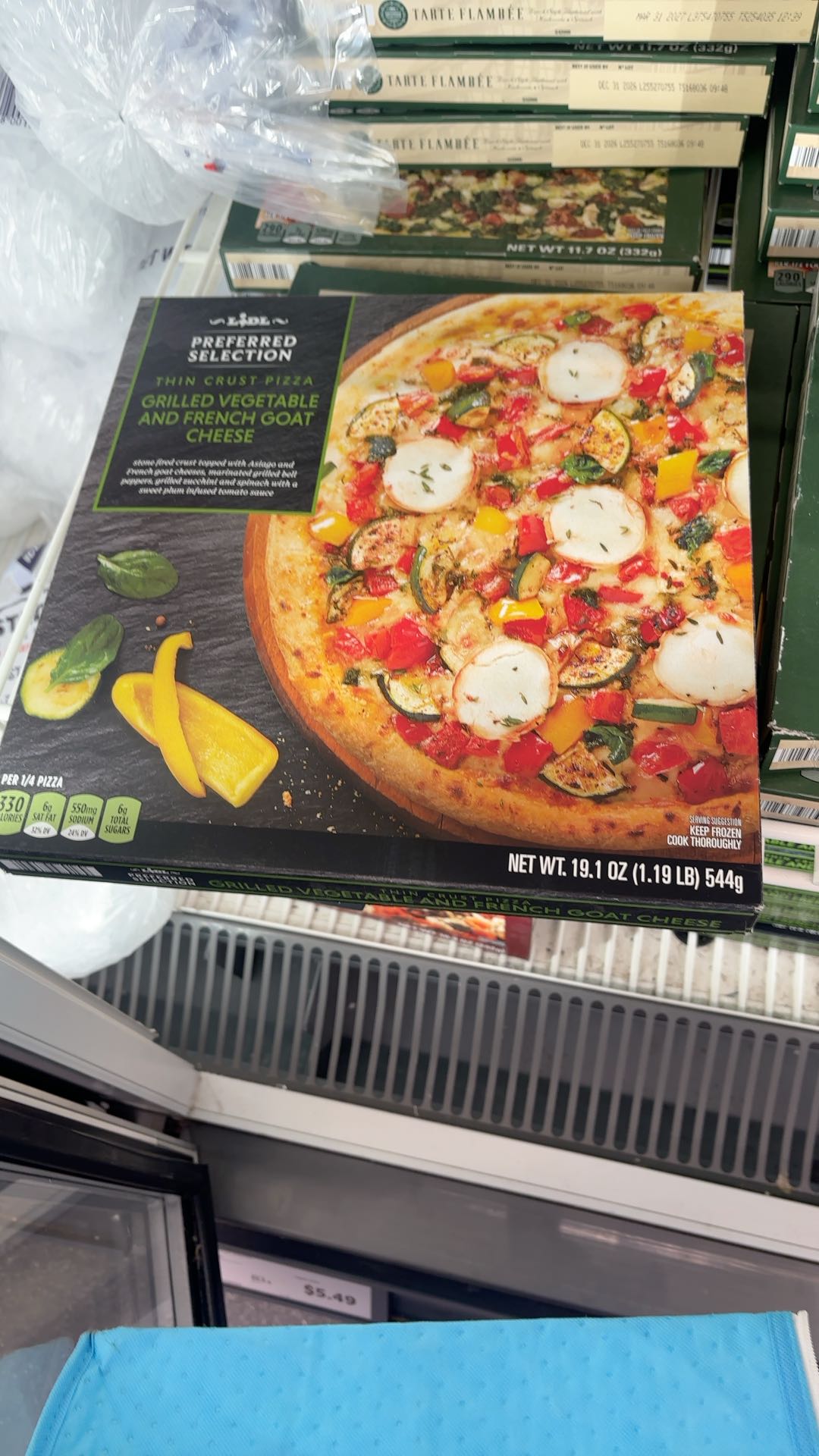
French GOAT Cheese And Veggie Pizza

Private Selection
60 Fair
View on Amazon

Summary

This pizza features some beneficial ingredients like wheat germ flour and Asiago cheese, which provide vitamins, minerals, and protein. However, the presence of canola oil, a highly processed seed oil, detracts from its health profile. The product is moderately processed, which limits its score despite the inclusion of some nutritious components.

At a glance

Beneficial ingredients 2
Harmful ingredients 1
Owned by Kroger
Category Cheese

Key ingredients 10

Wheat Flour
Neutral

Wheat flour is a staple ingredient in many baked goods and provides structure to the dough. It is a refined carbohydrate, which can lead to rapid spikes in blood sugar levels. Whole grain alternatives offer more fiber and nutrients compared to refined wheat flour.

Risks

Refined wheat flour can contribute to blood sugar spikes and may lack essential nutrients found in whole grains.

Benefits

Provides structure and texture to baked goods, making it essential for traditional pizza dough.

See more about Wheat Flour →
Water
Neutral

Water is used as a solvent and to hydrate ingredients in dough. It is essential for the chemical reactions that occur during baking. Water itself does not provide any nutritional value.

Benefits

Essential for hydration and facilitating chemical reactions in baking.

See more about Water →
Canola Oil
Very Bad

Canola oil is a seed oil high in omega-6 fatty acids, which can promote inflammation when consumed in excess. It is often highly processed and refined, which can strip away beneficial nutrients. Alternatives like olive oil offer healthier fat profiles.

Risks

High omega-6 content may promote inflammation when consumed in excess.

See more about Canola Oil →
Wheat Germ Flour
Good

Wheat germ flour is rich in vitamins and minerals, including vitamin E and folic acid. It provides additional fiber and nutrients compared to refined flour. Its inclusion can enhance the nutritional profile of baked goods.

Risks

May cause allergic reactions in individuals with wheat allergies.

Benefits

Rich in essential nutrients and fiber, contributing to a healthier diet.

Salt
Neutral

Salt is used to enhance flavor and as a preservative in food products. While essential in small amounts, excessive consumption can lead to health issues like hypertension. It is a common ingredient in processed foods.

Risks

Excessive salt intake can lead to high blood pressure and cardiovascular issues.

Benefits

Enhances flavor and acts as a preservative in food products.

See more about Salt →
Yeast
Neutral

Yeast is a microorganism used in baking to leaven dough, creating a light and airy texture. It is a natural ingredient that contributes to the fermentation process. Yeast itself does not provide significant nutritional benefits.

Benefits

Essential for leavening dough and creating a desirable texture in baked goods.

See more about Yeast →
Dextrose
Neutral

Dextrose is a simple sugar used as a sweetener and to aid fermentation in baking. It is quickly absorbed by the body, leading to rapid spikes in blood sugar levels. It is less desirable than complex carbohydrates for sustained energy.

Risks

Can cause rapid spikes in blood sugar levels, which may be a concern for individuals with insulin sensitivity.

Benefits

Aids in fermentation and provides a quick source of energy.

See more about Dextrose →
Asiago Soft Cheese
Good

Asiago soft cheese is a dairy product that provides protein and calcium. It is made from pasteurized milk and cheese cultures, contributing to its nutritional value. Cheese can be a good source of essential nutrients when consumed in moderation.

Risks

May cause allergic reactions in individuals with lactose intolerance or dairy allergies.

Benefits

Rich in protein and calcium, supporting bone health and muscle function.

Pasteurized Milk
Neutral

Pasteurized milk is used in cheese production to ensure safety by eliminating harmful bacteria. It provides essential nutrients like calcium and vitamin D. Pasteurization can slightly reduce the nutritional content compared to raw milk.

Benefits

Provides essential nutrients such as calcium and vitamin D, supporting bone health.

See more about Pasteurized Milk →
Cheese Cultures
Neutral

Cheese cultures are used to ferment milk, aiding in the cheese-making process. They contribute to the flavor and texture of the cheese. These cultures are natural and do not pose significant health risks.

Benefits

Essential for the fermentation process, contributing to the flavor and texture of cheese.

Processing

Group 3 · Processed

Processed Foods

Get the full breakdown in the Scout app

Scan any product to see lab results, healthy alternatives, and your personalized analysis.

Download on theApp Store