
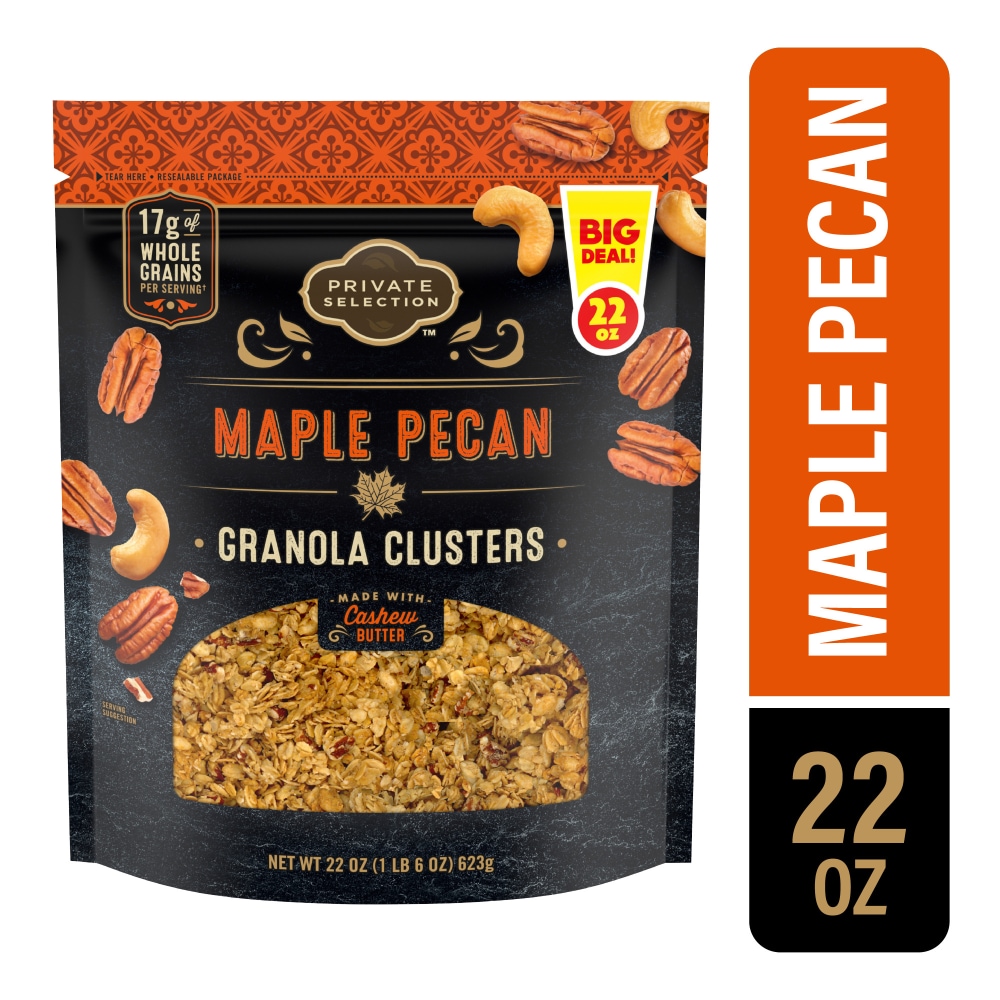


Maple Pecan Granola
Near you
Trader Joe's is carried at Trader Joe stores. Find one within 25 miles.
Summary
This granola contains beneficial ingredients like whole rolled oats and pecans, which provide fiber and healthy fats. However, it is penalized for the presence of refined sugar and vegetable oils, which are highly processed and can contribute to health issues when consumed in excess. Additionally, the use of natural flavors and the overall processing level of the product limit its healthiness compared to less processed alternatives.
At a glance
Key ingredients 11
Whole Rolled OatsGood
Whole rolled oats are a whole grain that provides a good source of fiber and essential nutrients. They are minimally processed, retaining most of their nutritional value. Oats can help lower cholesterol levels and support heart health.
Benefits
Rich in dietary fiber, which aids in digestion and helps maintain healthy cholesterol levels. Provides essential vitamins and minerals such as manganese and phosphorus.
Milled Cane SugarBad
Milled cane sugar is a refined sugar that contributes to increased calorie intake without providing essential nutrients. It is highly processed and can lead to spikes in blood sugar levels. Excessive consumption is linked to various health issues such as obesity and type 2 diabetes.
Risks
High intake of refined sugars can lead to weight gain, insulin resistance, and increased risk of chronic diseases.
Vegetable OilVery Bad
Vegetable oils like canola, safflower, and sunflower oil are high in omega-6 fatty acids, which can promote inflammation when consumed in excess. These oils are often extracted using high heat and chemicals, which can degrade their nutritional quality. They are considered less healthy compared to oils high in monounsaturated fats.
Risks
High omega-6 content may promote inflammation and contribute to chronic health issues when consumed in large amounts.
Rice FlourNeutral
Rice flour is a gluten-free alternative to wheat flour, commonly used in processed foods. It is a refined carbohydrate with limited nutritional value compared to whole grains. While it provides energy, it lacks fiber and essential nutrients.
Risks
May contribute to rapid spikes in blood sugar levels due to its high glycemic index.
Benefits
Provides a gluten-free option for those with celiac disease or gluten intolerance.
PecansGood
Pecans are a nutrient-dense nut rich in healthy fats, vitamins, and minerals. They contain monounsaturated fats that support heart health and provide antioxidants. Pecans are minimally processed and offer a natural source of nutrients.
Risks
Potential allergen for individuals with tree nut allergies.
Benefits
Rich in monounsaturated fats, which support heart health, and contain antioxidants that may reduce oxidative stress.
Maple SyrupNeutral
Maple syrup is a natural sweetener derived from the sap of maple trees. It contains some minerals and antioxidants but is primarily a source of sugar. While less processed than refined sugars, it should be consumed in moderation.
Risks
High in sugars, which can contribute to weight gain and blood sugar spikes if consumed in excess.
Benefits
Contains small amounts of minerals like manganese and zinc, and provides a natural alternative to refined sugars.
CornstarchNeutral
Cornstarch is a refined carbohydrate used as a thickening agent in foods. It is highly processed and provides little nutritional value. While it serves a functional purpose in food preparation, it lacks essential nutrients.
Risks
May contribute to rapid spikes in blood sugar levels due to its high glycemic index.
HoneyNeutral
Honey is a natural sweetener with some antioxidant properties and trace amounts of vitamins and minerals. It is less processed than refined sugars but still high in sugar content. Honey can be a healthier alternative to refined sugars when used in moderation.
Risks
High sugar content can contribute to weight gain and blood sugar spikes if consumed in excess.
Benefits
Contains antioxidants and trace nutrients, offering a natural alternative to refined sugars.
SaltNeutral
Salt is used to enhance flavor and preserve food. While essential for bodily functions, excessive intake can lead to health issues such as hypertension. It is important to consume salt in moderation as part of a balanced diet.
Risks
Excessive salt intake can lead to high blood pressure and increased risk of cardiovascular diseases.
Benefits
Essential for maintaining fluid balance and nerve function in the body.
Barley Malt SyrupNeutral
Barley malt syrup is a natural sweetener made from sprouted barley. It is less processed than refined sugars and contains some nutrients. However, it is still a source of sugar and should be consumed in moderation.
Risks
High sugar content can contribute to weight gain and blood sugar spikes if consumed in excess.
Benefits
Provides a natural alternative to refined sugars and contains some nutrients from barley.
Natural FlavorVery Bad
Natural flavors are often used to enhance taste but can be highly processed and contain undisclosed additives. They lack nutritional value and can be misleading as they may contain synthetic chemicals. The term 'natural' does not guarantee a healthier option compared to artificial flavors.
Risks
May contain undisclosed additives and synthetic chemicals, posing potential health concerns.
Processing
Processed Foods
Get the full breakdown in the Scout app
Scan any product to see lab results, healthy alternatives, and your personalized analysis.
Download on theApp Store