
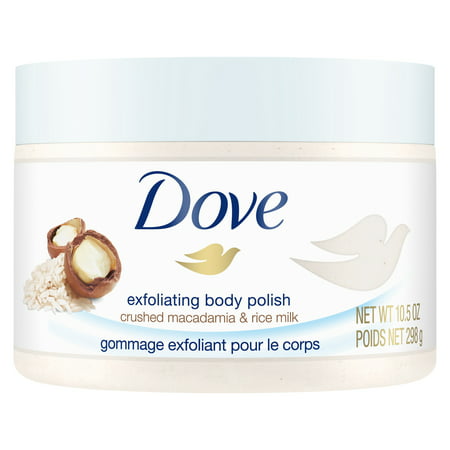


Dove Exfoliating Body Polish Macadamia and Rice Milk Body Scrub 10.5 oz
Analysis updated August 2026 · How Scout scores
At a glance
Summary
This body scrub contains beneficial ingredients like macadamia seed oil and rice germ oil, which provide moisturizing and antioxidant benefits. However, the presence of sodium laureth sulfate, a surfactant that can cause skin irritation, and synthetic fragrance, which may trigger allergic reactions, detracts from its overall safety profile. The product's formulation includes a mix of natural and synthetic components, leading to a moderate processing level.
Key ingredients 26
Macadamia Ternifolia Seed OilVery Good
Macadamia oil is rich in fatty acids and antioxidants, providing excellent moisturizing and skin-repairing properties. It is beneficial for dry and aging skin.
Risks
Minimal risks, though it may cause allergic reactions in those with nut allergies.
Benefits
Deeply moisturizes and nourishes the skin, improving elasticity and softness.
Oryza Sativa (Rice) Germ OilVery Good
Rice germ oil is rich in vitamins and antioxidants, offering moisturizing and anti-aging benefits. It helps protect the skin from environmental damage.
Risks
Generally safe, but may cause irritation in very sensitive skin.
Benefits
Provides hydration and helps reduce signs of aging, improving skin texture.
GlycerinGood
Glycerin is a humectant that attracts moisture to the skin, helping to keep it hydrated. It is widely used in skincare for its moisturizing properties.
Risks
There are minimal risks associated with glycerin, though it can be sticky in high concentrations.
Benefits
Glycerin helps maintain skin hydration and improves skin barrier function.
Oryza Sativa (Rice) Bran ExtractGood
Rice bran extract is known for its antioxidant properties and ability to soothe and soften the skin. It is beneficial in maintaining skin health.
Risks
Minimal risks, though it may cause irritation in sensitive individuals.
Benefits
Helps soothe and protect the skin, enhancing its natural glow.
Caprylic/Capric TriglycerideGood
Caprylic/capric triglyceride is an emollient derived from coconut oil and glycerin. It helps to moisturize and soften the skin without leaving a greasy feel.
Risks
Generally safe with low risk of irritation.
Benefits
Provides lightweight moisture and enhances skin smoothness.
Water (Aqua)Neutral
Water is a common solvent used in cosmetic formulations. It helps dissolve other ingredients and provides a base for the product. It does not have any direct benefits or risks.
Risks
There are no significant risks associated with water in cosmetics.
Benefits
Water helps in dissolving other ingredients and provides a smooth texture to the product.
Hydrated SilicaNeutral
Hydrated silica is used as an abrasive agent in exfoliating products. It helps remove dead skin cells, improving skin texture.
Risks
Overuse can lead to skin irritation due to its abrasive nature.
Benefits
It effectively exfoliates the skin, leaving it smooth and refreshed.
Sodium Lauroyl IsethionateNeutral
Sodium lauroyl isethionate is a mild surfactant used for its cleansing properties. It helps create a creamy lather without stripping the skin's natural oils.
Risks
It can cause mild irritation in sensitive individuals.
Benefits
Provides gentle cleansing and helps maintain skin moisture.
Stearic AcidNeutral
Stearic acid is a fatty acid used as an emulsifier and thickener in cosmetics. It helps stabilize formulations and improve texture.
Risks
Generally considered safe, but can cause irritation in sensitive skin.
Benefits
Helps stabilize and thicken formulations, improving product consistency.
Sodium StearateNeutral
Sodium stearate is a salt of stearic acid used as a surfactant and emulsifier. It helps in forming a stable emulsion and provides a creamy texture.
Risks
May cause mild irritation in sensitive skin types.
Benefits
Contributes to the stability and texture of the product.
Cocamidopropyl BetaineNeutral
Cocamidopropyl betaine is a mild surfactant used to enhance foam and cleansing properties. It is derived from coconut oil and is generally well-tolerated.
Risks
Can cause irritation in some individuals, especially those with sensitive skin.
Benefits
Improves the cleansing ability of the product while being gentle on the skin.
Lauric AcidNeutral
Lauric acid is a fatty acid used for its cleansing and emulsifying properties. It is effective in removing dirt and oil from the skin.
Risks
May cause irritation in sensitive skin types.
Benefits
Helps cleanse the skin and maintain product stability.
Cetearyl AlcoholNeutral
Cetearyl alcohol is a fatty alcohol used as an emollient and emulsifier. It helps soften the skin and stabilize formulations.
Risks
Generally safe, but can cause irritation in very sensitive skin.
Benefits
Improves product texture and provides a moisturizing effect.
Sodium TallowateNeutral
Sodium tallowate is a soap ingredient used for its cleansing properties. It is derived from animal fat and helps remove dirt and oil.
Risks
May cause irritation in sensitive skin and is not suitable for vegans.
Benefits
Provides effective cleansing and helps maintain product consistency.
Synthetic WaxNeutral
Synthetic wax is used to thicken and stabilize cosmetic formulations. It helps improve the texture and application of the product.
Risks
Generally considered safe, but may cause irritation in sensitive individuals.
Benefits
Enhances product texture and stability.
Sodium IsethionateNeutral
Sodium isethionate is a surfactant used for its mild cleansing properties. It helps create a creamy lather and is gentle on the skin.
Risks
May cause mild irritation in sensitive skin types.
Benefits
Provides gentle cleansing and helps maintain skin moisture.
HydroxyacetophenoneNeutral
Hydroxyacetophenone is an antioxidant and preservative booster used in cosmetics. It helps enhance the stability and efficacy of other preservatives.
Risks
Generally considered safe with low risk of irritation.
Benefits
Enhances preservative efficacy and provides antioxidant benefits.
Sodium CocoateNeutral
Sodium cocoate is a soap ingredient derived from coconut oil, used for its cleansing properties. It helps remove dirt and oil from the skin.
Risks
May cause irritation in sensitive skin types.
Benefits
Provides effective cleansing and helps maintain product consistency.
Tetrasodium EDTANeutral
Tetrasodium EDTA is a chelating agent used to improve the stability and efficacy of cosmetic formulations. It helps bind metal ions and prevent product degradation.
Risks
May cause irritation in sensitive skin types.
Benefits
Enhances product stability and prevents degradation.
Tetrasodium EtidronateNeutral
Tetrasodium etidronate is a chelating agent used to prevent the formation of soap scum. It helps improve the stability and appearance of the product.
Risks
Generally considered safe, but may cause irritation in sensitive skin.
Benefits
Prevents soap scum formation and enhances product stability.
Nonfat Dry MilkNeutral
Nonfat dry milk is used for its moisturizing and skin-softening properties. It contains proteins and vitamins beneficial for skin health.
Risks
May cause irritation in individuals with milk allergies.
Benefits
Provides moisture and nourishment to the skin.
Iron Oxides (CI 77492, CI 77499, CI 77491)Neutral
Iron oxides are pigments used to impart color to cosmetic products. They are generally considered safe and non-irritating.
Risks
Minimal risks, though they may cause irritation in very sensitive skin.
Benefits
Provide natural color to the product without significant health risks.
Titanium Dioxide (CI 77891)Neutral
Titanium dioxide is used as a pigment and UV filter in cosmetics. It provides opacity and sun protection benefits.
Risks
Inhalation of fine particles can be harmful, but topical use is generally safe.
Benefits
Provides color and UV protection, enhancing product functionality.
PhenoxyethanolBad
Phenoxyethanol is a preservative used to prevent microbial growth in cosmetics. It is effective but can cause irritation and allergic reactions.
Risks
Potential irritant and allergen, especially for sensitive skin.
Benefits
Helps preserve the product by preventing microbial contamination.
Sodium Laureth SulfateBad
Sodium laureth sulfate is a surfactant used for its cleansing and foaming properties. It is milder than SLS but can still strip natural oils and cause irritation.
Risks
Potential irritant and may contain 1,4-dioxane, a possible carcinogen.
Benefits
Provides effective cleansing and foaming action.
Fragrance (Parfum)Very Bad
Fragrance is used to impart scent to products but can be a mixture of many chemicals. It is a common cause of allergic reactions and skin irritation.
Risks
Potential allergen and irritant, especially for sensitive skin.
Benefits
Provides a pleasant scent to the product.
Get the full breakdown in the Scout appTake Scout shopping
Scan any product to see lab results, healthy alternatives, and your personalized analysis.
Download on theApp Store GET IT ONGoogle PlayAmazon pricing & content
Amazon price as of . Product prices and availability are accurate as of the date/time indicated and are subject to change. Any price and availability information displayed on Amazon.com at the time of purchase will apply to the purchase of this product.
CERTAIN CONTENT THAT APPEARS ON THIS SITE COMES FROM AMAZON. THIS CONTENT IS PROVIDED “AS IS” AND IS SUBJECT TO CHANGE OR REMOVAL AT ANY TIME.