
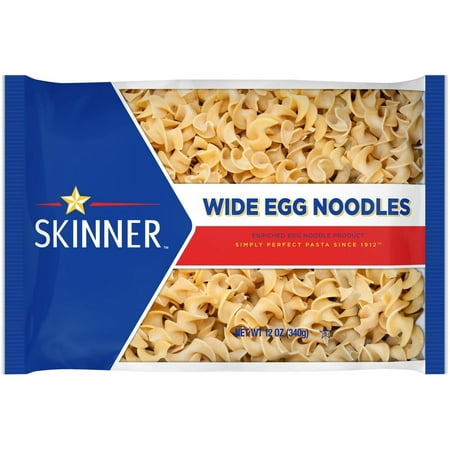
WIDE EGG NOODLES
Summary
This product is minimally processed and primarily composed of hard wheat flour and dried eggs, which provide a good source of protein and essential nutrients. The inclusion of beneficial vitamins and minerals such as niacin, iron, thiamin, riboflavin, and folic acid enhances its nutritional profile. The clean ingredient list and minimal processing contribute to its high rating.
At a glance
Key ingredients 7
Hard wheat flourNeutral
Hard wheat flour is a staple ingredient in pasta, providing structure and texture. It is minimally processed and retains some nutrients from the wheat grain. However, it is a refined carbohydrate, which may impact blood sugar levels.
Risks
Refined carbohydrates can lead to spikes in blood sugar levels and may contribute to weight gain if consumed in excess.
Benefits
Provides energy and is a source of carbohydrates necessary for bodily functions.
Dried egg yolks or eggsGood
Eggs are a high-quality source of protein and essential nutrients. They contain vitamins such as B12 and D, and minerals like selenium. The inclusion of eggs enhances the nutritional profile of the noodles.
Risks
Eggs can be a common allergen and may pose a risk to individuals with egg allergies.
Benefits
Rich in protein and essential nutrients, supporting muscle maintenance and overall health.
NiacinGood
Niacin, also known as vitamin B3, is essential for energy metabolism and DNA repair. It is often added to foods to prevent deficiencies. Niacin fortification helps ensure adequate intake of this important nutrient.
Benefits
Supports energy metabolism and helps maintain healthy skin and nerves.
Ferrous sulfateGood
Ferrous sulfate is a form of iron used to fortify foods, helping to prevent iron deficiency anemia. Iron is crucial for oxygen transport in the blood. Fortification with ferrous sulfate is a common practice to enhance the nutritional value of foods.
Risks
Excessive iron intake can lead to toxicity, but this is rare from food sources alone.
Benefits
Essential for oxygen transport and energy production in the body.
Thiamin mononitrateGood
Thiamin mononitrate is a synthetic form of vitamin B1, important for carbohydrate metabolism and nerve function. It is added to foods to prevent deficiencies. Fortification with thiamin helps support energy production and neurological health.
Benefits
Supports energy metabolism and proper nerve function.
RiboflavinGood
Riboflavin, or vitamin B2, is essential for energy production and cellular function. It is often added to foods to ensure adequate intake. Riboflavin fortification helps maintain healthy skin and eyes.
Benefits
Supports energy production and helps maintain healthy skin and eyes.
Folic acidGood
Folic acid is a synthetic form of folate, a B-vitamin important for DNA synthesis and cell division. It is crucial for pregnant women to prevent neural tube defects. Fortification with folic acid helps prevent deficiencies and supports overall health.
Risks
Excessive intake can mask vitamin B12 deficiency, but this is unlikely from food sources alone.
Benefits
Supports DNA synthesis and is crucial for fetal development during pregnancy.
Processing
Unprocessed or Minimally Processed Foods
Get the full breakdown in the Scout app
Scan any product to see lab results, healthy alternatives, and your personalized analysis.
Download on theApp Store