
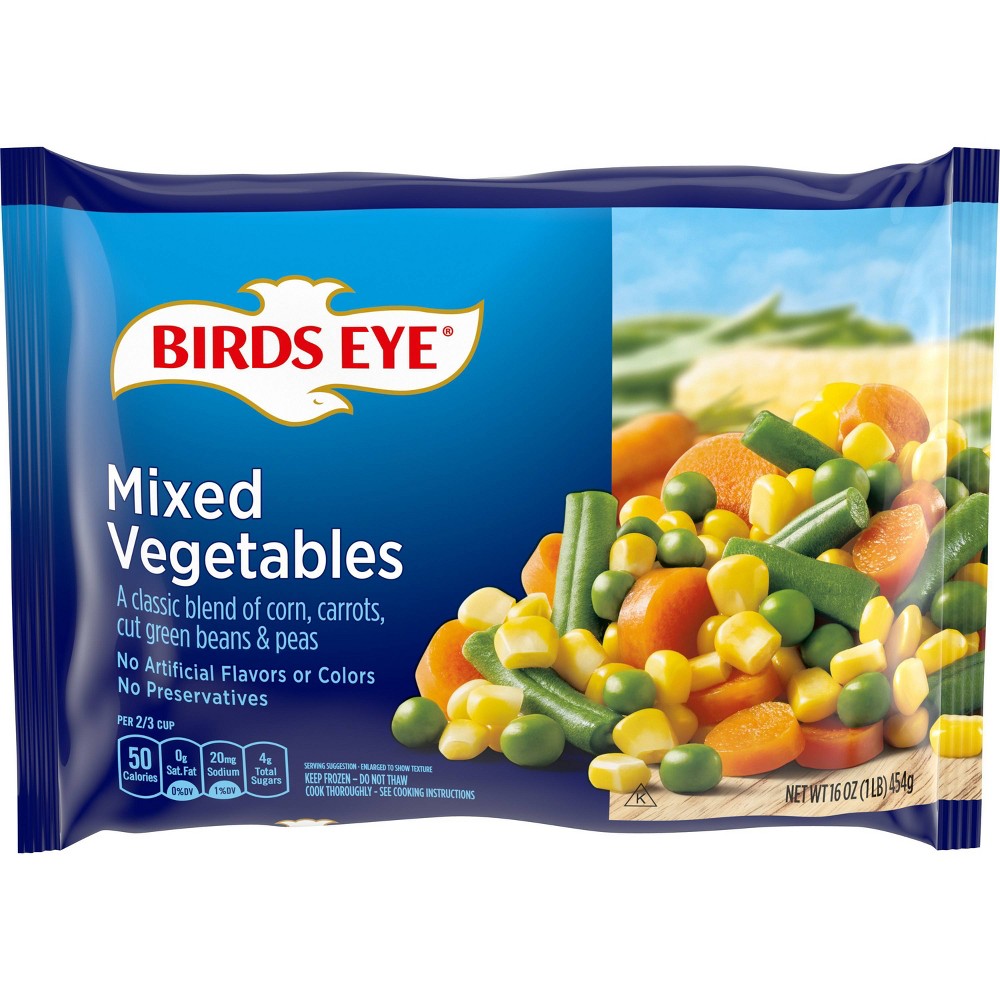


Birds Eye Classic Mixed Vegetables
Analysis updated August 2026 · How Scout scores
At a glance
Summary
This product consists of minimally processed vegetables like corn, carrots, green beans, and peas, which are all nutrient-dense and retain their natural nutritional profiles. The inclusion of salt is minimal, and there are no harmful additives or seed oils present. Despite being processed, the clean ingredient list and the use of whole vegetables contribute positively to its health rating.
Key ingredients 5
CarrotsVery Good
Carrots are a nutrient-dense vegetable high in beta-carotene, which the body converts to vitamin A. They are minimally processed and retain their natural nutritional benefits. Carrots support eye health and immune function.
Benefits
High in beta-carotene and antioxidants, promoting eye health and reducing oxidative stress.
Green BeansVery Good
Green beans are a low-calorie vegetable rich in vitamins A, C, and K. They are minimally processed and provide dietary fiber. Green beans support bone health and immune function.
Benefits
Rich in vitamins and fiber, supporting bone health and digestion.
CornGood
Corn is a whole grain that provides dietary fiber and essential nutrients. It is minimally processed and retains its natural nutritional profile. Corn is a good source of carbohydrates and provides energy.
Benefits
Rich in fiber and essential nutrients such as vitamins B and C, supporting digestive health and energy production.
PeasGood
Peas are a good source of plant-based protein and fiber. They are minimally processed and retain their natural nutritional profile. Peas support digestive health and provide essential nutrients.
Benefits
Provide plant-based protein and fiber, supporting muscle health and digestion.
SaltNeutral
Salt is used as a seasoning and preservative in foods. It is a processed culinary ingredient that enhances flavor. While necessary in small amounts, excessive consumption can lead to health issues.
Risks
Excessive salt intake can lead to high blood pressure and cardiovascular issues.
Benefits
Enhances flavor and acts as a preservative in foods.
Processing
Processed Foods
Get the full breakdown in the Scout appTake Scout shopping
Scan any product to see lab results, healthy alternatives, and your personalized analysis.
Download on theApp Store GET IT ONGoogle PlayAmazon pricing & content
Amazon price as of . Product prices and availability are accurate as of the date/time indicated and are subject to change. Any price and availability information displayed on Amazon.com at the time of purchase will apply to the purchase of this product.
CERTAIN CONTENT THAT APPEARS ON THIS SITE COMES FROM AMAZON. THIS CONTENT IS PROVIDED “AS IS” AND IS SUBJECT TO CHANGE OR REMOVAL AT ANY TIME.