
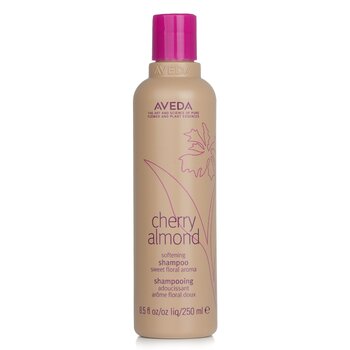

Aveda Cherry Almond Softening Shampoo
Analysis updated August 2026 · How Scout scores
At a glance
Summary
This shampoo contains beneficial ingredients like Decyl Glucoside, Sweet Almond Oil, and Cherry Extract, which are gentle and nourishing for the hair. However, the presence of Ammonium Lauryl Sulfate and Sodium Chloride can be harsh and drying, potentially leading to scalp irritation. Additionally, the use of synthetic fragrance introduces a risk of allergic reactions, impacting the overall ingredient safety and hair health.
Key ingredients 25
Prunus Amygdalus Dulcis (Sweet Almond) OilVery Good
Sweet Almond Oil is rich in vitamins and fatty acids, which nourish and moisturize the hair. It helps to improve hair texture and adds shine.
Risks
There are minimal risks, though individuals with nut allergies should exercise caution.
Benefits
It deeply moisturizes and conditions the hair, promoting softness and shine.
Decyl GlucosideGood
Decyl Glucoside is a mild, non-ionic surfactant derived from glucose and coconut oil. It is gentle on the skin and hair, making it suitable for sensitive scalps. It effectively cleanses without stripping natural oils.
Risks
There are no significant risks associated with decyl glucoside.
Benefits
It provides gentle cleansing and is biodegradable, making it environmentally friendly.
Prunus Serrulata Flower (Cherry) ExtractGood
Cherry Extract is known for its antioxidant properties, which help to protect hair from environmental damage. It also adds a pleasant fragrance to the product.
Risks
There are minimal risks associated with cherry extract.
Benefits
It provides antioxidant protection and a natural fragrance to the shampoo.
GlycerinGood
Glycerin is a humectant that attracts moisture to the hair, helping to keep it hydrated. It is widely used in hair care products for its moisturizing properties.
Risks
There are minimal risks associated with glycerin.
Benefits
It helps to maintain moisture levels in the hair, preventing dryness and frizz.
Water\Aqua\EauNeutral
Water is a universal solvent and is used as a base in many cosmetic formulations. It helps dissolve other ingredients and provides a medium for them to function. It does not have any direct benefits or risks in the context of shampoo.
Risks
There are no significant risks associated with water in cosmetic formulations.
Benefits
Water helps in the even distribution of other ingredients in the product.
PropanediolNeutral
Propanediol is used as a solvent and humectant in cosmetic formulations. It helps to improve the texture and moisture retention of the product. It is generally considered safe and non-irritating.
Risks
There are minimal risks associated with propanediol, though some individuals may experience mild irritation.
Benefits
It helps to retain moisture in the hair and improves the overall feel of the product.
Sodium Hydroxypropylsulfonate Laurylglucoside CrosspolymerNeutral
This ingredient is used as a surfactant and thickener in shampoos. It helps to stabilize the formulation and improve texture. It is generally considered safe for use in cosmetics.
Risks
There are minimal risks associated with this ingredient.
Benefits
It enhances the texture and stability of the shampoo, contributing to a better user experience.
Babassuamidopropyl BetaineNeutral
Babassuamidopropyl Betaine is a mild surfactant derived from babassu oil. It helps to cleanse and condition the hair without causing irritation. It is suitable for sensitive skin.
Risks
There are minimal risks associated with this ingredient.
Benefits
It provides mild cleansing and conditioning properties, enhancing the softness of hair.
Glycol DistearateNeutral
Glycol Distearate is used as an opacifying agent and emollient in shampoos. It helps to improve the texture and appearance of the product. It is generally considered safe for use.
Risks
There are minimal risks associated with glycol distearate.
Benefits
It enhances the texture and appearance of the shampoo, providing a pearlescent look.
Polyquaternium-10Neutral
Polyquaternium-10 is a conditioning agent that helps to reduce static and improve hair manageability. It is commonly used in shampoos and conditioners.
Risks
There are minimal risks associated with polyquaternium-10.
Benefits
It enhances hair manageability and reduces static, making hair easier to style.
Butylene GlycolNeutral
Butylene Glycol is used as a solvent and conditioning agent in hair care products. It helps to improve the texture and spreadability of the product.
Risks
There are minimal risks associated with butylene glycol.
Benefits
It enhances the texture and spreadability of the shampoo, improving user experience.
Sodium ChlorideNeutral
Standard formulation ingredient — neither beneficial nor harmful at typical use.
Risks
Potential risks include scalp irritation and dryness due to its thickening properties.
Benefits
It helps to thicken the shampoo, improving its consistency.
Citric AcidNeutral
Citric Acid is used to adjust the pH of cosmetic formulations. It helps to maintain the stability and effectiveness of the product.
Risks
There are minimal risks associated with citric acid.
Benefits
It helps to maintain the pH balance of the shampoo, ensuring product stability.
Sodium HydroxideNeutral
Sodium Hydroxide is used to adjust the pH of cosmetic formulations. It is used in small amounts to ensure the product is not too acidic.
Risks
There are minimal risks when used in small amounts for pH adjustment.
Benefits
It helps to maintain the pH balance of the shampoo, ensuring product stability.
GeraniolNeutral
Geraniol is a naturally occurring compound used for its rose-like scent. It is generally considered safe in low concentrations.
Risks
There are minimal risks, though some individuals may experience allergic reactions.
Benefits
It provides a pleasant floral scent to the product.
Sodium PhytateNeutral
Sodium Phytate is used as a chelating agent in cosmetic formulations. It helps to stabilize the product by binding metal ions.
Risks
There are minimal risks associated with sodium phytate.
Benefits
It helps to stabilize the product and improve its shelf life.
Benzoic AcidNeutral
Benzoic Acid is used as a preservative in cosmetic formulations. It helps to prevent microbial growth and extend the shelf life of the product.
Risks
There are minimal risks associated with benzoic acid.
Benefits
It helps to preserve the product and prevent spoilage.
Ammonium Lauryl SulfateBad
Ammonium Lauryl Sulfate is a surfactant that can effectively cleanse hair by removing dirt and oil. However, it can be harsh and strip natural oils, leading to dryness and irritation for some users.
Risks
Potential risks include scalp irritation and dryness due to its strong cleansing properties.
Benefits
It provides effective cleansing and foaming properties, which can be beneficial for removing heavy buildup.
Acrylates CopolymerBad
Processed additive flagged under Scout's ingredient doctrine.
Risks
There are minimal risks associated with acrylates copolymer.
Benefits
It provides styling benefits by helping to hold hair in place.
LinaloolBad
Processed additive flagged under Scout's ingredient doctrine.
Risks
There are minimal risks, though some individuals may experience allergic reactions.
Benefits
It provides a floral scent to the product, enhancing its fragrance profile.
LimoneneBad
Processed additive flagged under Scout's ingredient doctrine.
Risks
There are minimal risks, though some individuals may experience allergic reactions.
Benefits
It provides a fresh citrus scent to the product.
PhenoxyethanolBad
Processed additive flagged under Scout's ingredient doctrine.
Risks
There are minimal risks, though some individuals may experience irritation.
Benefits
It helps to preserve the product and prevent spoilage.
Potassium SorbateBad
Synthetic preservative — flagged in daily-use products.
Risks
There are minimal risks associated with potassium sorbate.
Benefits
It helps to preserve the product and prevent spoilage.
Sodium BenzoateBad
Synthetic preservative that can form benzene in the presence of vitamin C.
Risks
There are minimal risks associated with sodium benzoate.
Benefits
It helps to preserve the product and prevent spoilage.
Fragrance (Parfum)Very Bad
Fragrance is used to impart a pleasant scent to the product, but it can contain a mixture of chemicals that may cause irritation or allergic reactions. It is often not disclosed what specific chemicals are used.
Risks
Potential risks include skin irritation and allergic reactions due to undisclosed chemical components.
Benefits
It provides a pleasant scent to the shampoo, enhancing user experience.
Get the full breakdown in the Scout appTake Scout shopping
Scan any product to see lab results, healthy alternatives, and your personalized analysis.
Download on theApp Store GET IT ONGoogle PlayAmazon pricing & content
Amazon price as of . Product prices and availability are accurate as of the date/time indicated and are subject to change. Any price and availability information displayed on Amazon.com at the time of purchase will apply to the purchase of this product.
CERTAIN CONTENT THAT APPEARS ON THIS SITE COMES FROM AMAZON. THIS CONTENT IS PROVIDED “AS IS” AND IS SUBJECT TO CHANGE OR REMOVAL AT ANY TIME.