
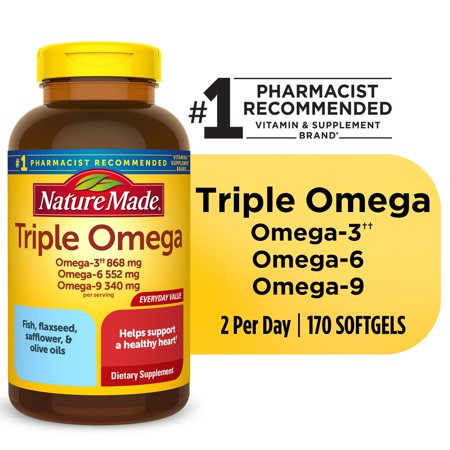


Nature Made Triple Omega 369 Softgels Dietary Supplement 170 Count
Analysis updated August 2026 · How Scout scores
At a glance
Summary
This supplement contains beneficial oils like flaxseed and olive oil, which provide essential fatty acids and support heart health. However, the inclusion of safflower oil, a seed oil high in omega-6 fatty acids, is a concern due to its potential to promote inflammation when consumed in excess. The product is moderately processed, but the presence of high-quality omega-3 and omega-9 fatty acids contributes positively to its overall formulation.
Key ingredients 6
Olive OilVery Good
Olive oil is rich in monounsaturated fats and antioxidants, supporting heart health and reducing inflammation. It is often cold-pressed, preserving its nutritional quality and beneficial compounds. Compared to other oils, it is considered one of the healthiest options due to its high oleic acid content.
Benefits
Rich in monounsaturated fats that support heart health and provide anti-inflammatory properties.
Omega-3 Fatty AcidsVery Good
Omega-3 fatty acids are essential fats that play a crucial role in brain function and heart health. They are often derived from fish oil or algae and are known for their anti-inflammatory properties. Compared to other fatty acids, omega-3s are particularly beneficial for reducing the risk of chronic diseases.
Benefits
Essential for brain function and heart health, with strong anti-inflammatory properties.
Flaxseed OilGood
Flaxseed oil is a rich source of alpha-linolenic acid (ALA), an omega-3 fatty acid that supports heart health. It is minimally processed and provides essential fatty acids that are beneficial for reducing inflammation. Compared to other oils, it offers a plant-based source of omega-3s, which are often lacking in typical diets.
Benefits
Rich in omega-3 fatty acids, which are known to support cardiovascular health and reduce inflammation.
Omega-9 Fatty AcidsGood
Omega-9 fatty acids are non-essential fats that can be beneficial for heart health and reducing inflammation. They are commonly found in olive oil and are known for their ability to improve cholesterol levels. Compared to other fats, omega-9s are stable and beneficial for cardiovascular health.
Benefits
Beneficial for heart health and known to improve cholesterol levels.
Omega-6 Fatty AcidsNeutral
Omega-6 fatty acids are essential fats that are necessary for normal growth and development. However, they are often consumed in excess in modern diets, which can lead to an imbalance with omega-3s. While necessary, they should be balanced with omega-3 intake to avoid promoting inflammation.
Risks
Excessive intake may lead to an imbalance with omega-3s, promoting inflammation.
Benefits
Necessary for normal growth and development, but should be consumed in balance with omega-3s.
Safflower OilVery Bad
Safflower oil is classified as a seed oil and is high in omega-6 fatty acids, which can promote inflammation if consumed in excess. It is often highly processed, which can degrade its nutritional quality. Compared to other oils, it lacks the beneficial omega-3 fatty acids and is not recommended for regular consumption.
Risks
High omega-6 content may promote inflammation when consumed in excess.
Processing
Processed Foods
Get the full breakdown in the Scout appTake Scout shopping
Scan any product to see lab results, healthy alternatives, and your personalized analysis.
Download on theApp Store GET IT ONGoogle PlayAmazon pricing & content
Amazon price as of . Product prices and availability are accurate as of the date/time indicated and are subject to change. Any price and availability information displayed on Amazon.com at the time of purchase will apply to the purchase of this product.
CERTAIN CONTENT THAT APPEARS ON THIS SITE COMES FROM AMAZON. THIS CONTENT IS PROVIDED “AS IS” AND IS SUBJECT TO CHANGE OR REMOVAL AT ANY TIME.