
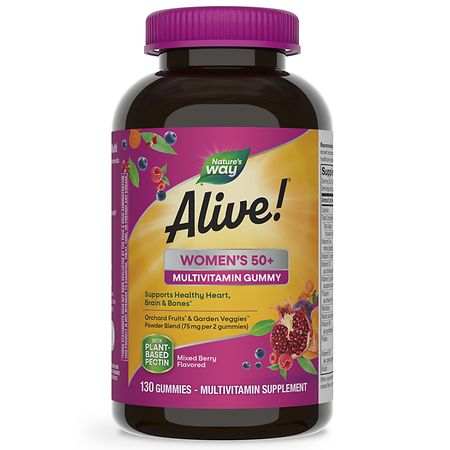

Nature s Way Alive! Women s 50+ Gummy Multivitamin B-Vitamins Mixed Berry Flavored 130 Count
Analysis updated July 2026 · How Scout scores
At a glance
Summary
This multivitamin contains a comprehensive range of essential vitamins and minerals, including high-quality forms of Vitamin D3, Vitamin C, and B-vitamins, which are crucial for various bodily functions such as immune support and energy metabolism. The formulation is free from harmful additives like artificial dyes and sweeteners, and it uses bioavailable forms of nutrients, making it a well-rounded and beneficial supplement for women over 50.
Key ingredients 16
Vitamin AVery Good
Vitamin A is essential for maintaining healthy vision, immune function, and skin health. It is a high-quality active ingredient in supplements, often derived from natural sources like beta-carotene. Its inclusion in multivitamins supports overall health and wellness.
Risks
Excessive intake can lead to toxicity, particularly in supplement form.
Benefits
Supports eye health, immune function, and skin integrity.
Vitamin CVery Good
Vitamin C is a powerful antioxidant that supports immune function and skin health. It is commonly included in supplements for its role in collagen synthesis and as a free radical scavenger. Its water-soluble nature ensures it is generally safe in higher doses.
Risks
High doses may cause gastrointestinal discomfort.
Benefits
Enhances immune defense and promotes healthy skin.
Vitamin EVery Good
Vitamin E acts as a potent antioxidant, protecting cells from oxidative damage. It is a valuable component of multivitamins, contributing to skin health and immune function. Its fat-soluble nature aids in protecting cell membranes.
Risks
High doses may interfere with blood clotting.
Benefits
Protects cells from oxidative stress and supports skin health.
ThiaminVery Good
Thiamin, or vitamin B1, is essential for energy metabolism and nerve function. It is a critical component of B-vitamin complexes, supporting carbohydrate metabolism and neurological health. Its inclusion in supplements aids in maintaining energy levels.
Benefits
Supports energy production and nerve function.
Vitamin B6Very Good
Vitamin B6 is crucial for amino acid metabolism and neurotransmitter synthesis. It is a key component of B-vitamin complexes, supporting brain health and mood regulation. Its role in hemoglobin production is also significant.
Risks
Excessive intake can lead to nerve damage.
Benefits
Supports brain health and neurotransmitter synthesis.
FolateVery Good
Folate is essential for DNA synthesis and cell division. It is particularly important for pregnant women to prevent neural tube defects. Its inclusion in supplements supports overall cellular health and development.
Benefits
Supports DNA synthesis and cell division.
Pantothenic AcidVery Good
Pantothenic acid, or vitamin B5, is essential for synthesizing coenzyme A, crucial for fatty acid metabolism. It is a key component of B-vitamin complexes, supporting energy production and hormone synthesis. Its role in synthesizing and metabolizing proteins, carbohydrates, and fats is critical.
Benefits
Supports energy production and hormone synthesis.
CalciumVery Good
Calcium is crucial for bone health and muscle function. It is a fundamental mineral in supplements, supporting bone density and preventing osteoporosis. Its role in nerve transmission and muscle contraction is also significant.
Risks
Excessive intake can lead to kidney stones and impaired absorption of other minerals.
Benefits
Supports bone health and muscle function.
IodineVery Good
Iodine is crucial for thyroid function and hormone production. It is an essential trace element in supplements, supporting metabolic rate and energy production. Its role in preventing goiter and supporting cognitive function is well-documented.
Risks
Excessive intake can lead to thyroid dysfunction.
Benefits
Supports thyroid function and hormone production.
Vitamin D3Good
Vitamin D3 is crucial for calcium absorption and bone health. It is the preferred form of vitamin D in supplements due to its superior bioavailability compared to D2. Adequate levels are essential for maintaining bone density and immune function.
Risks
Overconsumption can lead to hypercalcemia and associated health issues.
Benefits
Promotes bone health and supports immune system function.
RiboflavinGood
Riboflavin, or vitamin B2, is vital for energy production and cellular function. It plays a key role in the metabolism of fats, drugs, and steroids. Its bright yellow color is a natural indicator of its presence in supplements.
Benefits
Aids in energy production and supports cellular health.
NiacinGood
Niacin, or vitamin B3, is important for DNA repair and energy metabolism. It is often included in supplements to support cardiovascular health and reduce cholesterol levels. Its role in converting nutrients into energy is well-documented.
Risks
High doses can cause flushing and liver damage.
Benefits
Supports cardiovascular health and energy metabolism.
Vitamin B12Good
Vitamin B12 is vital for nerve function and red blood cell formation. It is a critical component of B-vitamin complexes, particularly for vegetarians and the elderly who may be at risk of deficiency. Its role in energy production and neurological health is well-established.
Benefits
Supports nerve function and red blood cell formation.
BiotinGood
Biotin, or vitamin B7, is important for carbohydrate, fat, and protein metabolism. It is often included in supplements for its role in maintaining healthy hair, skin, and nails. Its water-soluble nature ensures it is generally safe in higher doses.
Benefits
Supports metabolism and promotes healthy hair, skin, and nails.
PhosphorusGood
Phosphorus is essential for bone health and energy production. It is a key mineral in supplements, supporting the formation of bones and teeth. Its role in ATP production and cellular function is critical.
Risks
Excessive intake can lead to imbalances in calcium and phosphorus levels.
Benefits
Supports bone health and energy production.
ZincGood
Zinc is vital for immune function and wound healing. It is a key mineral in supplements, supporting enzyme function and DNA synthesis. Its role in maintaining skin health and supporting immune defense is significant.
Risks
Excessive intake can lead to copper deficiency and immune dysfunction.
Benefits
Supports immune function and wound healing.
Processing
Unprocessed or Minimally Processed Foods
Get the full breakdown in the Scout appTake Scout shopping
Scan any product to see lab results, healthy alternatives, and your personalized analysis.
Download on theApp Store GET IT ONGoogle Play