
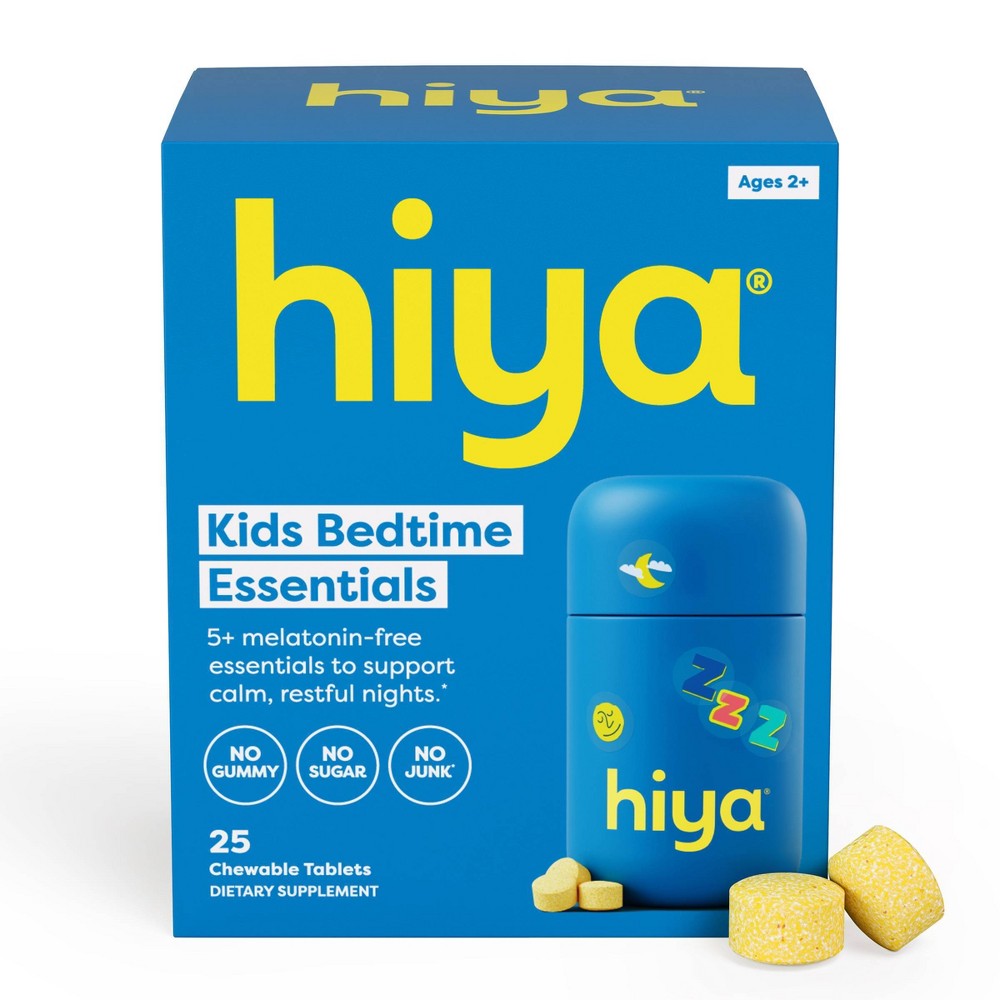
Hiya Kids' Bedtime Multivitamin Chewable Tablets - 25ct: Vitamins, Health And Beauty, Multivitamins
Analysis updated July 2026 · How Scout scores
At a glance
Summary
This multivitamin for kids contains a well-rounded selection of essential vitamins and minerals, including Vitamin A, C, D, E, and B vitamins, which are crucial for overall health and development. The inclusion of calming ingredients like L-theanine, GABA, and chamomile flower extract is beneficial for promoting relaxation and sleep. The formulation is clean, with no artificial additives or harmful substances, making it a high-quality choice for children's supplementation.
Key ingredients 14
Vitamin AVery Good
Vitamin A is essential for maintaining healthy vision, immune function, and skin health. It is a high-quality active ingredient often included in multivitamins for its broad health benefits. The form and dosage in supplements are typically well-regulated to ensure safety and efficacy.
Risks
Excessive intake can lead to toxicity, but this is rare with standard multivitamin dosages.
Benefits
Supports vision, immune function, and skin health.
Vitamin CVery Good
Vitamin C is a powerful antioxidant that supports immune function and skin health. It is commonly included in multivitamins for its role in collagen synthesis and as an immune booster. The form used in supplements is typically ascorbic acid, which is well-absorbed.
Risks
High doses may cause gastrointestinal discomfort, but standard doses in multivitamins are safe.
Benefits
Enhances immune function and supports skin health.
Vitamin DVery Good
Vitamin D is crucial for bone health and immune function, often included in supplements to address common deficiencies. It is typically provided as D3 (cholecalciferol), which is more effective in raising blood levels than D2. Adequate levels are essential for calcium absorption and bone health.
Risks
Over-supplementation can lead to toxicity, but this is unlikely with standard multivitamin doses.
Benefits
Supports bone health and enhances immune function.
Vitamin EVery Good
Vitamin E acts as an antioxidant, protecting cells from oxidative damage. It is a beneficial addition to multivitamins for its role in skin health and immune support. The natural form, d-alpha-tocopherol, is preferred for better absorption.
Risks
High doses can interfere with blood clotting, but standard multivitamin levels are safe.
Benefits
Protects cells from oxidative damage and supports skin health.
Thiamin (B1)Very Good
Thiamin is essential for energy metabolism and nerve function. It is a common component of multivitamins due to its role in converting nutrients into energy. The synthetic form, thiamine mononitrate, is stable and effective.
Benefits
Supports energy metabolism and nerve function.
Folate (B9)Very Good
Folate is crucial for DNA synthesis and cell division, making it essential during periods of rapid growth. It is included in multivitamins to prevent deficiencies and support overall health. The synthetic form, folic acid, is commonly used and effective.
Risks
Excessive intake can mask vitamin B12 deficiency, but standard doses are safe.
Benefits
Supports DNA synthesis and cell division.
Vitamin B6Very Good
Vitamin B6 is involved in amino acid metabolism and neurotransmitter synthesis. It is included in multivitamins to support brain health and energy metabolism. The form used, pyridoxine hydrochloride, is stable and effective.
Risks
High doses can cause nerve damage, but standard multivitamin levels are safe.
Benefits
Supports brain health and energy metabolism.
CalciumVery Good
Calcium is essential for bone health and muscle function. It is a critical component of multivitamins to prevent deficiencies and support skeletal health. The form used, such as calcium carbonate or citrate, affects absorption and efficacy.
Risks
Excessive intake can lead to kidney stones, but standard doses are safe.
Benefits
Supports bone health and muscle function.
RiboflavinGood
Riboflavin is important for energy production and cellular function. It is included in multivitamins to support metabolic processes and maintain healthy skin. The synthetic form, riboflavin, is well-absorbed and effective.
Benefits
Supports energy production and cellular function.
Vitamin B12Good
Vitamin B12 is vital for nerve function and the production of red blood cells. It is a key component of multivitamins, especially for vegetarians and older adults who may be at risk of deficiency. The form used, cyanocobalamin or methylcobalamin, is effective in supplements.
Benefits
Supports nerve function and red blood cell production.
MagnesiumGood
Magnesium is important for muscle and nerve function, as well as energy production. It is included in multivitamins to support overall health and prevent deficiencies. The form used, such as magnesium oxide or citrate, influences absorption.
Risks
High doses can cause diarrhea, but standard multivitamin levels are safe.
Benefits
Supports muscle and nerve function, and energy production.
L-theanineGood
L-theanine is an amino acid found in tea that promotes relaxation without drowsiness. It is included in supplements for its calming effects and potential to improve focus. The natural form is well-tolerated and effective.
Benefits
Promotes relaxation and may improve focus.
GABAGood
GABA is a neurotransmitter that helps regulate mood and promote relaxation. It is included in supplements for its calming effects and potential to reduce anxiety. The synthetic form used in supplements is generally considered safe.
Benefits
Promotes relaxation and may reduce anxiety.
Chamomile Flower ExtractGood
Chamomile flower extract is known for its calming and anti-inflammatory properties. It is included in supplements for its potential to promote relaxation and improve sleep quality. The extract is derived from the flowers and is generally well-tolerated.
Risks
May cause allergic reactions in individuals sensitive to ragweed.
Benefits
Promotes relaxation and may improve sleep quality.
Processing
Unprocessed or Minimally Processed Foods
Get the full breakdown in the Scout appTake Scout shopping
Scan any product to see lab results, healthy alternatives, and your personalized analysis.
Download on theApp Store GET IT ONGoogle Play