
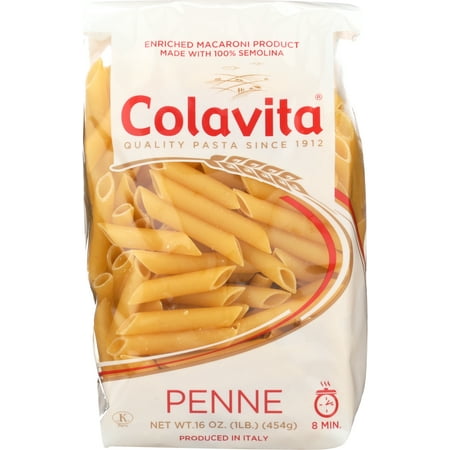


Colavita Penne Ziti Pasta, 16 Ounce
Analysis updated August 2026 · How Scout scores
At a glance
Summary
This pasta is made primarily from semolina wheat and enriched with essential vitamins and minerals, which are typical for pasta products. It is minimally processed, containing no harmful additives or seed oils, and maintains a clean ingredient list. The product's high protein content and low sugar levels further contribute to its positive rating.
Key ingredients 6
NiacinGood
Beneficial ingredient — whole-food or functional value in this product class.
Benefits
Supports energy metabolism and is important for maintaining healthy skin and nerve function.
RiboflavinGood
Essential B vitamin — beneficial micronutrient.
Benefits
Supports energy production and is important for the metabolism of fats and other compounds.
SemolinaNeutral
Semolina is a coarse flour made from durum wheat, commonly used in pasta. It is a minimally processed ingredient that provides carbohydrates and some protein. While it is a staple in many diets, it lacks significant micronutrient diversity.
Risks
Contains gluten, which may cause issues for individuals with celiac disease or gluten sensitivity.
Benefits
Provides a source of energy through carbohydrates and contains some protein, which is beneficial for muscle maintenance.
Iron LactateNeutral
Iron lactate is used to fortify foods with iron, an essential mineral for oxygen transport in the blood. It is a bioavailable form of iron that helps prevent anemia. Fortification is important in diets that may lack sufficient iron intake.
Risks
Excessive iron intake can lead to toxicity, but this is rare from fortified foods alone.
Benefits
Helps prevent iron deficiency anemia and supports healthy blood oxygen levels.
Thiamin MononitrateNeutral
Thiamin mononitrate is a form of vitamin B1 used to fortify foods. It plays a crucial role in energy metabolism and nerve function. Fortification helps ensure adequate intake in populations at risk of deficiency.
Benefits
Essential for energy metabolism and proper nerve function.
Folic AcidNeutral
Folic acid is a synthetic form of folate, a B-vitamin essential for DNA synthesis and repair. It is added to prevent neural tube defects in developing fetuses. Fortification is crucial for women of childbearing age to prevent birth defects.
Risks
Excessive intake can mask vitamin B12 deficiency, but this is unlikely from fortified foods alone.
Benefits
Prevents neural tube defects during pregnancy and supports DNA synthesis and repair.
Processing
Unprocessed or Minimally Processed Foods
Get the full breakdown in the Scout appTake Scout shopping
Scan any product to see lab results, healthy alternatives, and your personalized analysis.
Download on theApp Store GET IT ONGoogle Play