
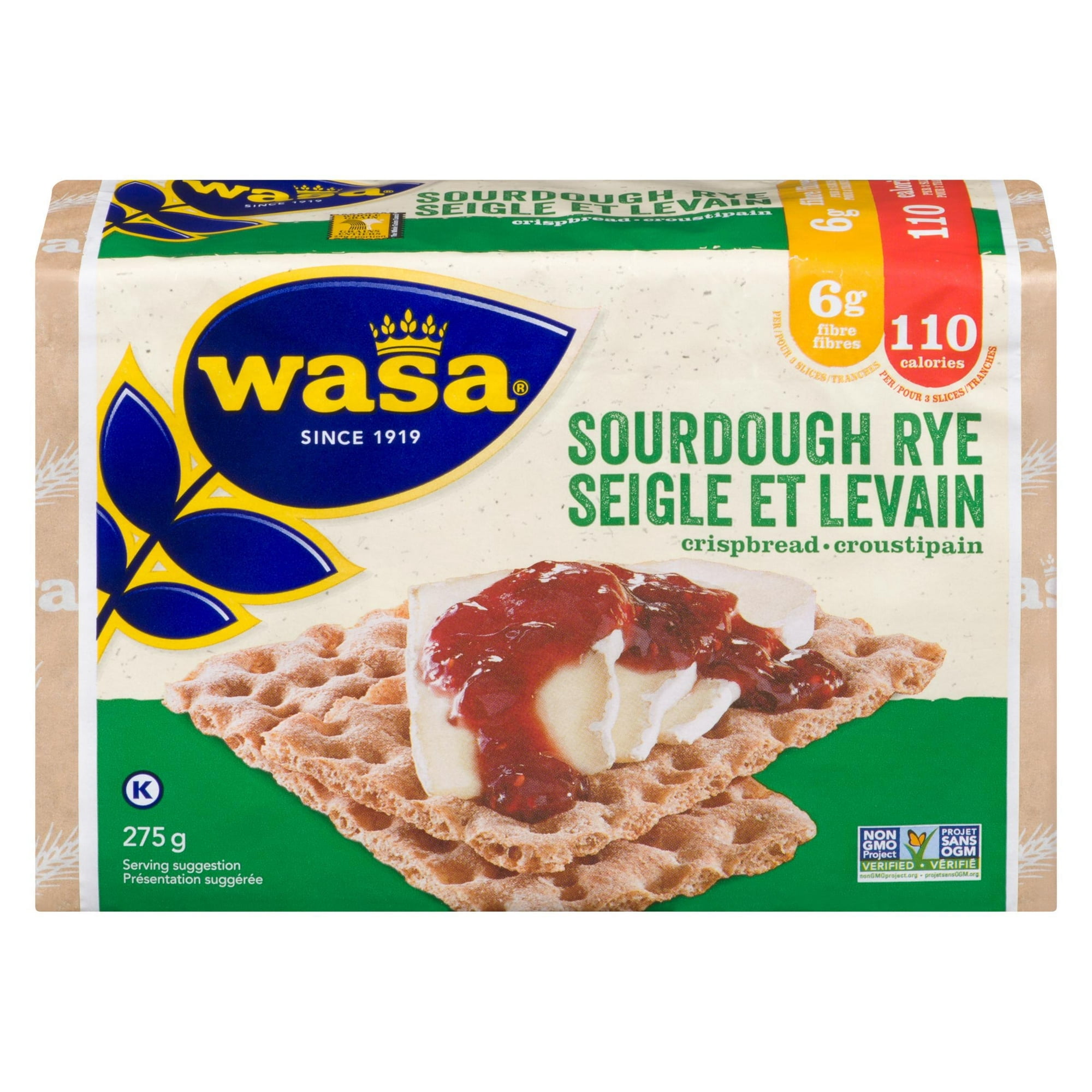


Wasa Sourdough Rye Whole Grain Crispbread
Analysis updated June 2026 · How Scout scores
At a glance
Summary
This crispbread is made primarily from whole grain rye flour, which is a nutritious ingredient rich in dietary fiber and essential nutrients. The ingredient list is short and clean, with no harmful additives or seed oils, making it a healthier option compared to many processed foods. However, due to its processing level, the score is capped to reflect its processed nature.
Key ingredients 4
Whole grain rye flourGood
Whole grain rye flour is a nutritious ingredient rich in dietary fiber and essential nutrients. It is minimally processed, retaining most of its natural vitamins and minerals. Compared to refined grains, it offers better satiety and supports digestive health.
Benefits
Provides dietary fiber that aids in digestion and helps maintain stable blood sugar levels. Contains essential nutrients such as magnesium and phosphorus.
Rye flourNeutral
Rye flour is a common ingredient in bread products, providing a distinct flavor and texture. It is less processed than white flour but may not retain all the nutrients of whole grain rye flour. It serves as a staple ingredient in many traditional bread recipes.
Risks
May cause allergic reactions in individuals with gluten sensitivity or celiac disease.
Benefits
Contributes to the flavor and texture of the bread, offering a traditional taste profile.
YeastNeutral
Yeast is a natural leavening agent used to ferment and rise dough. It is a crucial component in bread-making, contributing to the texture and flavor of the final product. Yeast fermentation can also enhance the bioavailability of certain nutrients.
Benefits
Enhances the texture and flavor of bread through fermentation, which can also improve nutrient absorption.
SaltNeutral
Salt is used in bread-making to enhance flavor and control yeast activity. It is a common ingredient in many food products, providing essential sodium for bodily functions. However, excessive consumption of salt can lead to health issues such as hypertension.
Risks
Excessive intake of salt can contribute to high blood pressure and cardiovascular issues.
Benefits
Enhances flavor and helps regulate yeast activity in bread-making.
Processing
Processed Foods
Get the full breakdown in the Scout appTake Scout shopping
Scan any product to see lab results, healthy alternatives, and your personalized analysis.
Download on theApp Store GET IT ONGoogle PlayAmazon pricing & content
Amazon price as of . Product prices and availability are accurate as of the date/time indicated and are subject to change. Any price and availability information displayed on Amazon.com at the time of purchase will apply to the purchase of this product.
CERTAIN CONTENT THAT APPEARS ON THIS SITE COMES FROM AMAZON. THIS CONTENT IS PROVIDED “AS IS” AND IS SUBJECT TO CHANGE OR REMOVAL AT ANY TIME.