
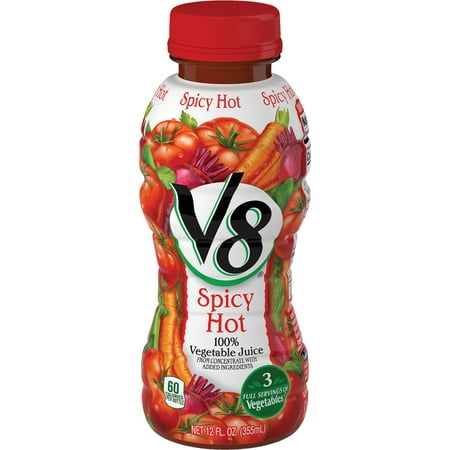


V8 Spicy Hot 100% Vegetable Juice, 12 oz. Bottle
Analysis updated July 2026 · How Scout scores
At a glance
Summary
This vegetable juice contains a variety of beneficial ingredients like concentrated vegetable juices, which provide essential vitamins and antioxidants. However, it is classified as ultra-processed due to the inclusion of natural flavoring and the overall processing level, which limits its score. Despite the presence of healthy components, the processing level and the use of natural flavoring reduce its overall health rating.
Key ingredients 15
Vegetable juiceGood
Vegetable juice is a blend of various vegetables providing essential vitamins and minerals. It is a convenient way to consume a variety of nutrients from vegetables. The juice form allows for easy absorption of nutrients.
Benefits
Rich in vitamins and minerals, supporting overall health and wellness. Provides antioxidants that may help reduce oxidative stress.
Concentrated juices of tomatoesGood
Tomato juice concentrate is rich in lycopene, an antioxidant linked to various health benefits. Concentration increases the nutrient density per serving. It supports heart health and may reduce cancer risk.
Benefits
High in lycopene, which supports heart health and may reduce cancer risk. Provides vitamins A and C, contributing to immune function.
CarrotsGood
Carrots are a source of beta-carotene, which the body converts to vitamin A. They support eye health and immune function. The concentration process retains these beneficial nutrients.
Benefits
Rich in beta-carotene, supporting eye health and immune function. Provides dietary fiber, which aids digestion.
CeleryGood
Celery is low in calories and provides dietary fiber and antioxidants. It supports digestive health and may help reduce inflammation. The juice form allows for easy nutrient absorption.
Benefits
Provides dietary fiber and antioxidants, supporting digestive health and reducing inflammation.
BeetsGood
Beets are rich in nitrates, which can improve blood flow and lower blood pressure. They also provide antioxidants and fiber. The concentration process enhances the nutrient content per serving.
Benefits
Rich in nitrates, which improve blood flow and lower blood pressure. Provides antioxidants and fiber, supporting overall health.
ParsleyGood
Parsley is a source of vitamins A, C, and K, and provides antioxidants. It supports bone health and immune function. The juice form allows for easy absorption of these nutrients.
Benefits
Rich in vitamins A, C, and K, supporting bone health and immune function. Provides antioxidants that may reduce oxidative stress.
WatercressGood
Watercress is nutrient-dense, providing vitamins A, C, and K, and antioxidants. It supports immune function and bone health. The juice form allows for easy absorption of these nutrients.
Benefits
Rich in vitamins A, C, and K, supporting immune function and bone health. Provides antioxidants that may reduce oxidative stress.
SpinachGood
Spinach is rich in iron, vitamins A, C, and K, and antioxidants. It supports eye health, immune function, and bone health. The concentration process enhances the nutrient content per serving.
Benefits
Rich in iron and vitamins, supporting eye health, immune function, and bone health. Provides antioxidants that may reduce oxidative stress.
Vitamin CGood
Vitamin C is an essential nutrient that supports immune function and acts as an antioxidant. It is often added to foods to enhance nutritional value. It also helps in the absorption of iron from plant-based sources.
Benefits
Supports immune function and acts as an antioxidant. Enhances iron absorption from plant-based sources.
Beta caroteneGood
Beta carotene is a precursor to vitamin A and acts as an antioxidant. It supports eye health and immune function. It is often added to foods to enhance nutritional value and color.
Benefits
Supports eye health and immune function. Acts as an antioxidant, reducing oxidative stress.
WaterNeutral
Water is used as a base in many beverages and is essential for hydration. It does not provide any additional nutrients or calories. Its presence ensures the product is not overly concentrated.
Benefits
Essential for hydration and maintaining bodily functions.
LettuceNeutral
Lettuce is low in calories and provides some vitamins and minerals. It is primarily used for its water content and mild flavor. The juice form does not significantly enhance its nutritional value.
Benefits
Provides hydration and a small amount of vitamins and minerals.
SaltNeutral
Salt is used to enhance flavor and preserve the product. It is a common ingredient in processed foods. Excessive consumption can lead to health issues such as high blood pressure.
Risks
Excessive salt intake can lead to high blood pressure and cardiovascular issues.
Benefits
Enhances flavor and acts as a preservative in food products.
Citric acidNeutral
Citric acid is used as a preservative and to add a sour flavor to foods. It is naturally found in citrus fruits. In processed foods, it helps maintain stability and freshness.
Benefits
Acts as a preservative and enhances flavor in food products.
Natural flavoringBad
Natural flavoring is a catch-all term for flavor compounds derived from natural sources. It lacks transparency, making it difficult to assess its health impact. The term can mask the presence of additives or allergens.
Risks
Lack of transparency can lead to potential allergen exposure or consumption of unwanted additives.
Processing
Ultra-Processed Foods
Get the full breakdown in the Scout appTake Scout shopping
Scan any product to see lab results, healthy alternatives, and your personalized analysis.
Download on theApp Store GET IT ONGoogle PlayAmazon pricing & content
Amazon price as of . Product prices and availability are accurate as of the date/time indicated and are subject to change. Any price and availability information displayed on Amazon.com at the time of purchase will apply to the purchase of this product.
CERTAIN CONTENT THAT APPEARS ON THIS SITE COMES FROM AMAZON. THIS CONTENT IS PROVIDED “AS IS” AND IS SUBJECT TO CHANGE OR REMOVAL AT ANY TIME.