

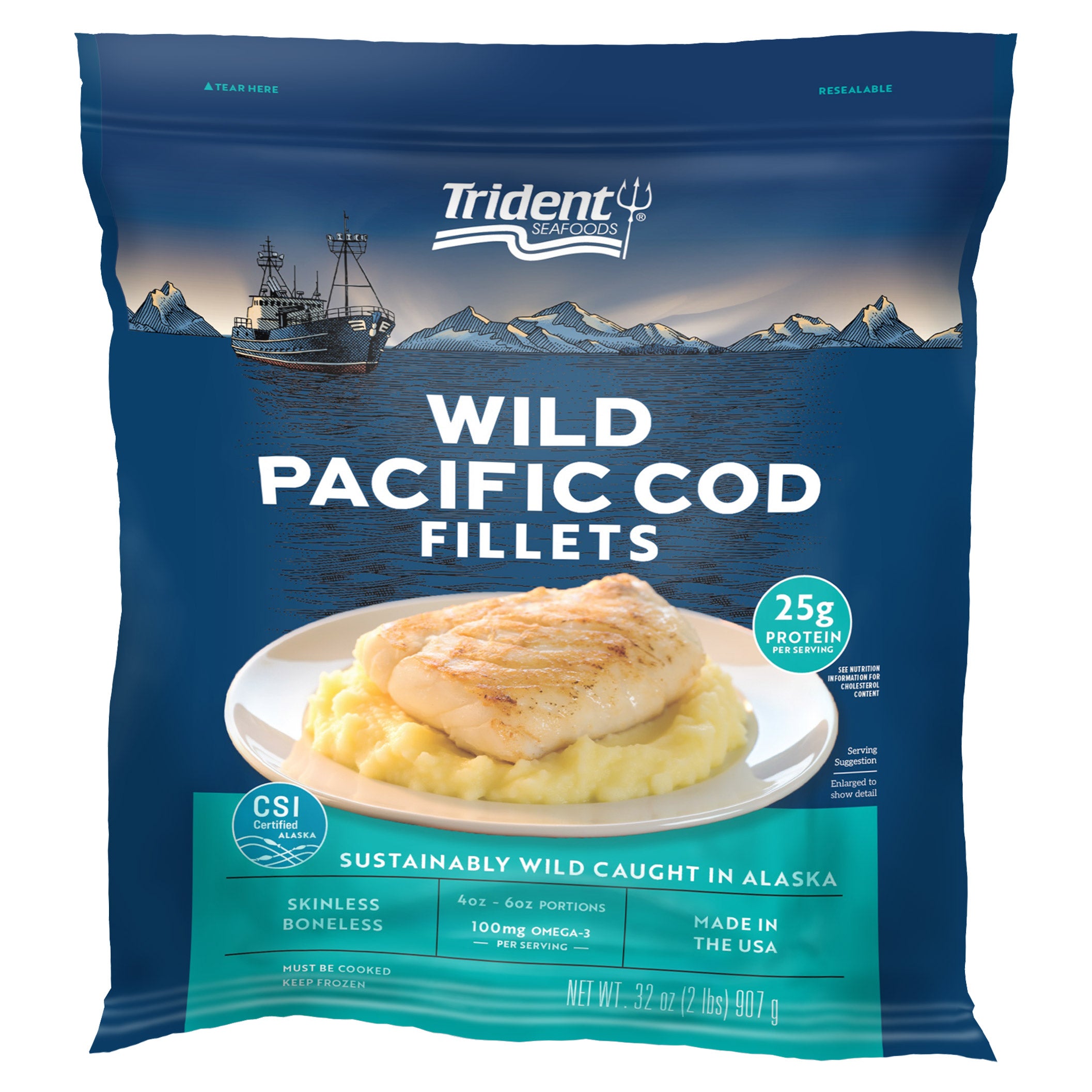

Breaded Wild Cod Fillets
Analysis updated August 2026 · How Scout scores
At a glance
Summary
The breaded wild cod fillets contain a beneficial ingredient, wild cod, which is a high-quality source of lean protein and essential nutrients. However, the product is processed and includes vegetable oil, which is often high in omega-6 fatty acids and can promote inflammation. The presence of enriched wheat flour and modified starches further contributes to its processed nature, limiting its overall health score.
Key ingredients 11
Wild CodGood
Wild cod is a high-quality source of lean protein and essential nutrients. It is less likely to contain contaminants compared to farmed fish. Wild-caught fish generally have a better nutrient profile and are more sustainable.
Benefits
Rich in protein and omega-3 fatty acids, which support heart and brain health.
WaterNeutral
Water is used as a processing aid and does not contribute significant nutritional value. It is essential for hydration and processing in food production. It does not pose any health risks.
Benefits
Essential for hydration and processing in food production.
Modified Corn StarchNeutral
Modified corn starch is used as a thickening agent and stabilizer in processed foods. It is chemically altered to improve its functional properties. While it is generally safe, it provides no significant nutritional benefits.
Benefits
Improves texture and stability in food products.
Wheat StarchNeutral
Wheat starch is used as a thickener and stabilizer in food products. It is derived from wheat and is gluten-free if properly processed. It provides no significant nutritional benefits.
Benefits
Improves texture and stability in food products.
Corn FlourNeutral
Corn flour is a finely ground powder made from dried corn. It is used to add texture and flavor to food products. While it provides some carbohydrates, it lacks significant nutritional benefits.
Benefits
Adds texture and flavor to food products.
Corn StarchNeutral
Corn starch is a common thickening agent used in cooking and food production. It is derived from the endosperm of corn kernels. It provides no significant nutritional benefits but is useful for texture enhancement.
Benefits
Enhances texture in food products.
SaltNeutral
Salt is used to enhance flavor and preserve food. It is a necessary nutrient but should be consumed in moderation to avoid health issues like hypertension. It does not provide additional nutritional benefits beyond sodium.
Risks
Excessive consumption may lead to hypertension and cardiovascular issues.
Benefits
Essential for maintaining fluid balance and nerve function.
Wheat GlutenNeutral
Wheat gluten is a protein found in wheat that provides elasticity to dough. It is beneficial for texture but can cause issues for those with gluten intolerance or celiac disease. It is a common ingredient in bread and baked goods.
Risks
May cause adverse reactions in individuals with gluten intolerance or celiac disease.
Benefits
Provides elasticity and structure to baked goods.
YeastNeutral
Yeast is used as a leavening agent in baking, helping dough to rise. It is a natural ingredient that contributes to the texture and flavor of baked goods. It is generally safe and provides some B vitamins.
Benefits
Contributes to the texture and flavor of baked goods and provides some B vitamins.
Enriched Wheat FlourBad
Refined grain flour stripped of bran and germ.
Risks
May contribute to blood sugar spikes and lacks the fiber of whole grains.
Benefits
Provides essential vitamins and minerals due to fortification.
Vegetable OilVery Bad
Vegetable oil is often high in omega-6 fatty acids, which can promote inflammation when consumed in excess. It is typically extracted using high heat and chemicals, which may degrade its nutritional quality. The specific type of vegetable oil is not identified, which raises concerns about its health impact.
Risks
High omega-6 content may promote inflammation when consumed in excess.
Processing
Processed Foods
Get the full breakdown in the Scout appTake Scout shopping
Scan any product to see lab results, healthy alternatives, and your personalized analysis.
Download on theApp Store GET IT ONGoogle Play