
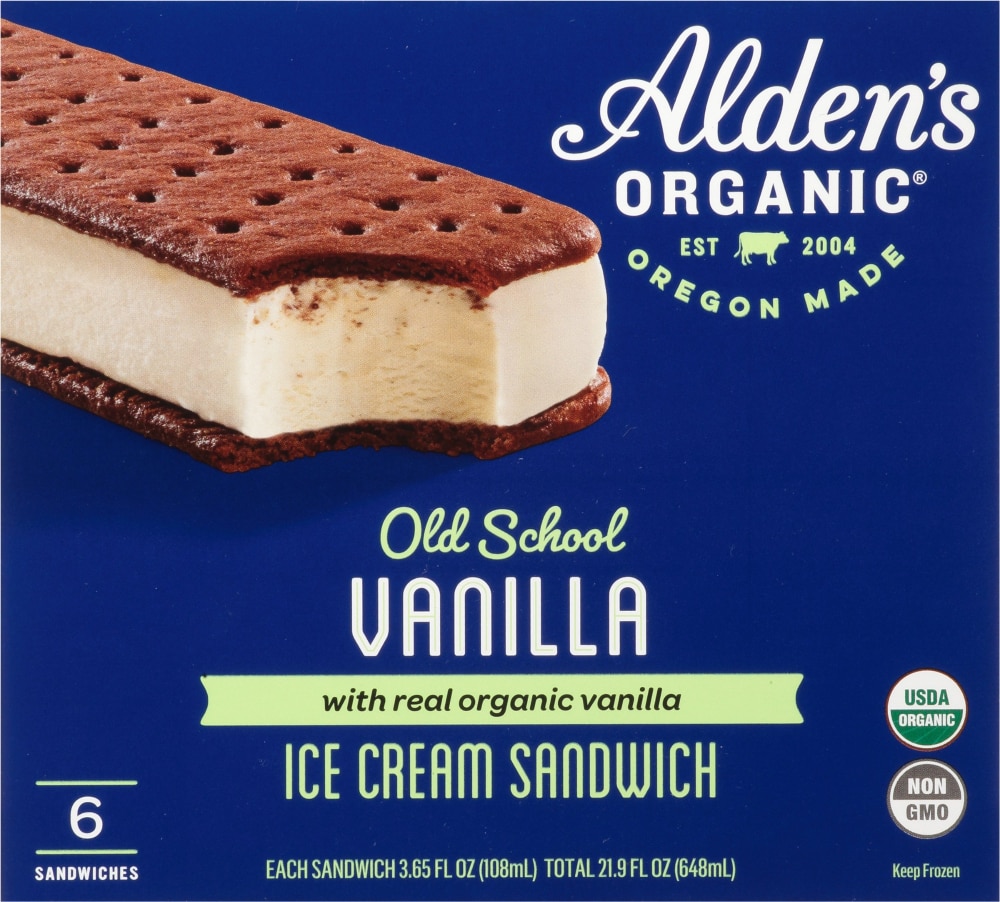



Alden's Organic OLD SCHOOL VANILLA ICE CREAM SANDWICH
Analysis updated August 2026 · How Scout scores
At a glance
Summary
This ice cream sandwich is ultra-processed, which limits its potential score despite using organic ingredients. The presence of organic palm oil and caramel color raises health concerns due to their negative impacts on heart health and potential harmful byproducts. While the product contains beneficial ingredients like organic cream and cocoa, the use of multiple additives and the processing level significantly affect its overall healthiness.
Key ingredients 17
Organic creamGood
Organic cream is a high-quality source of dairy fat. It provides essential fatty acids and fat-soluble vitamins. Being organic, it is free from synthetic pesticides and hormones.
Risks
High in saturated fat, which may contribute to heart disease if consumed in excess.
Benefits
Rich in fat-soluble vitamins like A, D, E, and K, which are essential for various bodily functions.
Organic milkGood
Organic milk is a nutritious source of calcium and protein. It is free from synthetic hormones and antibiotics. The organic certification ensures higher animal welfare standards.
Risks
Lactose intolerance can cause digestive issues for some individuals.
Benefits
Provides essential nutrients like calcium and vitamin D, supporting bone health.
Organic egg yolksGood
Egg yolks are a rich source of vitamins and minerals, including choline and vitamin D. Organic certification ensures no synthetic additives. They provide high-quality protein and healthy fats.
Risks
High cholesterol content may be a concern for individuals with specific health conditions.
Benefits
Rich in choline, which supports brain health and development.
Organic vanilla extractGood
Organic vanilla extract provides natural flavor without synthetic additives. It contains antioxidants that may have health benefits. The organic certification ensures no synthetic pesticides.
Benefits
Contains antioxidants that may help reduce oxidative stress.
Organic cocoaGood
Cocoa is rich in antioxidants and flavonoids, which have health benefits. Organic certification ensures no synthetic pesticides are used. It provides a natural chocolate flavor.
Risks
Contains caffeine and theobromine, which may affect sensitive individuals.
Benefits
Rich in antioxidants that may support heart health and reduce inflammation.
Organic locust bean gumNeutral
Locust bean gum is a natural thickener derived from carob seeds. It is used to improve texture and stability in foods. Being organic, it is free from synthetic additives.
Risks
Excessive consumption may cause digestive discomfort in sensitive individuals.
Benefits
Helps improve the texture and consistency of food products.
Organic guar gumNeutral
Guar gum is a natural thickening agent derived from guar beans. It is used to stabilize and thicken food products. The organic certification ensures it is free from synthetic chemicals.
Risks
May cause digestive issues like gas or bloating in some individuals.
Benefits
Improves the texture and shelf-life of food products.
Organic wheat flourNeutral
Organic wheat flour is a staple ingredient in baking. It provides carbohydrates and some protein. The organic certification ensures no synthetic pesticides or fertilizers are used.
Risks
Contains gluten, which can cause issues for individuals with celiac disease or gluten sensitivity.
Benefits
Provides energy and some essential nutrients like B vitamins.
Organic cane syrupNeutral
Organic cane syrup is a liquid sweetener derived from sugar cane. It is less processed than refined sugars. The organic certification ensures no synthetic chemicals are used.
Risks
High in sugars, which can contribute to metabolic disorders if consumed excessively.
Benefits
Provides a natural source of sweetness with some trace minerals.
Baking sodaNeutral
Baking soda is a leavening agent used in baking. It helps dough rise by releasing carbon dioxide. It is a common and safe ingredient in small quantities.
Risks
Excessive consumption can lead to alkalosis, a condition caused by high blood pH.
SaltNeutral
Salt is used to enhance flavor and preserve food. It is a common ingredient in many processed foods. Excessive intake can lead to health issues like hypertension.
Risks
High sodium intake is linked to increased blood pressure and cardiovascular risk.
Benefits
Essential for maintaining fluid balance and nerve function.
Organic cane sugarBad
Processed additive flagged under Scout's ingredient doctrine.
Risks
Excessive consumption can lead to weight gain and increased risk of metabolic diseases.
Benefits
Provides quick energy but should be consumed in moderation.
Organic sugarBad
Processed additive flagged under Scout's ingredient doctrine.
Risks
High sugar intake can lead to health issues like obesity and diabetes.
Benefits
Provides energy but should be consumed in moderation.
Organic palm oilBad
Palm oil is high in saturated fats, which can impact heart health negatively. Its production is often linked to deforestation and habitat destruction. Organic certification reduces chemical exposure but does not address environmental concerns.
Risks
High saturated fat content may increase the risk of cardiovascular diseases.
Benefits
Provides a stable cooking fat with a long shelf life.
Organic caramel colorBad
Caramel color is a food coloring agent that can contain harmful byproducts. Organic certification reduces chemical exposure but does not eliminate potential health risks. It is used to enhance the appearance of food products.
Risks
May contain 4-MEI, a potential carcinogen, depending on production methods.
Organic soy lecithinBad
Soy lecithin is an emulsifier derived from soybeans. It is used to improve texture and mix ingredients. Organic certification reduces chemical exposure but does not address potential allergenicity.
Risks
May cause allergic reactions in individuals sensitive to soy.
Benefits
Helps stabilize emulsions and improve texture in food products.
Natural vanilla flavorBad
Natural vanilla flavor is a broad term that can include various compounds. It lacks the complexity and benefits of pure vanilla extract. Its use is often to reduce costs rather than enhance quality.
Risks
May contain additives or solvents used in extraction processes.
Benefits
Provides vanilla flavor but lacks significant nutritional benefits.
Processing
Ultra-Processed Foods
Get the full breakdown in the Scout appTake Scout shopping
Scan any product to see lab results, healthy alternatives, and your personalized analysis.
Download on theApp Store GET IT ONGoogle PlayAmazon pricing & content
Amazon price as of . Product prices and availability are accurate as of the date/time indicated and are subject to change. Any price and availability information displayed on Amazon.com at the time of purchase will apply to the purchase of this product.
CERTAIN CONTENT THAT APPEARS ON THIS SITE COMES FROM AMAZON. THIS CONTENT IS PROVIDED “AS IS” AND IS SUBJECT TO CHANGE OR REMOVAL AT ANY TIME.