
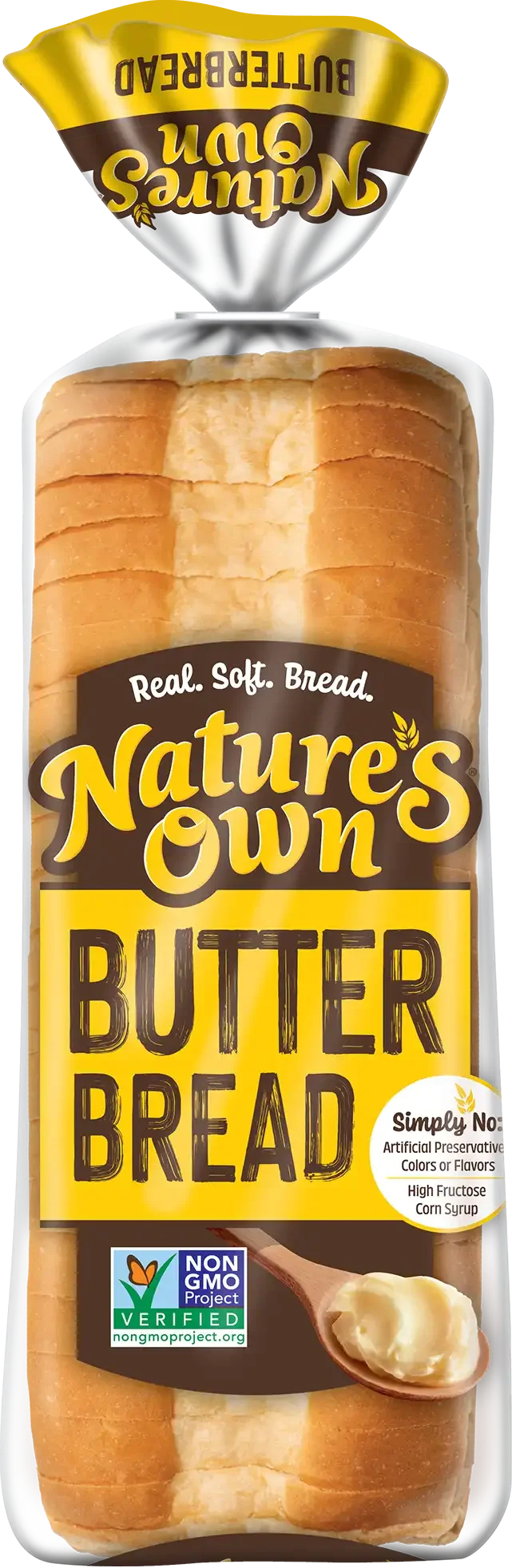


REAL BUTTER BREAD
Summary
This bread is ultra-processed, containing multiple additives such as dough conditioners and preservatives, which contribute to its high processing level. While it includes some beneficial ingredients like nonfat milk, butter, and sesame seeds, the presence of sugar and synthetic additives like calcium propionate and DATEM detracts from its overall healthiness. The combination of these factors results in a moderate score, reflecting both the positive and negative aspects of its ingredient profile.
At a glance
Key ingredients 16
Unbleached enriched wheat flourNeutral
Unbleached enriched wheat flour is a refined flour that has been fortified with vitamins and minerals. It lacks the fiber and nutrients found in whole grain flour. The enrichment process adds back some nutrients lost during processing.
Risks
May contribute to blood sugar spikes due to its refined nature.
Benefits
Provides essential vitamins and minerals such as iron and B vitamins due to enrichment.
Nonfat milkGood
Nonfat milk is a source of protein and calcium without the added fat content. It is beneficial for bone health and provides essential nutrients. The removal of fat makes it a lower-calorie option.
Benefits
Rich in calcium and protein, supporting bone health and muscle maintenance.
YeastNeutral
Yeast is a microorganism used in baking to leaven bread. It ferments sugars, producing carbon dioxide that helps dough rise. It is a natural ingredient with no significant health concerns.
Benefits
Contributes to the texture and flavor of bread through fermentation.
SugarBad
Sugar is a refined carbohydrate that can contribute to health issues when consumed in excess. It provides empty calories with no essential nutrients. Excessive intake is linked to obesity and metabolic disorders.
Risks
High consumption may lead to weight gain and increased risk of type 2 diabetes.
Benefits
Provides quick energy but lacks nutritional benefits.
Wheat glutenNeutral
Wheat gluten is a protein found in wheat that provides elasticity to dough. It is essential for the structure of bread. While safe for most, it can cause issues for those with gluten intolerance or celiac disease.
Risks
May cause adverse reactions in individuals with gluten sensitivity or celiac disease.
Benefits
Enhances the texture and chewiness of bread.
ButterGood
Butter is a dairy product rich in saturated fats and fat-soluble vitamins. It adds flavor and richness to baked goods. When sourced from grass-fed cows, it contains beneficial fatty acids.
Risks
High in saturated fats, which should be consumed in moderation.
Benefits
Provides fat-soluble vitamins and beneficial fatty acids when sourced from quality sources.
SaltNeutral
Salt is used to enhance flavor and preserve food. It is essential for various bodily functions but should be consumed in moderation. Excessive intake can lead to health issues like hypertension.
Risks
Excessive consumption may contribute to high blood pressure.
Benefits
Essential for maintaining fluid balance and nerve function.
Dough conditionersBad
Dough conditioners like sodium stearoyl lactylate and monoglycerides are used to improve dough texture and shelf life. They are synthetic additives that may have health concerns. Their presence indicates a higher level of processing.
Risks
May contain trans fats and contribute to inflammation.
Benefits
Improve dough consistency and extend shelf life.
Monocalcium phosphateNeutral
Monocalcium phosphate is a leavening agent used in baking. It reacts with baking soda to produce carbon dioxide, helping dough rise. It is generally recognized as safe when used in food.
Benefits
Assists in leavening, contributing to the texture of baked goods.
Calcium propionateBad
Calcium propionate is a preservative used to prevent mold growth in baked goods. It is a synthetic additive that may cause adverse reactions in sensitive individuals. Its use indicates a higher level of food processing.
Risks
May cause headaches or digestive issues in sensitive individuals.
Benefits
Extends the shelf life of bread by inhibiting mold growth.
Guar gumNeutral
Guar gum is a thickening agent derived from guar beans. It is used to improve texture and stability in food products. Generally considered safe, but excessive consumption may cause digestive issues.
Risks
May cause digestive discomfort if consumed in large amounts.
Benefits
Improves texture and stability of food products.
Ascorbic acidNeutral
Ascorbic acid, also known as vitamin C, is used as a dough conditioner and antioxidant. It helps improve dough strength and shelf life. It is a natural compound with no significant health concerns.
Benefits
Acts as an antioxidant and improves dough quality.
DatemBad
Datem is an emulsifier used to strengthen dough and improve texture. It is a synthetic additive that may have health concerns. Its presence indicates a higher level of food processing.
Risks
May cause digestive issues in sensitive individuals.
Benefits
Improves dough strength and texture.
Calcium sulfateNeutral
Calcium sulfate is used as a firming agent and dough conditioner. It is generally recognized as safe when used in food. It provides calcium but is not a significant source of nutrition.
Benefits
Contributes to dough firmness and provides calcium.
EnzymesNeutral
Enzymes are proteins that catalyze biochemical reactions, used in baking to improve dough properties. They are natural and generally safe. They enhance the texture and volume of bread.
Benefits
Improve dough properties and enhance bread quality.
Sesame seedsGood
Sesame seeds are a source of healthy fats, protein, and minerals. They add flavor and nutritional value to baked goods. They are rich in antioxidants and beneficial compounds.
Risks
May cause allergic reactions in sensitive individuals.
Benefits
Provide healthy fats, protein, and antioxidants.
Processing
Ultra-Processed Foods
Get the full breakdown in the Scout app
Scan any product to see lab results, healthy alternatives, and your personalized analysis.
Download on theApp Store