


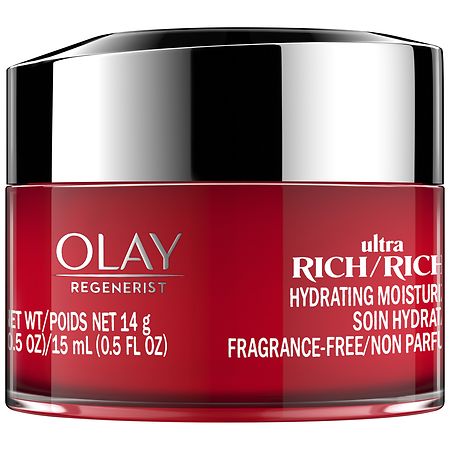
Olay Regenerist Micro-Sculpting Cream Face Moisturizer 1.7 oz.
Analysis updated September 2026 · How Scout scores
At a glance
Summary
This moisturizer contains beneficial ingredients like niacinamide, sodium hyaluronate, and green tea extract, which offer hydration and anti-aging benefits. However, the presence of parabens and synthetic fragrance, which can cause skin irritation and potential endocrine disruption, lowers its overall safety profile. The product's formulation includes both natural and synthetic components, resulting in a moderate processing level.
Key ingredients 42
PanthenolVery Good
Panthenol is a provitamin of B5 known for its moisturizing and soothing properties. It helps to improve skin hydration and elasticity.
Risks
Very low risk of irritation, generally well-tolerated.
Benefits
Enhances skin hydration and soothes irritation.
Palmitoyl Pentapeptide-4Very Good
Palmitoyl Pentapeptide-4 is a peptide that helps to stimulate collagen production, reducing the appearance of fine lines and wrinkles. It is valued for its anti-aging benefits.
Risks
Very low risk of irritation, generally well-tolerated.
Benefits
Promotes collagen production and reduces signs of aging.
Camellia Sinensis Leaf ExtractVery Good
Camellia Sinensis Leaf Extract, or green tea extract, is rich in antioxidants and has anti-inflammatory properties. It helps to protect the skin from environmental damage.
Risks
Very low risk of irritation, generally well-tolerated.
Benefits
Protects against environmental damage and soothes the skin.
Aloe Barbadensis Leaf JuiceVery Good
Aloe Barbadensis Leaf Juice is known for its soothing and hydrating properties. It helps to calm irritated skin and provides moisture.
Risks
Very low risk of irritation, generally well-tolerated.
Benefits
Soothes and hydrates the skin effectively.
AllantoinVery Good
Allantoin is used for its skin-soothing and conditioning properties. It helps to protect the skin and promote healing.
Risks
Very low risk of irritation, generally well-tolerated.
Benefits
Soothes and protects the skin, promoting healing.
GlycerinGood
Glycerin is a humectant that attracts moisture to the skin, improving hydration. It is widely used in skincare for its moisturizing properties.
Risks
Rarely, it can cause irritation in sensitive individuals.
Benefits
Helps to keep the skin hydrated and soft.
NiacinamideGood
Niacinamide is a form of Vitamin B3 that improves skin elasticity, enhances the barrier function, and evens skin tone. It is highly regarded for its anti-inflammatory and anti-aging properties.
Risks
Very low risk of irritation, generally well-tolerated.
Benefits
Improves skin texture, reduces inflammation, and brightens skin.
Tocopheryl AcetateGood
Tocopheryl Acetate is a form of Vitamin E that acts as an antioxidant. It helps to protect the skin from free radical damage.
Risks
Rarely, it can cause skin irritation in sensitive individuals.
Benefits
Protects the skin from oxidative stress and supports skin health.
Sodium HyaluronateGood
Sodium Hyaluronate is a salt form of Hyaluronic Acid, known for its ability to retain moisture. It helps to hydrate and plump the skin.
Risks
Generally safe, with a very low risk of irritation.
Benefits
Deeply hydrates the skin and improves elasticity.
Caprylic/Capric TriglycerideGood
Caprylic/Capric Triglyceride is used as an emollient and skin-replenishing ingredient. It helps to improve the texture and hydration of the skin.
Risks
Generally considered safe, with a very low risk of irritation.
Benefits
Enhances skin hydration and improves texture.
MicaGood
Beneficial ingredient — whole-food or functional value in this product class.
Risks
Concerns about inhalation toxicity in powder form, but generally safe in creams.
Benefits
Provides shimmer and color to the product.
WaterNeutral
Water is a common solvent used in cosmetics to dissolve other ingredients. It helps in the application and absorption of the product. It does not provide any direct benefits or risks.
Benefits
Acts as a solvent and helps in the application of the product.
IsohexadecaneNeutral
Isohexadecane is used as an emollient and texture enhancer in cosmetics. It provides a silky feel without leaving a greasy residue.
Risks
Generally considered safe, but can cause mild irritation in sensitive skin.
Benefits
Improves the texture and feel of the product on the skin.
Isopropyl IsostearateNeutral
Isopropyl Isostearate is an emollient that helps to soften and smooth the skin. It is used to improve the spreadability of the product.
Risks
May cause mild irritation in sensitive skin types.
Benefits
Enhances the texture and spreadability of the product.
Aluminum Starch OctenylsuccinateNeutral
This ingredient is used as an absorbent and anti-caking agent in cosmetics. It helps to control the viscosity and stability of the product.
Risks
Generally safe, but can cause mild irritation in some individuals.
Benefits
Improves product stability and texture.
Nylon-12Neutral
Nylon-12 is used to enhance the texture and feel of cosmetic products. It provides a smooth, silky finish.
Risks
Considered safe, but may cause mild irritation in sensitive skin.
Benefits
Improves the texture and feel of the product.
Stearyl AlcoholNeutral
Stearyl Alcohol is a fatty alcohol used as an emollient and thickener in cosmetics. It helps to stabilize and improve the texture of the product.
Risks
Generally safe, but can cause mild irritation in sensitive skin.
Benefits
Improves product texture and stability.
Cetyl AlcoholNeutral
Cetyl Alcohol is a fatty alcohol used as an emollient and thickener. It helps to stabilize and improve the texture of the product.
Risks
Generally safe, but can cause mild irritation in sensitive skin.
Benefits
Improves product texture and stability.
Sodium Acrylates CopolymerNeutral
Sodium Acrylates Copolymer is used as a thickening agent and film former in cosmetics. It helps to stabilize the product and improve its texture.
Risks
Generally considered safe, but can cause mild irritation in sensitive skin.
Benefits
Improves product stability and texture.
Behenyl AlcoholNeutral
Behenyl Alcohol is a fatty alcohol used as an emollient and thickener. It helps to stabilize and improve the texture of the product.
Risks
Generally safe, but can cause mild irritation in sensitive skin.
Benefits
Improves product texture and stability.
Acrylamide/Sodium Acryloyldimethyltaurate CopolymerNeutral
This copolymer is used as a thickening agent and film former in cosmetics. It helps to stabilize the product and improve its texture.
Risks
Generally considered safe, but can cause mild irritation in sensitive skin.
Benefits
Improves product stability and texture.
DimethiconolNeutral
Dimethiconol is a silicone-based polymer used as an emollient and conditioning agent. It provides a smooth application and helps to lock in moisture.
Risks
Can cause breakouts in acne-prone skin due to occlusive properties.
Benefits
Provides a smooth application and helps retain moisture.
Sodium Peg-7 Olive Oil CarboxylateNeutral
This ingredient is used as an emulsifier and surfactant in cosmetics. It helps to blend oil and water-based ingredients.
Risks
Generally considered safe, but can cause mild irritation in sensitive skin.
Benefits
Improves product consistency and stability.
Peucedanum Graveolens (Dill) ExtractNeutral
Dill extract is used for its potential antioxidant and soothing properties. It may help to protect the skin from environmental damage.
Risks
Limited research on its efficacy and safety in cosmetics.
Benefits
May provide antioxidant benefits and soothe the skin.
Peg-100 StearateNeutral
PEG-100 Stearate is used as an emulsifier in cosmetics. It helps to blend oil and water-based ingredients for a stable product.
Risks
Generally considered safe, but can cause mild irritation in sensitive skin.
Benefits
Improves product consistency and stability.
Stearic AcidNeutral
Stearic Acid is a fatty acid used as an emulsifier and thickener in cosmetics. It helps to stabilize and improve the texture of the product.
Risks
Generally safe, but can cause mild irritation in sensitive skin.
Benefits
Improves product texture and stability.
Cetearyl GlucosideNeutral
Cetearyl Glucoside is used as an emulsifier in cosmetics. It helps to blend oil and water-based ingredients for a stable product.
Risks
Generally considered safe, but can cause mild irritation in sensitive skin.
Benefits
Improves product consistency and stability.
Cetearyl AlcoholNeutral
Cetearyl Alcohol is a fatty alcohol used as an emollient and thickener. It helps to stabilize and improve the texture of the product.
Risks
Generally safe, but can cause mild irritation in sensitive skin.
Benefits
Improves product texture and stability.
Citric AcidNeutral
Citric Acid is used to adjust the pH of cosmetics. It helps to maintain the stability and efficacy of the product.
Risks
Can cause irritation in sensitive skin if used in high concentrations.
Benefits
Helps to maintain product stability and efficacy.
C12-13 Pareth-3Neutral
C12-13 Pareth-3 is used as an emulsifier and surfactant in cosmetics. It helps to blend oil and water-based ingredients.
Risks
Generally considered safe, but can cause mild irritation in sensitive skin.
Benefits
Improves product consistency and stability.
Laureth-7Neutral
Laureth-7 is used as an emulsifier and surfactant in cosmetics. It helps to blend oil and water-based ingredients.
Risks
Generally considered safe, but can cause mild irritation in sensitive skin.
Benefits
Improves product consistency and stability.
C13-14 IsoparaffinNeutral
C13-14 Isoparaffin is used as an emollient and thickener in cosmetics. It helps to improve the texture and spreadability of the product.
Risks
Generally considered safe, but can cause mild irritation in sensitive skin.
Benefits
Enhances product texture and spreadability.
Sodium HydroxideNeutral
Sodium Hydroxide is used to adjust the pH of cosmetics. It helps to maintain the stability and efficacy of the product.
Risks
Can cause irritation if used in high concentrations.
Benefits
Helps to maintain product stability and efficacy.
Titanium DioxideNeutral
Titanium Dioxide is used as a pigment and UV filter in cosmetics. It helps to provide coverage and protection from UV radiation.
Risks
Concerns about inhalation toxicity in powder form, but generally safe in creams.
Benefits
Provides UV protection and coverage.
DimethiconeBad
Occlusive silicone film-former — flagged under clean-beauty doctrine.
Risks
Can cause breakouts in acne-prone skin due to occlusive properties.
Benefits
Provides a smooth application and helps retain moisture.
Benzyl AlcoholBad
Processed additive flagged under Scout's ingredient doctrine.
Risks
Can cause irritation and allergic reactions in sensitive individuals.
Benefits
Acts as a preservative to extend product shelf life.
Disodium EdtaBad
Processed additive flagged under Scout's ingredient doctrine.
Risks
Generally considered safe, but can cause mild irritation in sensitive skin.
Benefits
Enhances product stability and efficacy.
PolyethyleneVery Bad
Heavily flagged ingredient class under Scout's doctrine.
Risks
Concerns about microplastic pollution, but generally safe for skin.
Benefits
Enhances product texture and application.
EthylparabenVery Bad
Ethylparaben is a paraben used as a preservative in cosmetics. It helps to prevent microbial growth and extend product shelf life.
Risks
Concerns about endocrine disruption and skin irritation.
Benefits
Acts as a preservative to extend product shelf life.
MethylparabenVery Bad
Methylparaben is a paraben used as a preservative in cosmetics. It helps to prevent microbial growth and extend product shelf life.
Risks
Concerns about endocrine disruption and skin irritation.
Benefits
Acts as a preservative to extend product shelf life.
PropylparabenVery Bad
Propylparaben is a paraben used as a preservative in cosmetics. It helps to prevent microbial growth and extend product shelf life.
Risks
Concerns about endocrine disruption and skin irritation.
Benefits
Acts as a preservative to extend product shelf life.
FragranceVery Bad
Fragrance is used to impart scent to cosmetics. It is a common cause of allergic reactions and skin irritation.
Risks
High risk of skin irritation and allergic reactions.
Benefits
Provides a pleasant scent to the product.
Get the full breakdown in the Scout appTake Scout shopping
Scan any product to see lab results, healthy alternatives, and your personalized analysis.
Download on theApp Store GET IT ONGoogle PlayAmazon pricing & content
Amazon price as of . Product prices and availability are accurate as of the date/time indicated and are subject to change. Any price and availability information displayed on Amazon.com at the time of purchase will apply to the purchase of this product.
CERTAIN CONTENT THAT APPEARS ON THIS SITE COMES FROM AMAZON. THIS CONTENT IS PROVIDED “AS IS” AND IS SUBJECT TO CHANGE OR REMOVAL AT ANY TIME.