
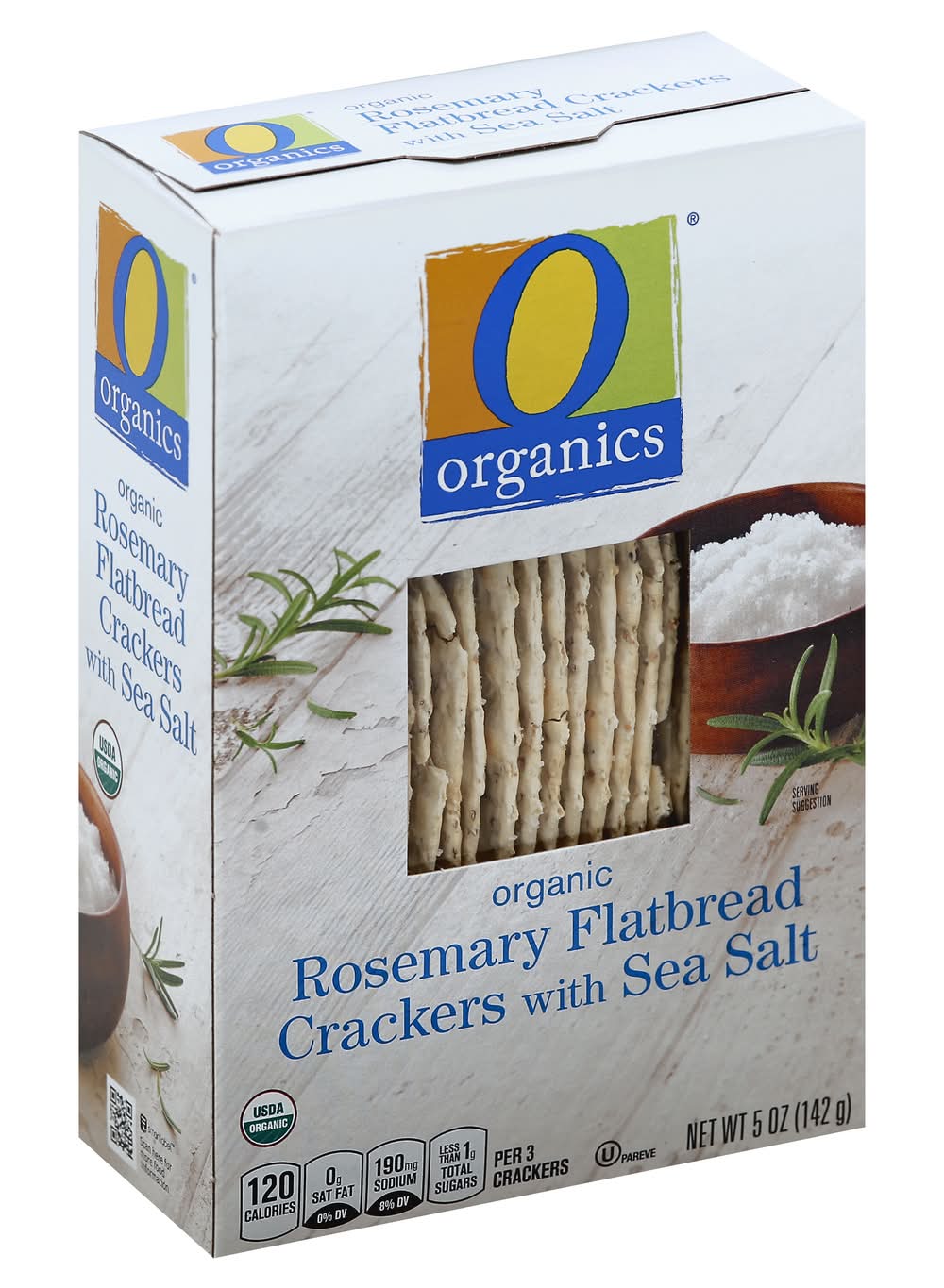


ORGANIC ROSEMARY FLATBREAD CRACKERS WITH SEA SALT
O OrganicsAnalysis updated July 2026 · How Scout scores
At a glance
Summary
This product contains a mix of organic whole grains and beneficial ingredients like sesame seeds and rosemary, which contribute to its nutritional value. However, the presence of organic expeller pressed canola oil, a seed oil, and organic sugar, a refined sweetener, detracts from its healthiness. The product is processed, which limits its score despite the organic certification and use of whole grains.
Key ingredients 9
Organic grain mixGood
The organic grain mix includes a variety of whole grains like spelt, rye, and barley, which are rich in fiber and nutrients. Whole grains support digestive health and provide sustained energy. The organic certification ensures minimal pesticide exposure.
Risks
Contains gluten, which may not be suitable for those with gluten intolerance.
Benefits
Rich in dietary fiber, vitamins, and minerals, supporting heart health and digestion.
Organic dehydrated minced onionGood
Organic dehydrated minced onion adds flavor and contains antioxidants. It is minimally processed and retains many of the beneficial compounds found in fresh onions. The organic certification ensures reduced pesticide exposure.
Benefits
Provides antioxidants and enhances flavor without added calories.
Organic sesame seedsGood
Organic sesame seeds are a good source of healthy fats, protein, and minerals like calcium and magnesium. They contribute to heart health and bone strength. The organic nature ensures minimal pesticide residues.
Risks
May cause allergic reactions in susceptible individuals.
Benefits
Rich in healthy fats, protein, and essential minerals, supporting overall health.
Organic rosemaryGood
Organic rosemary is a herb known for its antioxidant properties and ability to enhance flavor. It is minimally processed and retains its beneficial compounds. The organic certification ensures reduced pesticide exposure.
Benefits
Contains antioxidants that may support immune function and reduce inflammation.
Sea saltGood
Sea salt is a natural source of sodium and trace minerals, offering a more balanced mineral profile than refined salt. It is minimally processed, retaining its natural composition. It enhances flavor without the need for excessive additives.
Risks
Excessive sodium intake can lead to hypertension and cardiovascular issues.
Benefits
Provides essential sodium and trace minerals, supporting electrolyte balance.
Organic unbleached wheat flourNeutral
Organic unbleached wheat flour is a staple ingredient providing carbohydrates and some protein. It is less processed than bleached flour, retaining more nutrients. However, it lacks significant health benefits beyond basic nutrition.
Risks
May cause gluten-related issues for individuals with celiac disease or gluten sensitivity.
Benefits
Provides essential carbohydrates for energy and some protein content.
Organic yeastNeutral
Organic yeast is used as a leavening agent and contributes to the texture of baked goods. It is a natural ingredient with minimal processing. While it aids in fermentation, it does not provide significant health benefits.
Benefits
Aids in fermentation and contributes to the texture of baked goods.
Organic sugarBad
Organic sugar is a refined sweetener that contributes to calorie intake without providing significant nutrients. Despite being organic, it still poses health risks associated with high sugar consumption. It is better than non-organic sugar due to reduced pesticide exposure.
Risks
Excessive consumption can lead to weight gain, insulin resistance, and dental issues.
Organic expeller pressed canola oilVery Bad
Canola oil is a seed oil high in omega-6 fatty acids, which can promote inflammation when consumed in excess. The expeller-pressed method is a better extraction process, but it does not eliminate the health concerns associated with seed oils. Despite being organic, it remains a less desirable fat source.
Risks
High omega-6 content may promote inflammation and imbalance in fatty acid intake.
Processing
Processed Foods
Get the full breakdown in the Scout appTake Scout shopping
Scan any product to see lab results, healthy alternatives, and your personalized analysis.
Download on theApp Store GET IT ONGoogle Play