
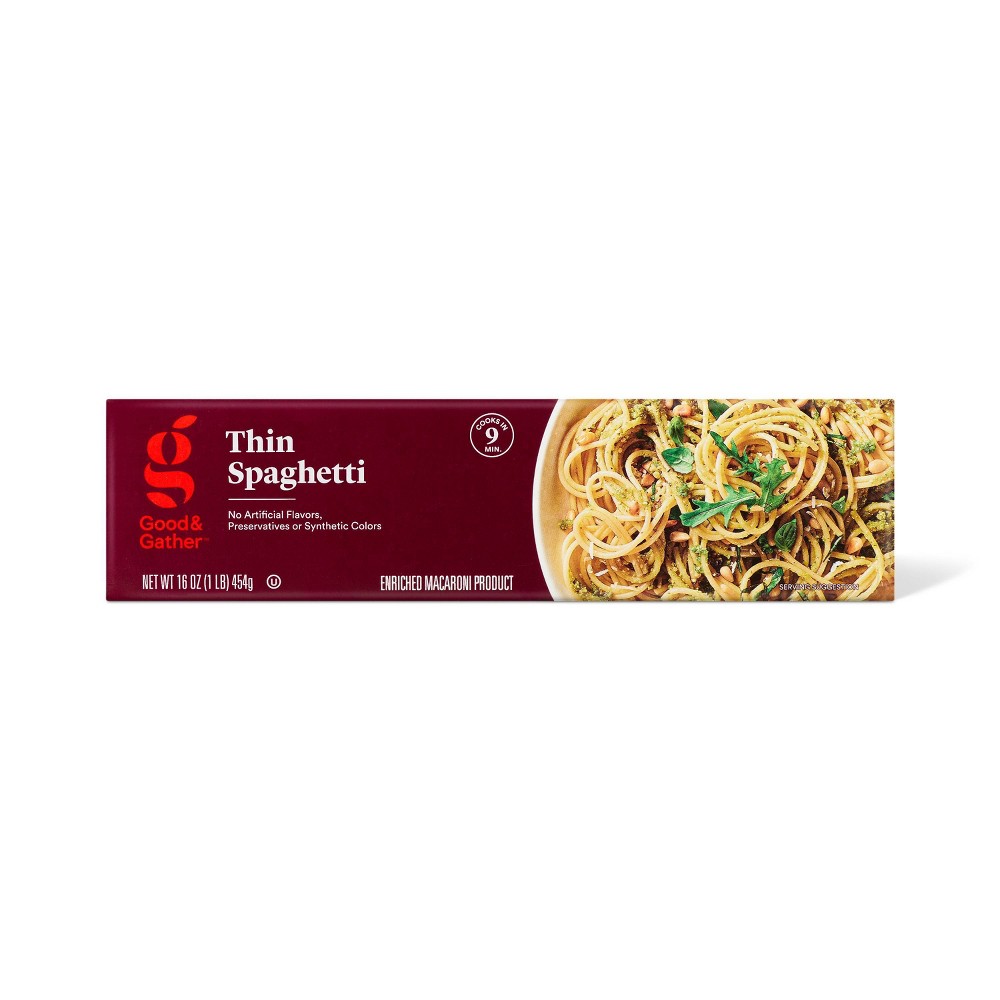
Thin Spaghetti - 16oz - Good & Gather™

Good And Gather
83 Good
View on Amazon

Summary

This pasta is made primarily from semolina, a minimally processed flour that retains more nutrients compared to refined wheat flours, contributing to its nutritional benefits. The ingredient list is short and free from harmful additives, artificial colors, or seed oils, which supports a higher score. However, due to its processing level, the score is capped, reflecting its status as a processed food.

At a glance

Beneficial ingredients 1
Harmful ingredients 0
Owned by Target Corporation
Category Pasta

Key ingredients 6

Semolina
Good

Semolina is a coarse flour made from durum wheat, known for its high protein content. It is minimally processed and retains more nutrients compared to refined wheat flours. Its use in pasta provides a firm texture and nutritional benefits.

Risks

Contains gluten, which may cause adverse reactions in individuals with celiac disease or gluten sensitivity.

Benefits

Rich in protein and fiber, contributing to satiety and digestive health. Provides essential nutrients like iron and B vitamins.

Niacin
Neutral

Niacin, also known as vitamin B3, is added to fortify the pasta with essential nutrients. It is a common practice in enriched flours to replace nutrients lost during processing. Niacin supports energy metabolism and nervous system health.

Benefits

Essential for converting food into energy and maintaining healthy skin and nerves.

See more about Niacin →
Ferrous Sulfate
Neutral

Ferrous sulfate is an iron supplement used to fortify foods and prevent iron deficiency. It is commonly added to enriched grain products to improve nutritional value. Iron is crucial for oxygen transport in the blood.

Risks

Excessive iron intake can lead to toxicity, but this is unlikely from fortified foods alone.

Benefits

Helps prevent iron deficiency anemia and supports overall energy levels and immune function.

See more about Ferrous Sulfate →
Thiamin Mononitrate
Neutral

Thiamin mononitrate is a synthetic form of vitamin B1 used to enrich foods. It is stable and effective in restoring thiamin levels lost during processing. Thiamin is essential for carbohydrate metabolism and nerve function.

Benefits

Supports energy production and proper nervous system function.

Riboflavin
Neutral

Riboflavin, or vitamin B2, is added to enriched foods to enhance nutritional content. It plays a key role in energy production and cellular function. Riboflavin is sensitive to light, so it is often added to foods to ensure adequate intake.

Benefits

Important for energy metabolism and maintaining healthy skin and eyes.

See more about Riboflavin →
Folic Acid
Neutral

Folic acid is a synthetic form of folate used to fortify foods and prevent deficiencies. It is crucial for DNA synthesis and cell division, making it especially important during periods of rapid growth. Fortification helps prevent neural tube defects in developing fetuses.

Risks

Excessive intake can mask vitamin B12 deficiency, but this is unlikely from fortified foods alone.

Benefits

Supports healthy cell division and is vital for fetal development during pregnancy.

See more about Folic Acid →

Processing

Group 3 · Processed

Processed Foods

Get the full breakdown in the Scout app

Scan any product to see lab results, healthy alternatives, and your personalized analysis.

Download on theApp Store