
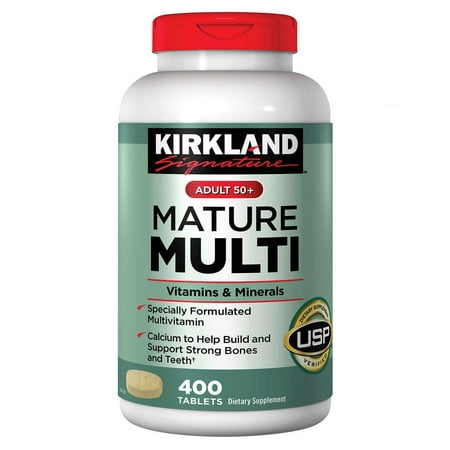
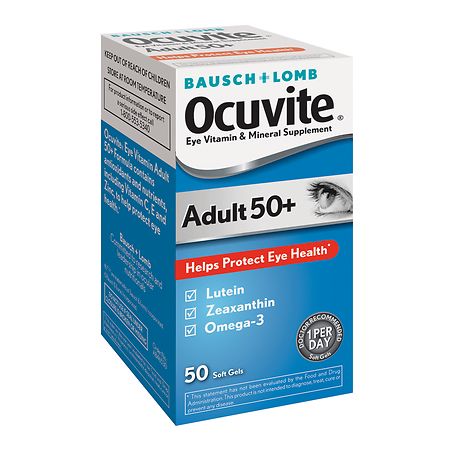
Kirkland Signature Adult 50+ Mature Multi Vitamins & Minerals 400 Tablets

kirkland
78 Good
$45.99 · 400 count
View on Amazon
Verified Amazon match

Summary

This multivitamin contains a range of essential vitamins and minerals, including beneficial forms like Vitamin C and Vitamin E, which support immune and skin health. However, it includes several additives and less bioavailable forms of some nutrients, such as magnesium oxide, which may affect absorption. The presence of multiple additives and the use of gelatin as a filler slightly detract from its overall formulation quality.

At a glance

Beneficial ingredients 25
Harmful ingredients 0
Owned by Costco
Category Vitamins And Minerals

Key ingredients 37

Calcium Carbonate
Good

Calcium Carbonate is a widely used calcium supplement that supports bone health. It is a cost-effective source of calcium, though it requires stomach acid for absorption. It is beneficial for maintaining strong bones and teeth.

Risks

Excessive intake may lead to kidney stones or impaired absorption of other minerals.

Benefits

Provides essential calcium for bone strength and overall health.

See more about Calcium Carbonate →
Dibasic Calcium Phosphate
Good

Dibasic Calcium Phosphate is used as a dietary supplement to provide calcium and phosphorus. It is a stable compound that aids in bone and dental health. It is often used in tablets for its binding properties.

Risks

Overconsumption may lead to imbalances in mineral absorption.

Benefits

Supports bone health by providing both calcium and phosphorus.

Potassium Chloride
Good

Potassium Chloride is an essential mineral that helps maintain fluid balance and proper muscle function. It is often used to prevent or treat low blood levels of potassium. It plays a crucial role in heart and muscle function.

Risks

High doses can cause hyperkalemia, leading to heart issues.

Benefits

Essential for maintaining electrolyte balance and proper muscle function.

See more about Potassium Chloride →
Cellulose Gel
Neutral

Cellulose Gel is a common filler and binder in supplements, providing no nutritional value. It is derived from plant fibers and is used to give structure to tablets. It is generally considered safe and inert.

See more about Cellulose Gel →
Ascorbic Acid
Very Good

Ascorbic Acid, also known as Vitamin C, is a powerful antioxidant that supports immune function and skin health. It is essential for collagen synthesis and acts as an antioxidant. It enhances iron absorption from plant-based foods.

Risks

High doses may cause gastrointestinal discomfort.

Benefits

Boosts immune system and promotes healthy skin and tissues.

See more about Ascorbic Acid →
Magnesium Oxide
Good

Magnesium Oxide is a common form of magnesium used in supplements to support muscle and nerve function. It is less bioavailable than other forms but is effective for relieving constipation. It is important for energy production and bone health.

Risks

May cause digestive issues in high doses.

Benefits

Supports muscle and nerve function, and aids in energy production.

See more about Magnesium Oxide →
Modified Food Starch
Neutral

Modified Food Starch is used as a stabilizer and thickener in supplements. It is derived from various starch sources and is modified for specific functional properties. It is generally recognized as safe.

See more about Modified Food Starch →
Di-Alpha Tocopheryl Acetate
Very Good

Di-Alpha Tocopheryl Acetate is a form of Vitamin E, an antioxidant that protects cells from damage. It is used in supplements for its stability and bioavailability. It supports immune function and skin health.

Risks

Excessive intake may interfere with blood clotting.

Benefits

Protects cells from oxidative damage and supports immune health.

Niacinamide
Good

Niacinamide, a form of Vitamin B3, supports energy metabolism and skin health. It is less likely to cause flushing compared to niacin. It plays a role in DNA repair and stress responses.

Risks

High doses may cause liver damage.

Benefits

Supports energy production and maintains healthy skin.

See more about Niacinamide →
Maltodextrin
Neutral

Maltodextrin is a carbohydrate used as a filler and stabilizer in supplements. It is derived from starch and provides quick energy. It is generally considered safe but has a high glycemic index.

Risks

May cause blood sugar spikes in sensitive individuals.

Benefits

Provides a quick source of energy.

See more about Maltodextrin →
Zinc Oxide
Good

Zinc Oxide is a source of zinc, an essential mineral for immune function and wound healing. It is used in supplements for its stability and effectiveness. It supports enzyme function and DNA synthesis.

Risks

Excessive intake can lead to copper deficiency.

Benefits

Supports immune health and aids in wound healing.

See more about Zinc Oxide →
D-Calcium Pantothenate
Good

D-Calcium Pantothenate is a form of Vitamin B5, essential for energy metabolism and hormone synthesis. It is used in supplements for its stability and bioavailability. It supports adrenal function and reduces stress.

Benefits

Supports energy metabolism and hormone production.

Hypromellose
Neutral

Hypromellose is a cellulose derivative used as a binder and coating agent in supplements. It is used to control the release of active ingredients. It is generally recognized as safe and inert.

See more about Hypromellose →
Manganese Sulfate
Good

Manganese Sulfate is a source of manganese, a trace mineral important for bone formation and metabolism. It is used in supplements for its bioavailability. It supports enzyme function and antioxidant defense.

Risks

Excessive intake may lead to neurological issues.

Benefits

Supports bone health and antioxidant defense.

Croscarmellose Sodium
Neutral

Croscarmellose Sodium is a disintegrant used in tablets to aid in their breakdown and absorption. It is derived from cellulose and is generally considered safe. It enhances the dissolution of active ingredients.

Magnesium Stearate
Neutral

Magnesium Stearate is a common lubricant used in supplement manufacturing to prevent ingredients from sticking to equipment. It is derived from stearic acid and is generally recognized as safe. It does not provide nutritional benefits.

See more about Magnesium Stearate →
Silicon Dioxide
Neutral

Silicon Dioxide is used as an anti-caking agent in supplements to prevent clumping. It is naturally occurring and is generally recognized as safe. It does not provide nutritional benefits.

See more about Silicon Dioxide →
Pyridoxine Hydrochloride
Good

Pyridoxine Hydrochloride is a form of Vitamin B6, essential for protein metabolism and neurotransmitter synthesis. It is used in supplements for its stability and effectiveness. It supports brain health and reduces homocysteine levels.

Risks

High doses may cause nerve damage.

Benefits

Supports brain health and protein metabolism.

See more about Pyridoxine Hydrochloride →
Copper Sulfate
Good

Copper Sulfate is a source of copper, a trace mineral important for iron metabolism and antioxidant defense. It is used in supplements for its bioavailability. It supports immune function and collagen formation.

Risks

Excessive intake can lead to toxicity and liver damage.

Benefits

Supports iron metabolism and antioxidant defense.

See more about Copper Sulfate →
Gelatin (Porcine)
Neutral

Gelatin (Porcine) is used as a gelling agent in capsules and tablets. It is derived from animal collagen and is used for its binding properties. It does not provide significant nutritional benefits in this form.

Thiamin Mononitrate
Good

Thiamin Mononitrate is a form of Vitamin B1, essential for energy metabolism and nerve function. It is used in supplements for its stability and effectiveness. It supports carbohydrate metabolism and heart health.

Benefits

Supports energy metabolism and nerve function.

Beta Carotene
Very Good

Beta Carotene is a precursor to Vitamin A and acts as an antioxidant. It is used in supplements for its ability to support vision and immune health. It is converted to Vitamin A in the body as needed.

Risks

High doses may increase the risk of lung cancer in smokers.

Benefits

Supports vision and immune health as a source of Vitamin A.

See more about Beta Carotene →
Polyethylene Glycol
Neutral

Polyethylene Glycol is used as a solvent and plasticizer in supplements. It is a synthetic compound that helps in the formulation of tablets. It is generally recognized as safe.

See more about Polyethylene Glycol →
Sodium Borate
Neutral

Sodium Borate is used as a preservative and buffering agent in supplements. It is a boron compound that helps maintain product stability. It is generally recognized as safe in small amounts.

Risks

High doses can be toxic and affect reproductive health.

Folic Acid
Very Good

Folic Acid is a form of Vitamin B9, essential for DNA synthesis and cell division. It is used in supplements to prevent neural tube defects during pregnancy. It supports red blood cell formation and heart health.

Risks

Excessive intake may mask Vitamin B12 deficiency.

Benefits

Supports DNA synthesis and prevents neural tube defects.

See more about Folic Acid →
Boric Acid
Neutral

Boric Acid is used as a preservative and buffering agent in supplements. It is a boron compound that helps maintain product stability. It is generally recognized as safe in small amounts.

Risks

High doses can be toxic and affect reproductive health.

Lycopene
Very Good

Lycopene is a powerful antioxidant found in tomatoes and other red fruits. It is used in supplements for its potential to support heart health and reduce cancer risk. It is known for its ability to neutralize free radicals.

Benefits

Supports heart health and may reduce cancer risk.

Chromium Picolinate
Good

Chromium Picolinate is a form of chromium used to improve insulin sensitivity and glucose metabolism. It is used in supplements for its bioavailability. It may help in managing blood sugar levels.

Risks

High doses may cause kidney or liver damage.

Benefits

Improves insulin sensitivity and supports glucose metabolism.

Lutein
Very Good

Lutein is a carotenoid that supports eye health and may reduce the risk of age-related macular degeneration. It is used in supplements for its antioxidant properties. It helps filter harmful blue light and supports vision.

Benefits

Supports eye health and protects against macular degeneration.

See more about Lutein →
Potassium Iodide
Good

Potassium Iodide is a source of iodine, essential for thyroid function and hormone production. It is used in supplements to prevent iodine deficiency. It supports metabolic rate and energy production.

Risks

Excessive intake can lead to thyroid dysfunction.

Benefits

Supports thyroid health and hormone production.

Sodium Selenate
Good

Sodium Selenate is a source of selenium, an essential trace mineral with antioxidant properties. It is used in supplements for its bioavailability. It supports immune function and thyroid health.

Risks

High doses can cause selenosis, leading to hair loss and nerve damage.

Benefits

Supports immune function and acts as an antioxidant.

Sodium Molybdate
Good

Sodium Molybdate is a source of molybdenum, a trace mineral important for enzyme function. It is used in supplements for its bioavailability. It supports detoxification and metabolism of sulfur-containing amino acids.

Benefits

Supports enzyme function and detoxification processes.

Vitamin D3
Very Good

Vitamin D3, also known as Cholecalciferol, is essential for calcium absorption and bone health. It is used in supplements for its effectiveness in maintaining healthy bones and immune function. It supports mood regulation and muscle function.

Risks

Excessive intake can lead to hypercalcemia and kidney damage.

Benefits

Enhances calcium absorption and supports bone and immune health.

See more about Vitamin D3 →
Cyanocobalamin
Good

Cyanocobalamin is a form of Vitamin B12, essential for nerve function and red blood cell formation. It is used in supplements for its stability and effectiveness. It supports energy production and neurological health.

Benefits

Supports nerve health and red blood cell production.

See more about Cyanocobalamin →
Phytonadione
Good

Phytonadione is a form of Vitamin K1, essential for blood clotting and bone health. It is used in supplements for its role in activating proteins involved in blood coagulation. It supports cardiovascular health by regulating calcium in the blood.

Benefits

Supports blood clotting and bone health.

Biotin
Good

Biotin, also known as Vitamin B7, supports hair, skin, and nail health. It is used in supplements for its role in energy metabolism and fatty acid synthesis. It is important for maintaining healthy skin and hair.

Benefits

Supports healthy hair, skin, and nails.

See more about Biotin →
Sodium Metavanadate
Neutral

Sodium Metavanadate is a source of vanadium, a trace element with unclear biological significance. It is used in supplements for its potential role in glucose metabolism. Its health benefits are not well-established.

Risks

High doses may cause gastrointestinal issues and kidney damage.

Processing

Group 4 · Ultra-processed

Ultra-Processed Foods

Get the full breakdown in the Scout app

Scan any product to see lab results, healthy alternatives, and your personalized analysis.

Download on theApp Store