
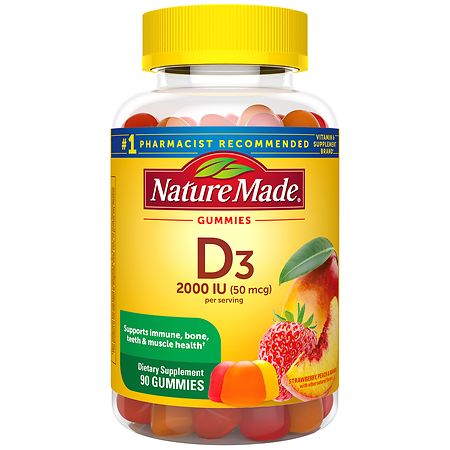



Nature Made Vitamin D3 2000 IU (50 mcg), for Bone Health and Immune Support Vitamin Gummies - 90ct
Analysis updated August 2026 · How Scout scores
At a glance
Summary
This vitamin D3 supplement contains beneficial Vitamin D3, which is essential for bone health and immune support. However, the presence of glucose syrup and sugar as sweeteners, along with palm oil, raises concerns due to their potential negative health impacts and environmental issues. Additionally, the use of natural flavors and unspecified added colors contributes to a moderate processing level, affecting the overall score.
Key ingredients 13
Vitamin D3Good
Vitamin D3 is essential for calcium absorption and bone health, and it supports immune function. It is the most bioavailable form of vitamin D, making it highly effective. This ingredient is crucial for maintaining healthy bones and a robust immune system.
Benefits
Supports bone health and immune function by enhancing calcium absorption and maintaining optimal vitamin D levels.
SodiumNeutral
Sodium is an essential mineral that helps maintain fluid balance and nerve function. In small amounts, it is necessary for health, but excessive intake can lead to hypertension. The amount in supplements is typically minimal and not a concern.
Risks
Excessive sodium intake can lead to high blood pressure and cardiovascular issues.
Benefits
Essential for maintaining fluid balance and proper nerve and muscle function.
WaterNeutral
Water is used as a solvent and carrier in many food products. It is essential for life and hydration but does not provide nutritional value in this context. Its presence is necessary for the formulation of gummies.
Benefits
Essential for hydration and as a solvent in food processing.
GelatinNeutral
Gelatin is a protein derived from animal collagen, used as a gelling agent. It is generally considered safe and provides some amino acids. However, it is not a significant source of nutrition in small amounts.
Benefits
Provides some amino acids and is used as a gelling agent in food products.
Citric AcidNeutral
Citric acid is a natural preservative and flavor enhancer found in citrus fruits. It is widely used in food products for its sour taste and preservative qualities. Generally recognized as safe when consumed in typical amounts.
Risks
Excessive consumption may cause tooth enamel erosion.
Benefits
Acts as a preservative and enhances flavor in food products.
PectinNeutral
Pectin is a natural fiber used as a gelling agent in food products. It is derived from fruits and is considered safe and beneficial for digestive health. It helps in forming the gummy texture.
Benefits
May aid in digestion and is used as a gelling agent in food products.
Carnauba WaxNeutral
Carnauba wax is used as a glazing agent to provide a shiny finish to food products. It is derived from the leaves of the carnauba palm and is considered safe for consumption. It does not contribute to nutritional value.
Benefits
Provides a glossy finish to food products without significant nutritional impact.
Tartaric AcidNeutral
Tartaric acid is a natural acid found in many plants, used to enhance flavor and stabilize products. It is generally recognized as safe and is used in small amounts. It contributes to the tart flavor of gummies.
Benefits
Enhances flavor and stability in food products.
Glucose SyrupBad
Glucose syrup is a sweetener that can contribute to high blood sugar levels and weight gain. It is highly processed and lacks nutritional value. Frequent consumption of glucose syrup can lead to metabolic issues.
Risks
May contribute to obesity, insulin resistance, and other metabolic disorders when consumed in excess.
SugarBad
Sugar is a common sweetener that can lead to increased calorie intake and weight gain. It is associated with various health issues, including dental cavities and metabolic syndrome. Excessive sugar consumption is a major health concern.
Risks
High sugar intake is linked to obesity, type 2 diabetes, and cardiovascular disease.
Palm OilBad
Palm oil is a widely used vegetable oil that can contribute to deforestation and habitat destruction. It is high in saturated fats, which may impact heart health negatively. The environmental impact of palm oil production is a significant concern.
Risks
High in saturated fats, which may increase the risk of heart disease.
Natural FlavorsBad
Natural flavors are a catch-all term for flavoring agents derived from natural sources. They lack transparency and can include a wide range of substances. The lack of specificity makes it difficult to assess their health impact.
Risks
Potential for undisclosed allergens or additives.
Colors AddedBad
Added colors can include artificial dyes, which may have health concerns such as hyperactivity in children. The lack of specificity about the type of colors used is concerning. Artificial colors are often criticized for their potential health impacts.
Risks
Potential links to hyperactivity and allergic reactions.
Processing
Processed Foods
Get the full breakdown in the Scout appTake Scout shopping
Scan any product to see lab results, healthy alternatives, and your personalized analysis.
Download on theApp Store GET IT ONGoogle PlayAmazon pricing & content
Amazon price as of . Product prices and availability are accurate as of the date/time indicated and are subject to change. Any price and availability information displayed on Amazon.com at the time of purchase will apply to the purchase of this product.
CERTAIN CONTENT THAT APPEARS ON THIS SITE COMES FROM AMAZON. THIS CONTENT IS PROVIDED “AS IS” AND IS SUBJECT TO CHANGE OR REMOVAL AT ANY TIME.